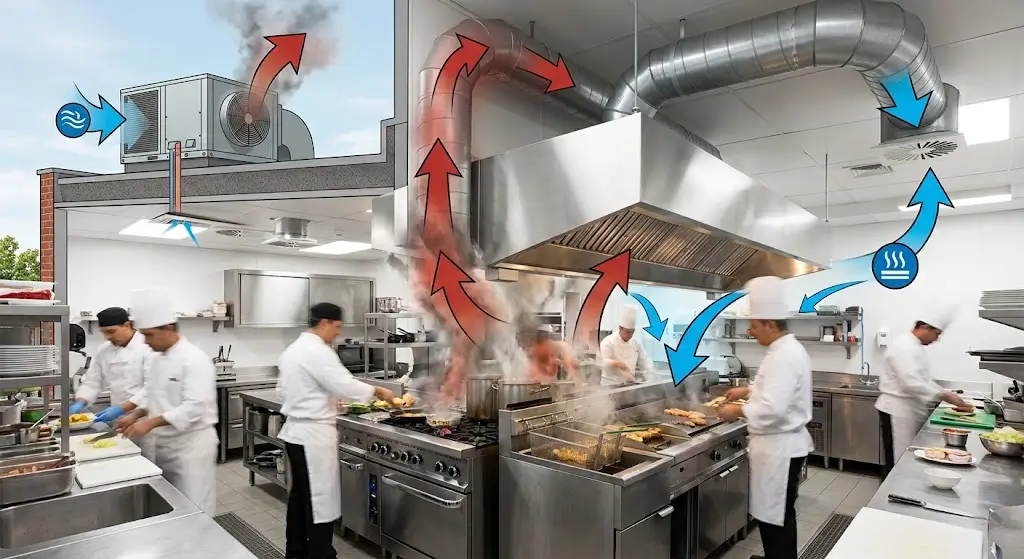
Ask two different kitchen equipment suppliers what kind of hood a menu needs and you might get two different answers, not because the code is unclear, but because the question usually gets skipped entirely. A Type I hood is the category required for any cooking equipment that produces grease-laden vapor, smoke, or flame, think fryers, char broilers, griddles, and range tops. A Type II hood, by contrast, is built for heat and steam only, the kind of exhaust you’d see over a dishwasher or a steam kettle. Confusing the two, or assuming a kitchen falls into whichever category is cheaper to install, is where a lot of projects run into trouble later.
The Line Between Type I and Type II
The distinction isn’t about how big the kitchen is or how much cooking happens. It’s about what the equipment actually produces. Type I hoods exist because certain cooking processes generate airborne grease particles that condense on surfaces and inside ductwork, creating a fire hazard if they’re not captured and filtered correctly. That’s why Type I systems come with grease filters, fire-rated ductwork requirements, and direct integration with a fire suppression system, none of which a Type II hood needs, because Type II exhaust is just moving heat and moisture, not flammable residue.
Put a fryer or a flat-top griddle under a Type II hood and the system isn’t just underperforming, it’s out of compliance with NFPA 96 in a way that will surface the moment an inspector looks at the equipment list against the hood installed above it.
How to Tell Which Category Your Kitchen Falls Into
The equipment list is really the whole answer. If a kitchen menu involves frying, char-broiling, griddling, or any cooking method that produces smoke or grease-laden vapor, that section of the kitchen needs a Type I hood. Ovens, steamers, and dishwashers that only produce heat and steam fall under Type II, or in some jurisdictions, may not require a hood at all depending on local code interpretation.
Where this gets complicated is mixed kitchens, which describes most full-service restaurants. A kitchen might run a dish pit under Type II exhaust while the cook line, fryers, flat-tops, and char broiler all sit under a Type I system a few feet away. Getting that division right isn’t guesswork, it comes from walking the actual equipment layout and matching each piece to what it produces, not from applying a blanket hood type across the whole kitchen.
Why This Isn’t a Decision to Make After the Equipment Arrives
Kitchen design and hood design have to happen together, not in sequence. A hood sized and positioned for a menu that later changes, say, a concept that adds a char broiler after the kitchen was already built around a lighter menu, can leave a restaurant needing to retrofit a system that was never designed for that equipment load in the first place.
This is exactly why determining whether your kitchen needs Commercial Type I Hood Installation starts with looking at what’s actually cooking underneath it, current menu and any equipment additions planned down the line, rather than treating the hood as an afterthought once the kitchen layout is finalized.
What a Type I System Actually Includes
A Type I hood isn’t just the metal canopy over the cook line. The full system includes grease filters designed to capture airborne grease before it enters the ductwork, fire-rated ducting built to the clearance and construction standards NFPA 96 requires, an exhaust fan sized to the equipment’s airflow needs, and integration with the kitchen’s fire suppression system so the two work together in the event of a grease fire.
Skipping or under-specifying any one of these pieces doesn’t just create a weaker system, it creates a system that won’t pass inspection, because each component is addressed specifically under fire and mechanical code, not left to installer discretion.
The Cost of Guessing Wrong
Installing a Type II hood where a Type I system was actually required is one of the more expensive mistakes a kitchen build can make, not because the hood itself was wrong, but because correcting it after the fact usually means tearing out ductwork, replacing the hood entirely, and delaying an opening date that was already set. It’s a far more disruptive fix than getting the equipment list and hood type right at the design stage.
The reverse mistake, over-building with a Type I system where it isn’t needed, isn’t a code violation, but it does mean paying for fire suppression integration and grease filtration a kitchen never actually needed for that section of equipment.
Why This Should Start With an Assessment, Not an Assumption
Because the right hood type depends entirely on what’s cooking, and because menus change, expand, and get reworked more often than kitchen layouts do, the safest starting point is a site assessment that looks at the actual equipment, current and planned, before any hood gets specified. That’s a very different process than picking a hood size off a chart or assuming a kitchen’s previous tenant had the right system installed.
A Track Record Built on Getting This Right
Since 1980, CRS Hoods has installed more than 10,000 commercial kitchen exhaust systems across Pennsylvania, New Jersey, Delaware, and Maryland, with systems that consistently pass inspection on the first attempt. Getting the Type I versus Type II distinction right at the start of a project is part of why that track record holds up, a system built around the actual cooking equipment doesn’t run into the retrofit problems described above.
Frequently Asked Questions
What equipment requires a Type I hood?
Equipment that produces grease-laden vapor, smoke, or flame, such as fryers, char broilers, griddles, and range tops, requires a Type I hood under NFPA 96.
What’s the difference between a Type I and Type II hood?
A Type I hood is built to capture grease-laden vapor and integrate with fire suppression systems. A Type II hood handles heat and steam only, for equipment like dishwashers or steamers that don’t produce grease or smoke.
Can one kitchen need both hood types?
Yes. Mixed kitchens often run a dish pit or steam equipment under Type II exhaust while the cook line sits under a separate Type I system, depending on what each piece of equipment produces.
What happens if the wrong hood type is installed?
A hood that doesn’t match what the equipment underneath it produces won’t pass inspection, and correcting it after installation, particularly replacing a Type II system with Type I, typically involves significant rework and delay.
When should hood type be decided in a kitchen build?
As early as possible, ideally alongside the equipment layout itself, since the hood has to be designed around the specific cooking equipment a menu requires, including any planned additions.