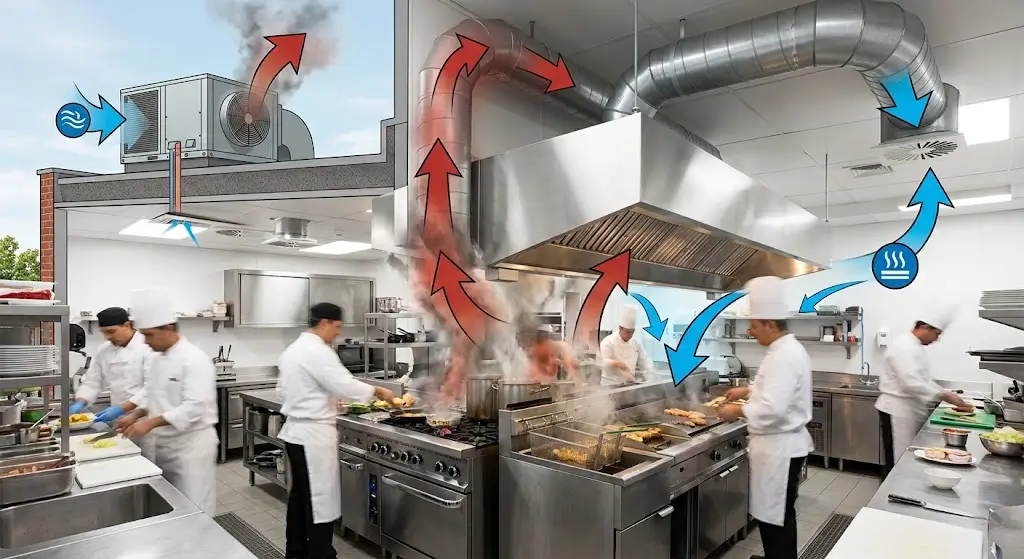


An inspector walks through the kitchen, checks the hood, runs through the ductwork, looks at the fire suppression tie-in, and then delivers the news no owner wants a week before opening: the system doesn’t pass. If a kitchen ventilation system fails inspection, the doors stay closed. No workaround, no conditional approval to open “just for now.” The restaurant cannot legally operate until the problem is fixed and the system is re-inspected and approved.
That single fact catches a lot of owners off guard, usually because they assumed a failed inspection meant a minor note to fix later, not a hard stop on opening day.
Why Inspectors Don’t Give Partial Credit
Fire and life-safety code doesn’t work on a sliding scale. NFPA 96 and the International Mechanical Code set specific requirements for how a ventilation system has to be built, installed, and maintained, and an inspector is checking the system against those requirements, not against how good it looks or how expensive the equipment was. A system either meets the standard or it doesn’t.
That’s a harder pill to swallow than it sounds. Plenty of systems look complete, the hood is up, the ductwork is run, the fan pulls air, and still fail because something underneath the surface doesn’t meet code. Clearances that are too tight. Ductwork material that doesn’t hold up under the standard. A makeup air balance that’s off. None of these are visible to someone glancing at the kitchen, but all of them are exactly what an inspector is trained to catch.
The Usual Suspects Behind a Failed Inspection
A handful of issues account for most failures, and they tend to fall into two very different buckets: problems baked in from the start, and problems that develop over time.
On the installation side, a hood sized wrong for the equipment underneath it is a common culprit, as is ductwork that doesn’t meet the clearance or construction requirements NFPA 96 lays out. Fire suppression integration gets flagged often too, especially when the ventilation system wasn’t coordinated with suppression during design. Paperwork matters as well. Missing permits or incomplete installation records can hold up an approval even when the physical system itself is sound.
On the operations side, it’s almost always grease. A system that hasn’t been cleaned on schedule accumulates buildup in the hood, filters, or ductwork, and that buildup alone is enough to fail an inspection, new construction or not.
So the Kitchen Fails. Now What?
The inspector documents specifically what didn’t pass, not a vague “try again,” but the actual issue or issues standing in the way. For a kitchen that hasn’t opened yet, that means the opening date slips until the fix is made. For an existing restaurant that gets flagged during a routine or complaint-driven inspection, the outcome depends on how serious the issue is and what the local jurisdiction requires, which can range from a set correction window to an immediate closure if the problem represents a real fire hazard.
Either way, the path forward is the same: fix the specific thing the inspector flagged, then get back in front of them for another look.
Some Fixes Are Fast. Others Aren’t.
A missed cleaning is usually the easiest fix on the list, schedule the service, get it done, move on. A paperwork gap can often be resolved just as quickly. But a hood that was never sized correctly for the equipment beneath it, or ductwork that was installed without meeting clearance requirements, isn’t something that gets patched over a weekend. Those issues can mean reworking ductwork, swapping components, or in worse cases, revisiting how the system was designed in the first place.
That gap, between a quick fix and a real rework, usually comes down to one thing: whether the system was designed and installed correctly the first time. A hood fabricator who accounted for the kitchen’s actual equipment and layout from the start rarely ends up in this position. A system installed without that attention runs into it far more often.
Getting Back to Open
Once the fix is made, the system goes back in front of an inspector. There’s no shortcut here, no way to self-certify that the problem is resolved. The re-inspection has to happen, and approval has to come through, before a new restaurant can open its doors or an existing kitchen can resume normal service.
The Version of This Story Nobody Tells
Most of what makes a failed inspection painful isn’t the fix itself, it’s the timing. A delayed opening pushes back revenue, staff onboarding, marketing plans, everything downstream of the date that was supposed to be locked in. A forced closure on an active kitchen is worse, service stops, and it stays stopped until the system passes.
The quieter version of this story is the one where it never happens, because the system was built right the first time. Since 1980, CRS Hoods has installed more than 10,000 commercial kitchen exhaust systems across Pennsylvania, New Jersey, Delaware, and Maryland, with systems that consistently pass inspection on the first attempt. That’s not an accident. It’s what happens when a fabricator designs the hood, ductwork, and makeup air around the kitchen’s actual equipment instead of treating installation as a generic mechanical task.
Frequently Asked Questions
Can a restaurant open if its ventilation system fails inspection?
No. Operation isn’t legally permitted until the identified issue is corrected and the system passes re-inspection.
What are the most common reasons a system fails inspection?
Improper installation, equipment sized wrong for the kitchen’s cooking load, grease buildup from missed cleaning, fire suppression integration gaps, and missing permits or documentation.
How long does correcting a failed inspection take?
It varies widely. Cleaning or documentation issues can be resolved in days. Problems tied to installation or equipment sizing can take considerably longer, since they may require rework rather than a simple fix.
Does a failed inspection mean the whole system needs to be replaced?
Not always. Some failures need targeted correction. Others, especially ones rooted in how the original system was installed or sized, may require more extensive rework depending on what the inspector found.
What’s the best way to avoid a failed inspection altogether?
Work with a licensed hood fabricator who designs the system around the kitchen’s specific equipment and layout from the start, and stay on the cleaning and maintenance schedule NFPA 96 requires.