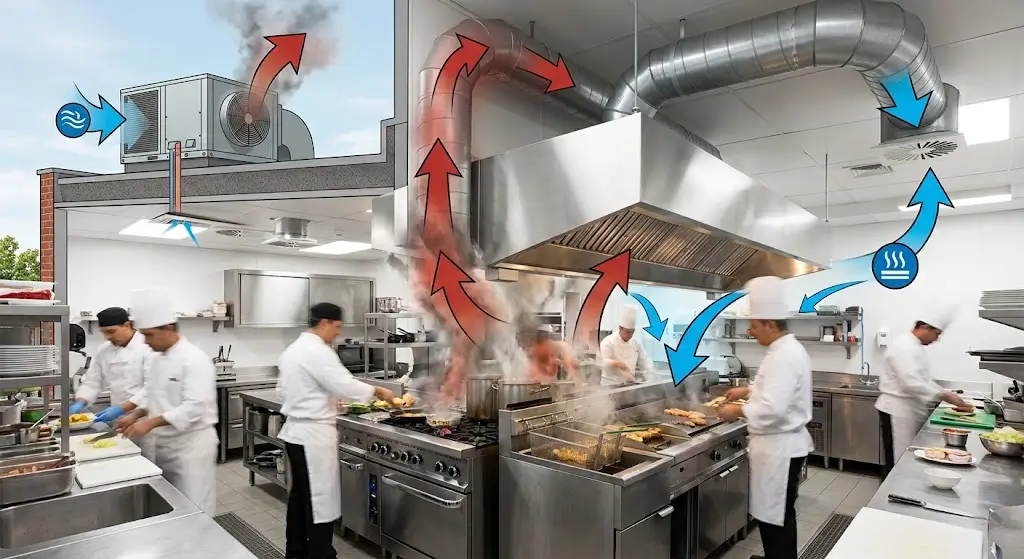


Commercial kitchen ventilation scrubbing systems are designed to remove grease, smoke, heat, odors, and airborne contaminants from kitchen exhaust before they are released into the atmosphere. They play a vital role in maintaining indoor air quality, meeting local ventilation requirements, protecting kitchen equipment, and creating a safer working environment for restaurant staff. Whether you’re operating a restaurant, hotel kitchen, food court, or catering facility, investing in the right ventilation scrubbing system can improve both compliance and operational efficiency.
What Are Commercial Kitchen Ventilation Scrubbing Systems?
Commercial kitchen ventilation scrubbing systems are advanced air-cleaning solutions that work alongside commercial kitchen exhaust systems. Their primary purpose is to capture harmful contaminants generated during cooking before the exhaust air leaves the building.
Unlike standard exhaust systems that simply move air outdoors, scrubbing systems actively clean the air by removing grease particles, smoke, odors, and fine particulate matter. This makes them particularly useful in commercial environments where cooking activities produce large volumes of pollutants throughout the day.
These systems are commonly installed in:
- Restaurants
- Hotels
- Ghost kitchens
- Food courts
- Hospitals
- School cafeterias
- Commercial catering facilities
Their growing popularity is largely due to increasingly strict environmental regulations and the demand for better indoor and outdoor air quality.
How Do Kitchen Ventilation Scrubbing Systems Work?
Commercial kitchen ventilation scrubbing systems use multiple stages of filtration and air purification to clean contaminated exhaust air.
The process typically begins when cooking fumes are captured by the kitchen hood. The air then passes through grease filters designed to remove larger grease particles. Depending on the system design, additional filtration technologies may include electrostatic precipitators, UV filtration, activated carbon filters, and pollution control units that target smoke and odors.
By the time the air is discharged, a significant amount of contaminants has been removed, helping businesses reduce environmental impact and improve compliance with local building and health regulations.
Think of a ventilation scrubbing system as a water purifier, but for your kitchen’s air. Rather than allowing contaminated air to flow directly outside, it undergoes multiple cleaning stages before being safely released.
Why Commercial Kitchens Need Ventilation Scrubbing Systems
Commercial kitchens produce much more than food. Cooking activities generate heat, grease vapors, smoke, moisture, and odor particles that can quickly affect both indoor and outdoor environments.
Without proper air cleaning systems, commercial kitchens may experience:
- Excessive grease buildup within ductwork.
- Poor indoor air quality.
- Persistent cooking odors.
- Increased fire risks.
- Environmental compliance issues.
- Higher maintenance costs.
Ventilation scrubbing systems help address these challenges by improving overall air management throughout the facility.
They are particularly beneficial for restaurants located in shopping centers, mixed-use buildings, and densely populated areas where controlling odors and smoke is essential.
The Benefits of Commercial Kitchen Ventilation Scrubbing Systems
One of the biggest advantages of installing a ventilation scrubbing system is improved air quality. Cleaner exhaust air creates a more comfortable and healthier environment for kitchen staff while helping businesses comply with local requirements.
These systems can significantly reduce grease accumulation within ductwork and exhaust components. Reduced grease buildup often translates into lower maintenance costs and fewer disruptions caused by frequent cleaning requirements.
Businesses can also benefit from better odor control. Strong cooking smells may negatively impact neighboring businesses or customers if not properly managed. Ventilation scrubbing systems help minimize this issue by filtering odor-producing particles before they leave the building.
Another major benefit is fire prevention. Grease is highly combustible, and excessive grease accumulation within exhaust systems increases fire risks considerably. Proper filtration reduces the amount of grease entering the ventilation system, improving overall kitchen safety.
Types of Commercial Kitchen Ventilation Scrubbing Technologies
Several technologies are used within commercial kitchen ventilation scrubbing systems.
Electrostatic precipitators are among the most effective options for removing fine grease and smoke particles from kitchen exhaust. These systems electrically charge contaminants and collect them on specially designed plates.
Activated carbon filtration is commonly used to control odors. It works by absorbing odor molecules and volatile organic compounds that may otherwise be released into the environment.
UV filtration systems use ultraviolet light to break down grease particles and reduce odor levels within the exhaust stream. They are often installed within commercial hood systems to improve overall air purification.
Pollution control units combine multiple filtration technologies into a single solution and are particularly useful in facilities with stringent air quality requirements.
The best system for your kitchen will largely depend on factors such as cooking volume, building design, local regulations, and operational requirements.
Choosing the Right Kitchen Ventilation Solution
Selecting the right ventilation system is one of the most important decisions for any commercial kitchen project.
Your ventilation system should be designed based on:
- The size of the kitchen.
- The type of cooking equipment being used.
- Daily cooking volume.
- Local code requirements.
- Building ventilation limitations.
A properly designed kitchen ventilation system can dramatically improve air quality, ventilation performance, and long-term operating costs. Commercial kitchens should never rely on a one-size-fits-all approach when it comes to ventilation design.
The right solution ensures that your kitchen remains efficient, compliant, and comfortable for both staff and customers.
Common Industries That Use Ventilation Scrubbing Systems
Commercial kitchen ventilation scrubbing systems are used across a wide range of industries.
Restaurants are perhaps the most obvious users, but they’re far from the only ones. Hotels with multiple dining facilities, university cafeterias, healthcare institutions, and food production facilities all require advanced ventilation solutions to manage airborne contaminants effectively.
Cloud kitchens and ghost kitchens have also contributed to increased demand for high-performance ventilation systems due to their intensive cooking operations and compact layouts.
As food businesses continue to evolve, the need for cleaner and more efficient air management systems continues to grow.
Maintenance Requirements
Like any commercial kitchen equipment, ventilation scrubbing systems require regular maintenance to perform effectively.
Routine inspections and scheduled cleaning help maintain airflow efficiency and ensure that filtration components are functioning properly. Neglecting maintenance can reduce system performance and increase operating costs over time.
Commercial kitchens should establish preventative maintenance schedules that include filter replacements, component inspections, and professional servicing where necessary.
Proper maintenance not only extends the lifespan of the system but also helps maintain compliance with ventilation and fire safety requirements.
Are Commercial Kitchen Ventilation Scrubbing Systems Worth It?
For most commercial kitchens, the answer is yes.
The long-term benefits often outweigh the initial investment. Improved air quality, enhanced safety, reduced maintenance costs, and regulatory compliance all contribute to better operational efficiency.
Businesses operating in urban environments or buildings with strict ventilation requirements may find ventilation scrubbing systems particularly valuable.
When properly designed and maintained, these systems help create a cleaner, safer, and more productive commercial kitchen environment.
Conclusion
Commercial kitchen ventilation scrubbing systems are essential for modern food service operations that prioritise air quality, safety, and regulatory compliance. By removing grease, smoke, odors, and airborne contaminants from kitchen exhaust, these systems provide significant benefits for both staff and customers.
Whether you’re planning a new commercial kitchen or upgrading an existing ventilation setup, investing in the right ventilation solution can improve efficiency and reduce long-term operational challenges. Choosing a properly designed ventilation system is one of the smartest investments you can make for your commercial kitchen.
Frequently Asked Questions
What is a commercial kitchen ventilation scrubbing system?
It is an air-cleaning system designed to remove grease, smoke, odors, and contaminants from commercial kitchen exhaust air.
Why are ventilation scrubbing systems important?
They improve air quality, reduce grease buildup, enhance fire safety, and help businesses comply with ventilation regulations.
Are kitchen ventilation scrubbing systems required by code?
Requirements vary depending on local building and environmental regulations. Certain commercial kitchens may require advanced air-cleaning systems based on their cooking operations.
How often should ventilation scrubbing systems be maintained?
Maintenance schedules vary by system type and cooking volume, but routine inspections and cleaning are essential for optimal performance.
Do ventilation scrubbing systems reduce cooking odors?
Yes. Many systems use activated carbon filtration and other technologies to significantly reduce cooking odors.
Can existing commercial kitchens install ventilation scrubbing systems?
Yes. Many scrubbing systems can be retrofitted into existing commercial kitchen ventilation setups.
What is the difference between a standard exhaust system and a scrubbing system?
A standard exhaust system primarily removes air from the kitchen, while a scrubbing system actively cleans the exhaust air before it is discharged.