
If you’re wondering how long to leave your extractor fan on in the kitchen, the answer is simple: you should leave it running for at least 15 to 20 minutes after you’ve finished cooking. This allows the fan to remove excess moisture, grease particles, smoke, and lingering cooking odors that remain in the air long after you’ve turned off your hob or oven. For heavier cooking methods such as frying or grilling, leaving the extractor fan on for up to 30 minutes is often recommended.
Many homeowners make the mistake of switching off their extractor fan immediately after cooking. Unfortunately, that’s usually too soon. Your kitchen may look clean, but invisible moisture and grease particles can still be circulating in the air and settling on your walls, cabinets, and appliances.
The Ideal Time to Leave Your Kitchen Extractor Fan Running
An extractor fan isn’t just there to eliminate unpleasant smells. Its primary purpose is to improve ventilation by removing airborne contaminants produced during cooking.
For most households, leaving your extractor fan running for 15 to 20 minutes after cooking is more than enough. If you’ve prepared a large meal or cooked foods that produce a lot of steam and grease, increasing that time to around 30 minutes can significantly improve your kitchen’s air quality.
Think of your extractor fan as the final step in the cooking process. Just because you’ve stopped cooking doesn’t mean the ventilation process is complete. Giving your fan a few extra minutes to do its job helps maintain a cleaner and healthier kitchen environment.
Why Leaving Your Extractor Fan On Matters
Cooking naturally produces moisture, grease, smoke, and various airborne particles. Every time you boil water, fry chicken, simmer a sauce, or bake a meal, these particles are released into your kitchen.
Without proper ventilation, excess moisture can lead to condensation on windows and walls. Grease particles can settle on surfaces, making cabinets and countertops sticky over time. Cooking odors may linger throughout the house long after dinner has been served.
Modern homes are often built to be more energy efficient and airtight than older properties. While this improves insulation, it also means moisture and pollutants have fewer ways to escape naturally. Your extractor fan plays an important role in keeping indoor air fresh and reducing humidity levels within your kitchen.
What Happens If You Turn It Off Too Soon?
Turning off your extractor fan immediately after cooking is a bit like stopping your washing machine before the rinse cycle has finished. The majority of the work has been done, but not all of it.
Even after cooking stops, steam and grease remain suspended in the air for several minutes. If they aren’t properly removed, they eventually settle onto surrounding surfaces. Over time, this buildup can contribute to unpleasant odors, increased cleaning requirements, and even mold growth in particularly humid environments.
Allowing your extractor fan to run for a little longer can help prevent these issues and improve the overall longevity of your kitchen finishes and appliances.
How Long Should You Leave It On After Cooking?
The amount of time your extractor fan should remain on largely depends on what you’ve been cooking.
Preparing toast or making a cup of tea produces very little moisture and typically requires minimal ventilation. On the other hand, frying fish, boiling multiple pots of food, or cooking for a large family gathering generates significantly more steam and grease.
A good rule of thumb is to leave the extractor fan running until the kitchen feels comfortable and dry. If your windows have steamed up or cooking smells are still noticeable, it’s worth leaving the fan on for a few additional minutes.
Many modern extractor fans include timer functions that automatically switch off after a predetermined period. These can be particularly useful if you regularly forget to turn the fan off yourself.
Light Cooking Versus Heavy Cooking
Not all cooking methods affect your kitchen in the same way.
Light cooking activities such as making coffee, reheating leftovers, or preparing simple meals usually require around 10 to 15 minutes of ventilation after cooking has finished.
Heavy cooking methods produce far more heat, moisture, and grease. Frying, grilling, baking large meals, simmering soups, or cooking strongly scented foods can leave airborne particles lingering for much longer. In these situations, allowing your extractor fan to operate for 20 to 30 minutes is generally the better approach.
The more moisture and grease released into the air, the harder your extractor fan needs to work to remove it effectively.
Cooking Methods That Produce More Moisture and Grease
Certain cooking techniques naturally produce more steam and grease than others. Deep frying, pan frying, boiling pasta, slow-cooking soups, and grilling meats are among the most common culprits.
While steam is often visible, grease particles are not. They may continue floating in the air long after you’ve plated your meal. This is one of the primary reasons kitchen surfaces gradually become sticky or difficult to clean when ventilation is inadequate.
Your extractor fan isn’t simply removing odors. It’s actively improving the air quality in your kitchen by capturing contaminants that are often invisible to the naked eye.
Factors That Affect How Long Your Extractor Fan Should Run
Several factors influence how long your extractor fan should remain switched on.
The size of your kitchen plays an important role. Smaller kitchens may clear airborne particles relatively quickly, while larger open-plan spaces often require additional ventilation time.
The type of extractor fan you have also matters. External vented systems are generally more effective because they expel contaminated air outside the property. Recirculating extractor fans rely on filters to clean and recirculate the air, which can sometimes require longer operating times to achieve the same results.
Humidity levels, cooking duration, and the number of people using the kitchen can also influence how long the fan should remain running.
Does Leaving an Extractor Fan On Waste Electricity?
One of the most common questions homeowners ask is whether leaving their extractor fan running for an extra 15 or 20 minutes wastes electricity.
Fortunately, the answer is no. Most domestic kitchen extractor fans consume relatively little electricity compared to larger household appliances. Running one for an additional few minutes after cooking is unlikely to make any noticeable difference to your energy bill.
When you consider the benefits of reducing moisture damage, improving air quality, and minimising grease buildup, the small amount of electricity used is often well worth it.
In many cases, the money spent operating an extractor fan is far less than the potential cost of repairing moisture-related issues within the kitchen.
Signs Your Kitchen Needs Longer Ventilation
Your kitchen will often provide clear signs when additional ventilation is required.
If cooking odors linger for extended periods, windows regularly become covered in condensation, or surfaces feel damp after cooking, your extractor fan may need to remain on for longer than usual.
Poor air circulation can also contribute to uncomfortable cooking conditions and increased humidity throughout the home. Leaving your extractor fan running for an additional 10 minutes can often make a noticeable difference.
Opening a nearby window while using your extractor fan can further improve airflow and help remove excess moisture more efficiently.
Common Mistakes People Make With Kitchen Extractor Fans
Many people unknowingly reduce the effectiveness of their extractor fan simply through everyday habits.
A common mistake is waiting until cooking has already started before switching the fan on. Ideally, your extractor fan should be turned on a few minutes beforehand to establish proper airflow.
Another mistake is neglecting regular maintenance. Grease filters naturally accumulate residue over time, which can restrict airflow and reduce performance. Cleaning or replacing filters according to the manufacturer’s recommendations can dramatically improve ventilation efficiency.
Switching the extractor fan off immediately after cooking is perhaps the most common error of all. Giving it just a few extra minutes can greatly improve its overall effectiveness.
Tips to Improve Kitchen Ventilation
Good kitchen ventilation is about consistency rather than complicated routines. Switching your extractor fan on before cooking begins, leaving it running after you’ve finished, and keeping it properly maintained are usually all that’s required.
Where possible, allowing fresh air into the kitchen by opening a window can further improve airflow. Choosing the appropriate fan speed for the type of cooking you’re doing can also make a noticeable difference in ventilation performance.
If your extractor fan struggles to remove odors or moisture, it may be worth considering whether the system is appropriately sized for your kitchen.
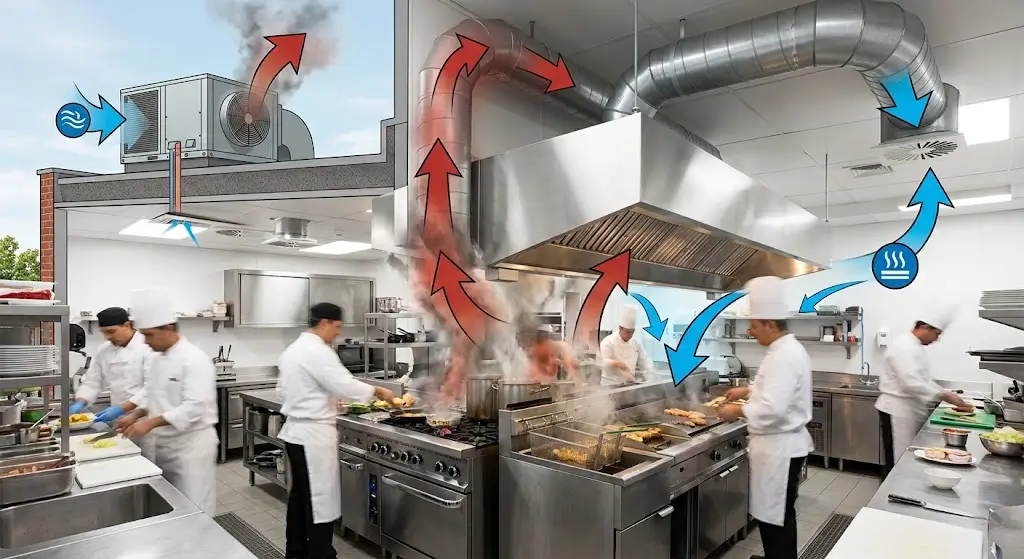
For commercial kitchens, ventilation requirements are considerably more demanding. Restaurants, cafés, and catering businesses produce significantly larger amounts of heat, grease, and smoke throughout the day. Working with a commercial kitchen extractor fan company can help ensure your ventilation system is properly designed and installed to maintain indoor air quality, improve staff comfort, and comply with industry requirements.
Conclusion
Knowing how long to leave your extractor fan on in the kitchen is essential for maintaining good indoor air quality and protecting your home from excess moisture and grease buildup. In most situations, leaving the extractor fan running for 15 to 20 minutes after cooking provides the ideal balance between ventilation and energy efficiency. Heavier cooking methods may require up to 30 minutes for the best results.
A few extra minutes of ventilation can go a long way towards keeping your kitchen cleaner, fresher, and more comfortable. Your extractor fan is one of the simplest yet most effective tools for maintaining a healthier cooking environment, so make sure you allow it enough time to do its job.
Frequently Asked Questions
How long should I leave my extractor fan on after cooking?
For most meals, leaving it on for 15 to 20 minutes is sufficient. Heavy cooking may require up to 30 minutes.
Should I leave my extractor fan running after frying food?
Yes. Frying produces significant amounts of grease and odors, so allowing the extractor fan to run for around 30 minutes is recommended.
Does an extractor fan remove moisture from the kitchen?
Yes. Extractor fans help remove excess humidity and reduce condensation caused by cooking.
Is it expensive to leave an extractor fan on for an extra 20 minutes?
No. Most extractor fans use relatively little electricity, making extended operation inexpensive.
When should I turn my extractor fan on?
It’s best to switch it on a few minutes before you begin cooking.
Why does my kitchen still smell after cooking?
Lingering odors may indicate that your extractor fan isn’t running long enough or requires maintenance.
Can I leave my extractor fan running overnight?
Although most extractor fans can safely operate for extended periods, leaving one on overnight is usually unnecessary for normal cooking activities.