
Blogs

Why Kitchen Hood Placement Matters More Than You Think

Why Kitchen Hood Placement Matters More Than You Think

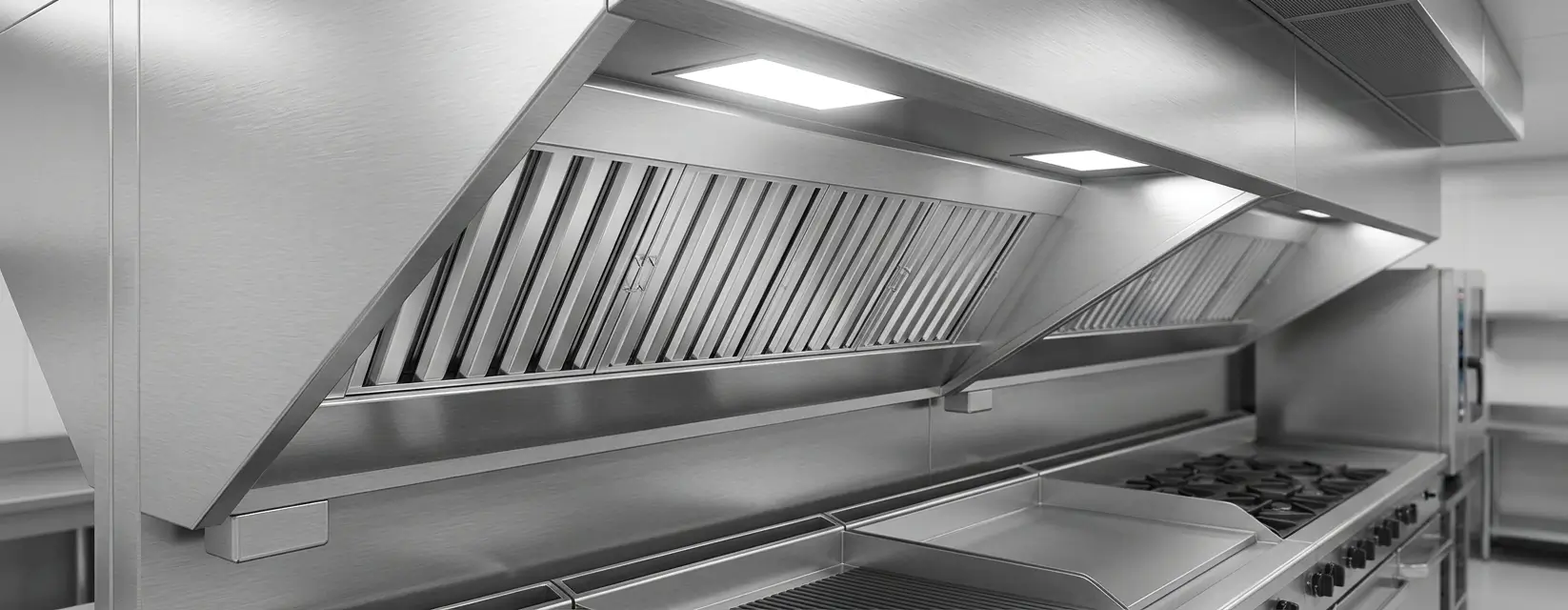
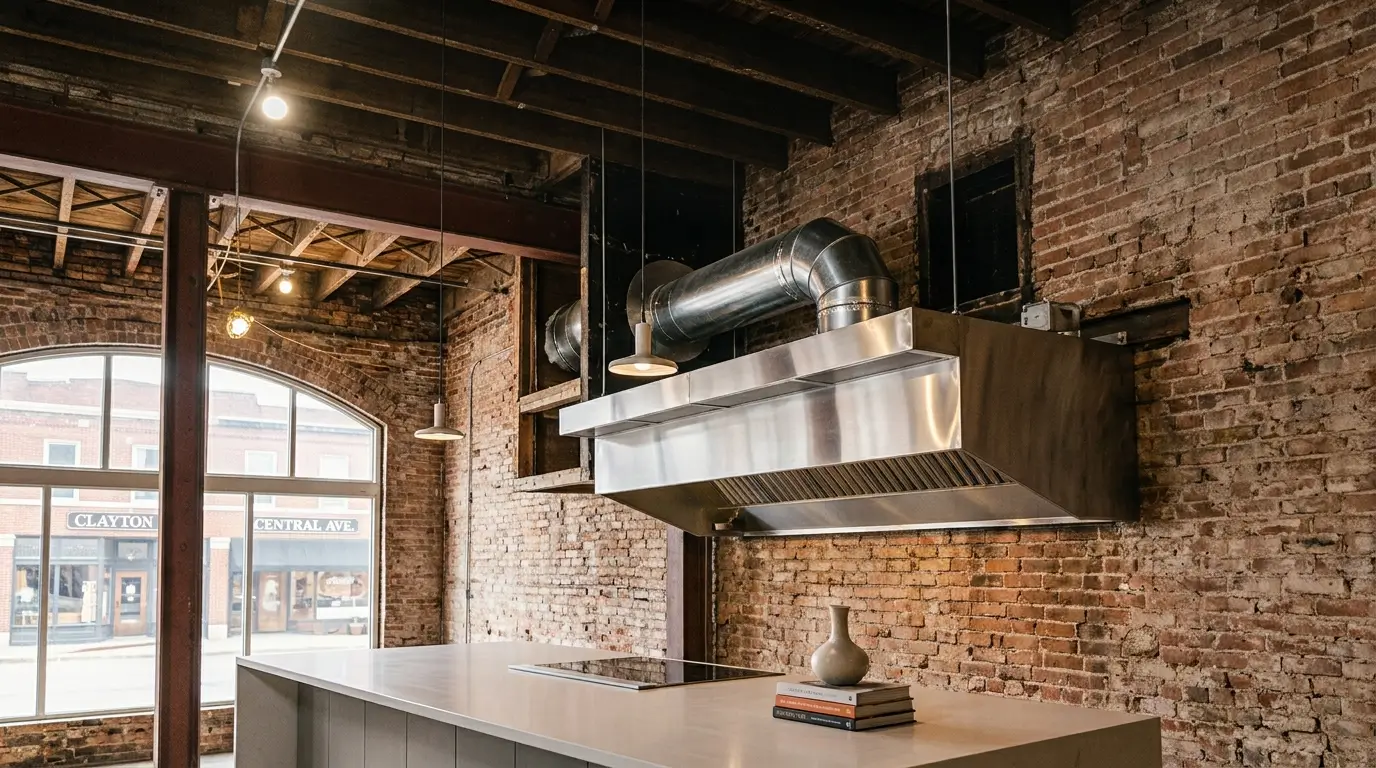
Hood placement affects capture performance as much as, and sometimes more than, hood size or capacity. Mounting height above the cooking equipment, how far the hood overhangs beyond that equipment, where equipment is positioned relative to the hood’s edges, and proximity to doors, HVAC vents, or other airflow sources all shape how effectively a hood actually captures smoke, heat, and grease-laden vapor. A hood placed without accounting for these factors can underperform even when it is correctly sized and properly
Read More »
Retrofitting a Commercial Hood in an Older Clayton Building

Retrofitting a Commercial Hood in an Older Clayton Building

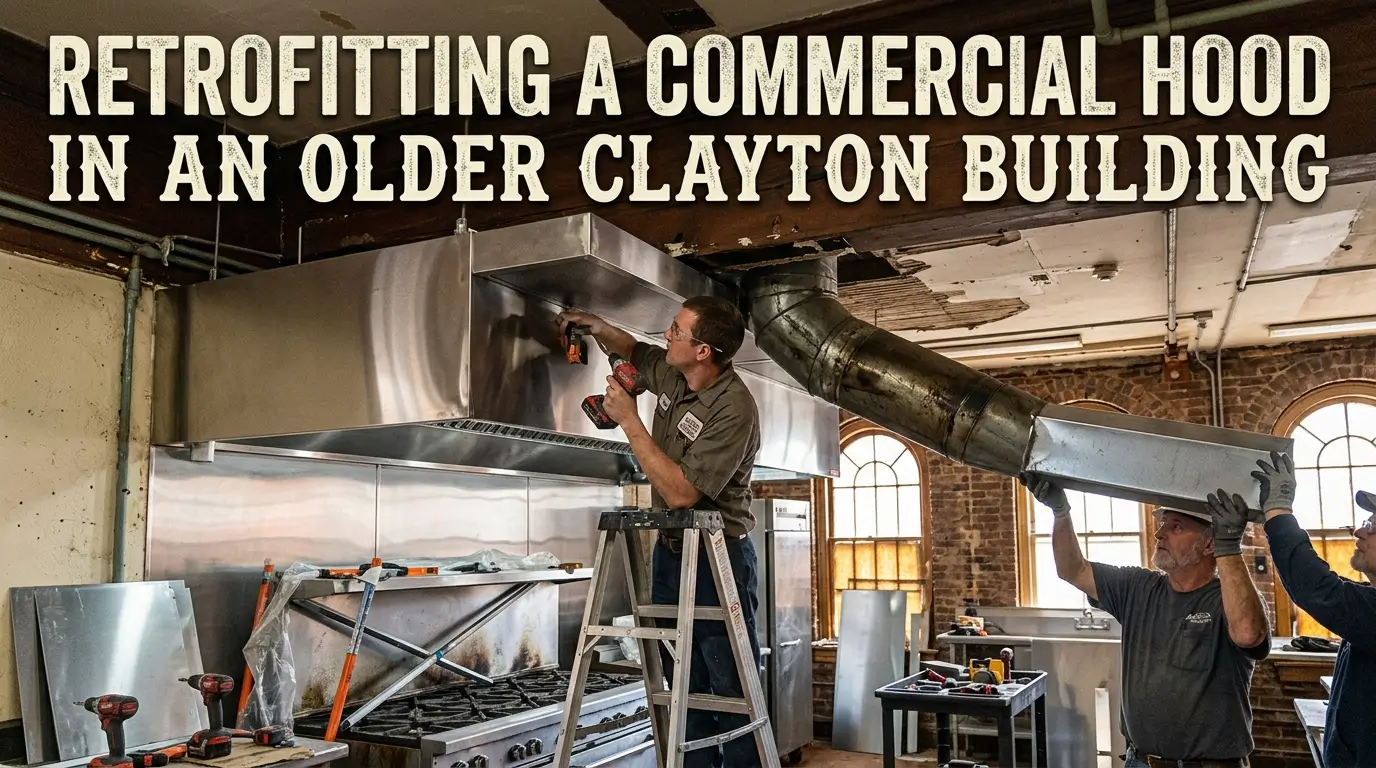
Retrofitting a commercial hood into an older Clayton building presents a different set of challenges than a new construction installation, primarily because the building was not originally designed around a commercial kitchen exhaust system. Structural constraints like ceiling height and joist spacing limit routing options, aging electrical and gas infrastructure may need updates to support the new system, and code compliance triggers can require bringing more of the building up to current standards than the hood project alone might suggest.

Read More »
How Much Hood Capacity Does a Clayton Kitchen Really Need

How Much Hood Capacity Does a Clayton Kitchen Really Need

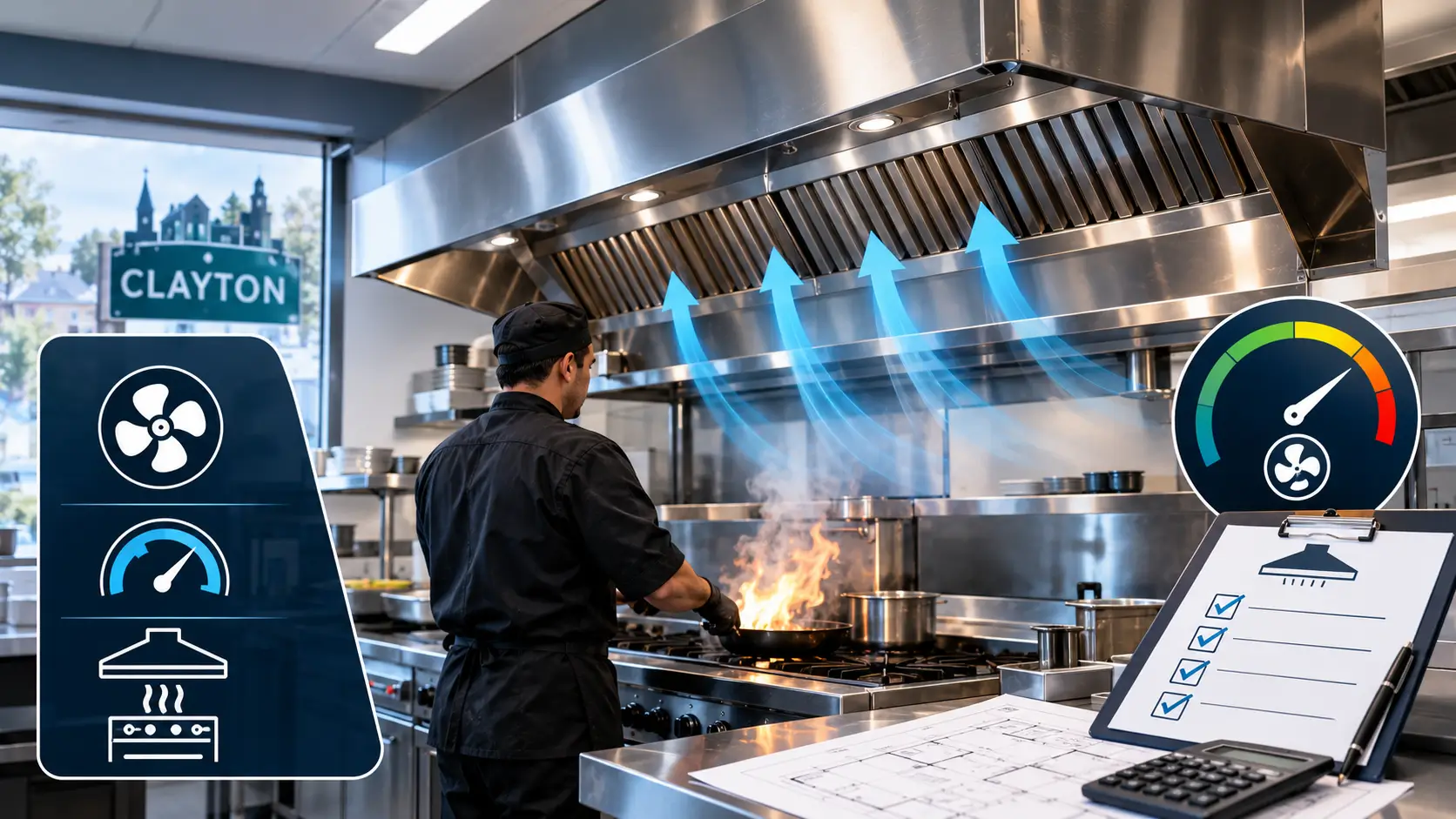
There is no single hood capacity number that applies to every Clayton kitchen, and treating capacity as a fixed figure based on square footage or restaurant type is one of the more common mistakes in hood planning. The right capacity depends on the duty rating of your specific cooking equipment, the style of hood you select, how far it overhangs your equipment, and how your kitchen is laid out. Getting this calculation right is central to a properly planned commercial

Read More »
Choosing the Right Commercial Hood for Your Lewes Kitchen

Choosing the Right Commercial Hood for Your Lewes Kitchen

Choosing the right commercial hood for a Lewes kitchen comes down to matching the hood type to your cooking equipment, selecting a style that fits your kitchen’s layout, and accounting for the coastal exposure that affects how well components hold up over time. A hood that would work perfectly in an inland kitchen with a different equipment lineup is not automatically the right choice for a coastal seafood restaurant or a tight, older-building kitchen closer to downtown Lewes. Getting this

Read More »
7 Things to Check Before Installing a Hood in Lewes

7 Things to Check Before Installing a Hood in Lewes

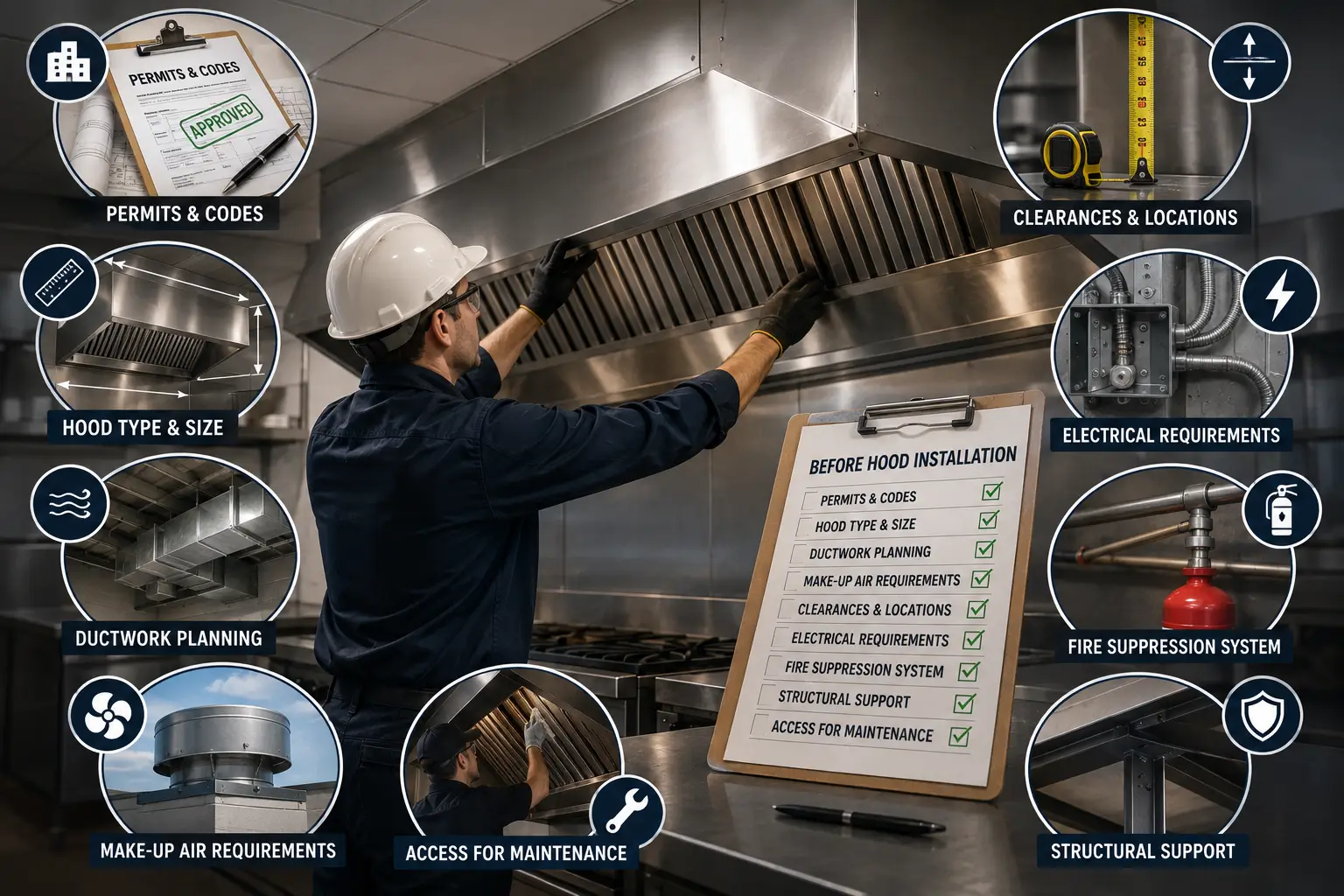
Before installing a commercial kitchen hood in Lewes, seven factors deserve attention: local permitting requirements, the building’s age and structural constraints, coastal exposure and material considerations, your finalized equipment lineup, available roof access and duct routing paths, make-up air needs, and the licensing credentials of whoever is fabricating and installing the system. Working through these before design begins, rather than discovering them mid-project, is what separates a commercial hood installation in Lewes that goes smoothly from one that runs into

Read More »
Lewes Restaurant Owners - Is Your Hood Ready for Inspection

Lewes Restaurant Owners: Is Your Hood Ready for Inspection

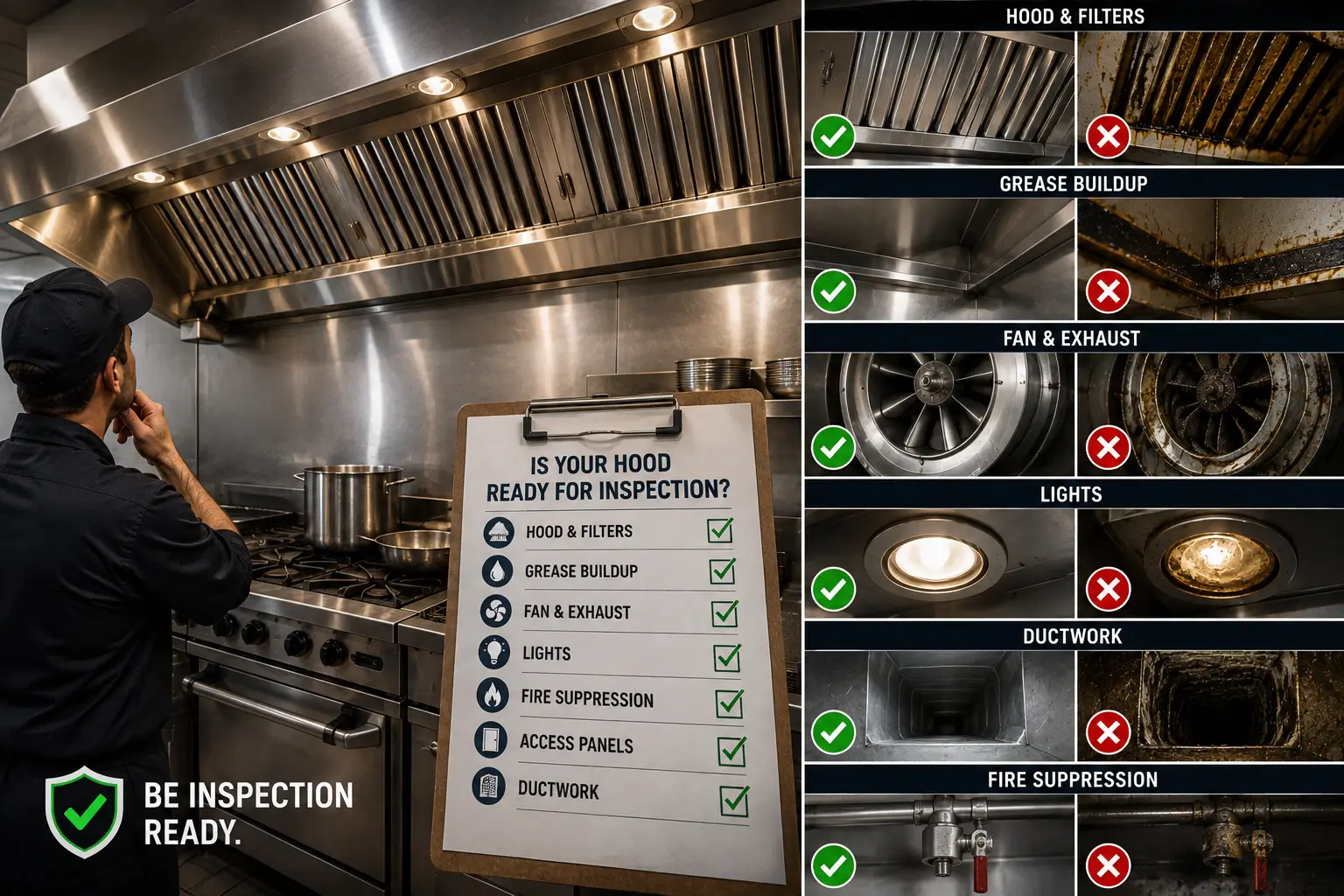
If you run a kitchen in Lewes, the honest way to answer “is your hood ready for inspection” comes down to four areas: your cleaning and maintenance documentation, the physical condition of your hood, duct, and fan, whether your fire suppression coverage still matches your current equipment, and how your system has held up against the wear a coastal, seasonal restaurant environment tends to accelerate. Most kitchens that fail inspection are not dealing with one dramatic issue. They are dealing

Read More »
How Dirty Fan Wheels Affect Commercial Kitchen Ventilation

How Dirty Fan Wheels Affect Commercial Kitchen Ventilation

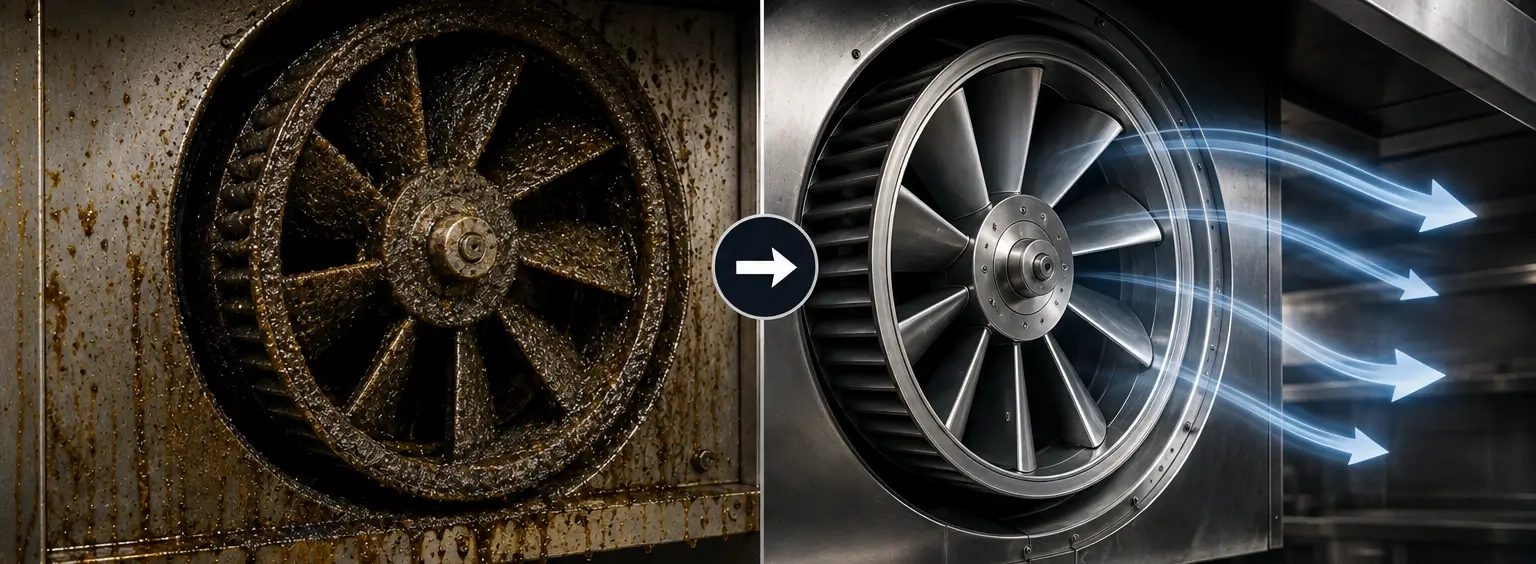
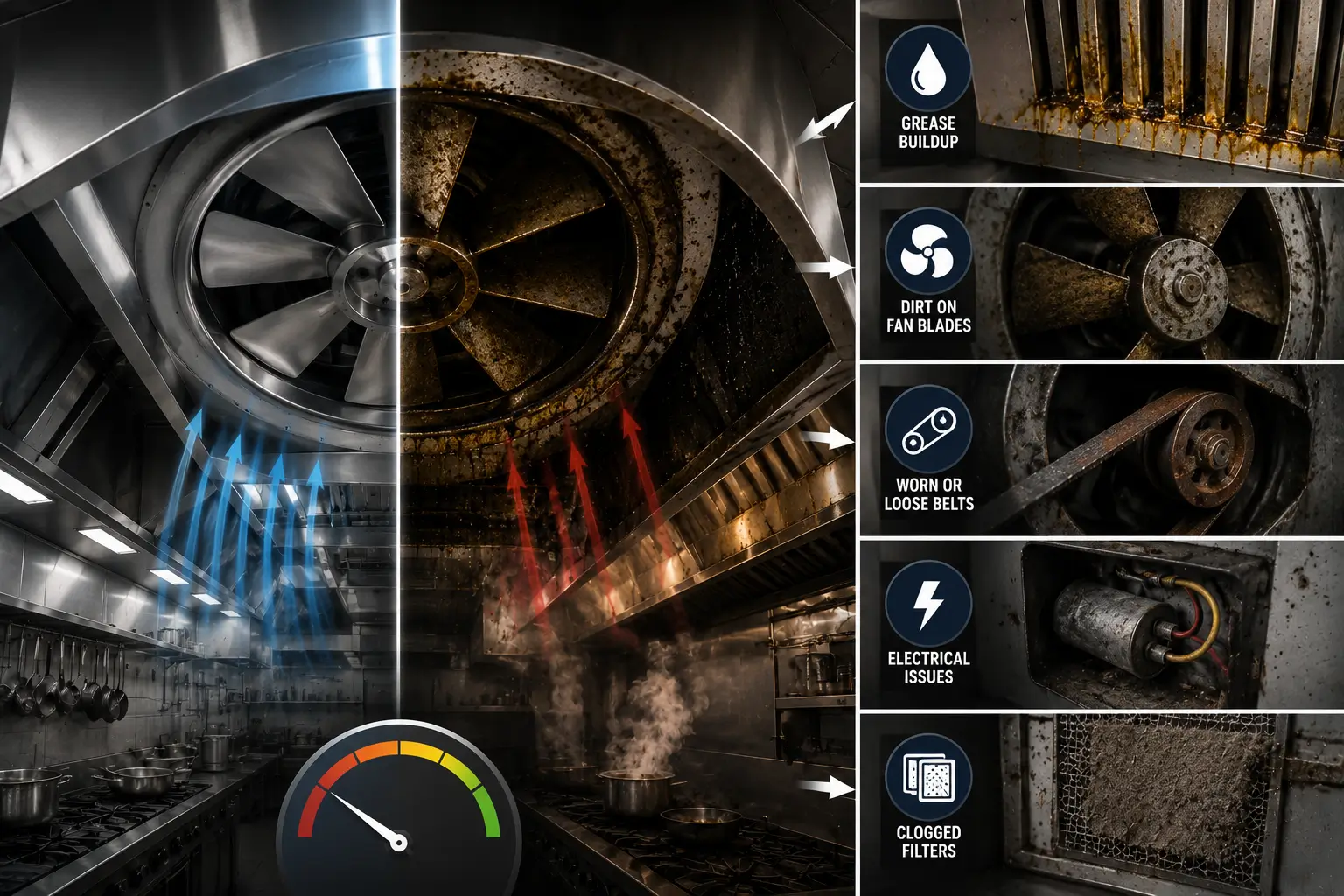
A dirty fan wheel is one of the most overlooked contributors to poor kitchen ventilation, largely because it sits out of sight on the exhaust fan itself rather than somewhere staff would naturally notice buildup. As grease accumulates on the wheel’s blades, it reduces how much air the fan can actually move, throws off the wheel’s balance, increases strain on the motor and bearings, and adds a layer of combustible material to a component that runs continuously during operating hours.

Read More »
Why Commercial Hood Fans Lose Performance Over Time

Why Commercial Hood Fans Lose Performance Over Time

Commercial hood fans lose performance gradually, not suddenly, and the causes are almost always mechanical or environmental rather than a single dramatic failure. Motor and bearing wear, blade imbalance from accumulated grease and debris, aging electrical components, corrosion from weather exposure, and airflow restriction elsewhere in the exhaust system all contribute to a fan that runs noticeably weaker than it did when it was first installed. None of these happen overnight, which is exactly why fan performance tends to decline

Read More »
5 Small Hood Problems That Can Become Expensive Repairs

5 Small Hood Problems That Can Become Expensive Repairs

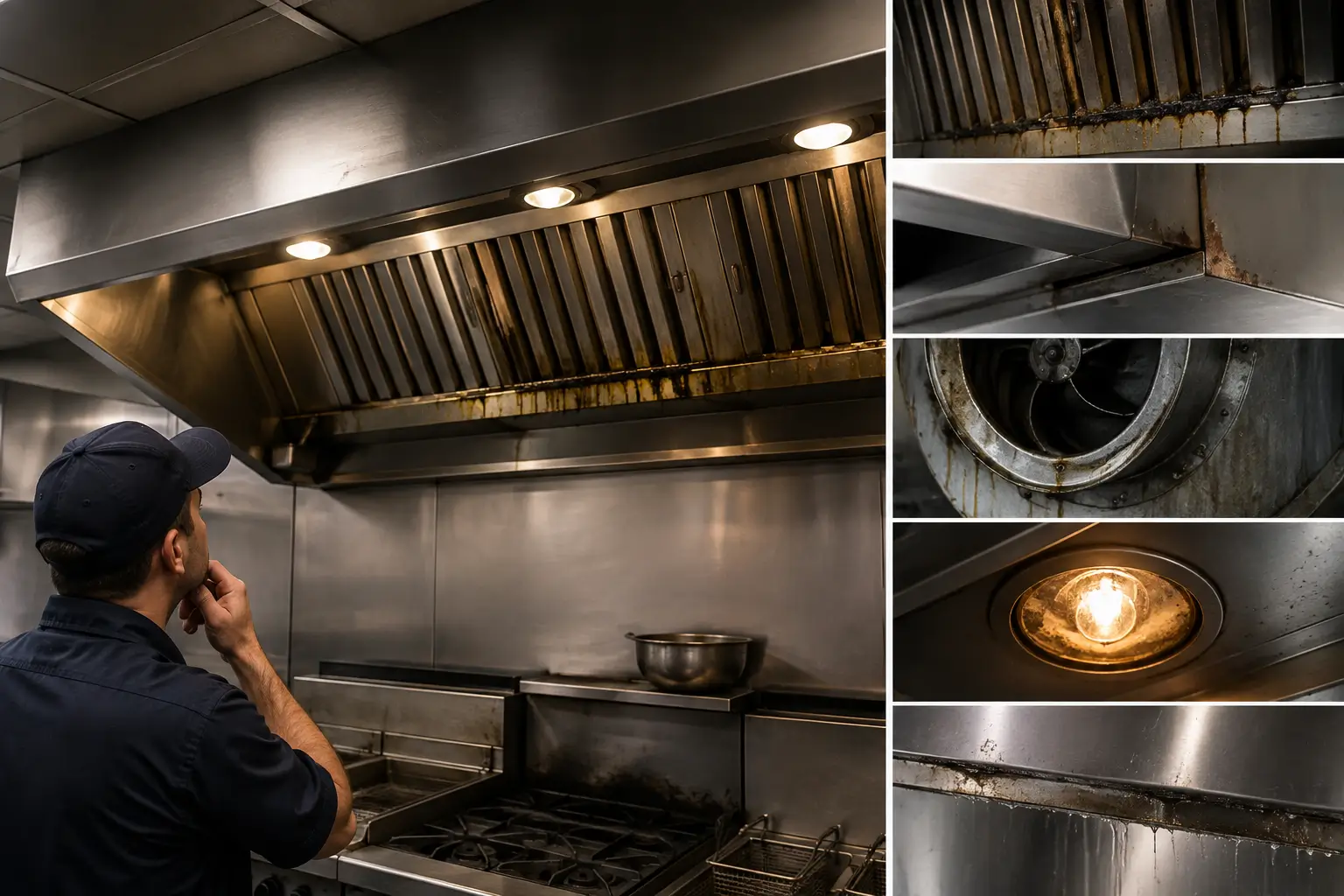
Five small hood issues tend to escalate into expensive repairs more often than any others: loose or worn fasteners and panels, minor grease leaks at duct seams, worn fan bearings or belts, damaged or missing filters, and small corrosion spots on the hood or curb. None of these look urgent when they first appear. That is exactly why they turn into bigger problems, since a minor issue that gets noticed but not addressed tends to keep getting worse until it

Read More »
What Happens If You Skip Commercial Hood Cleaning

What Happens If You Skip Commercial Hood Cleaning

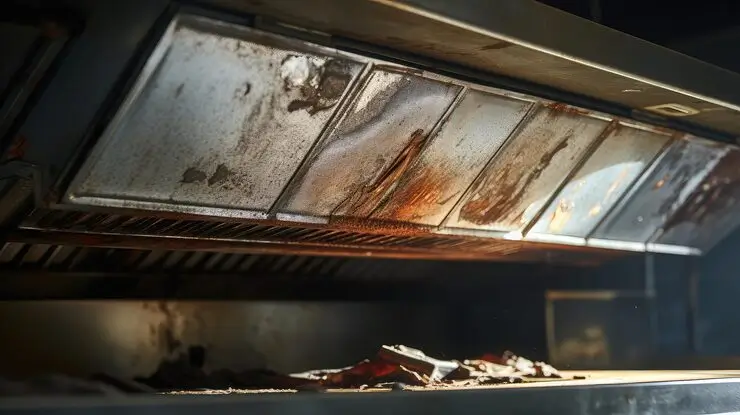
Skipping a scheduled hood cleaning rarely causes an immediate, visible problem, which is exactly why it is so easy to push off. But the consequences do not disappear just because they are not obvious right away. A missed cleaning cycle can lead to a failed inspection, complications with your insurance coverage, a more expensive and more disruptive cleaning job down the road, faster wear on exhaust equipment, and an elevated fire risk that only becomes apparent when it is already

Read More »
How Grease Buildup Affects Kitchen Exhaust Systems

How Grease Buildup Affects Kitchen Exhaust Systems

Grease buildup does more than sit inside a hood waiting to be cleaned. It physically restricts airflow through the system, forces the exhaust fan to work harder than it was designed to, corrodes ductwork from the inside over time, and creates a fire risk that grows more serious the longer it accumulates. Each of these effects touches a different part of the exhaust system, but they all stem from the same source: grease-laden vapor that was never fully captured and

Read More »
How Often Should Commercial Kitchen Hoods Be Cleaned

How Often Should Commercial Kitchen Hoods Be Cleaned

NFPA 96 sets cleaning frequency for commercial kitchen exhaust systems based on the type and volume of cooking a kitchen does, not a single universal schedule that applies to every restaurant. Systems serving solid fuel cooking operations generally need cleaning monthly. Systems serving high-volume cooking operations, including 24-hour kitchens and wok cooking, are typically cleaned quarterly. Moderate-volume kitchens usually fall on a semiannual schedule, and low-volume operations, such as seasonal facilities or kitchens with limited cooking hours, are often cleaned

Read More »
What Inspectors Check on a Restaurant Fire Suppression System

What Inspectors Check on a Restaurant Fire Suppression System

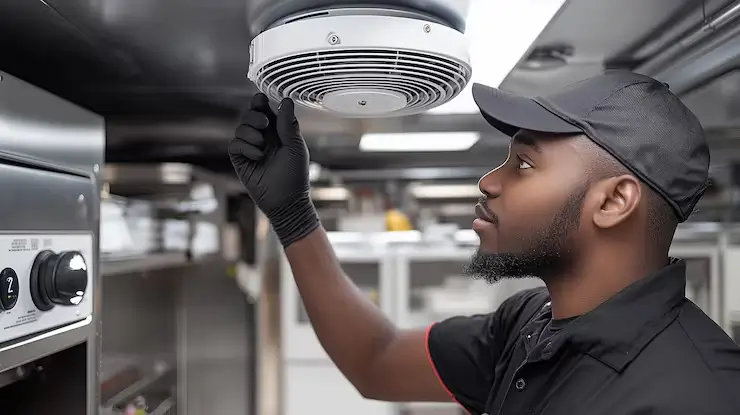
Inspectors evaluating a restaurant fire suppression system typically check nozzle coverage against the current equipment lineup, cylinder or tank service dates, the condition of piping and fittings, whether the gas and electrical shutoff interlock actually functions, accessibility of the manual pull station, and whether inspection tags and certification documentation are current and accurate. Knowing what falls under each of these categories makes it much easier to walk into an inspection with confidence rather than uncertainty about what might get flagged.

Read More »
Does Changing Cooking Equipment Affect Fire Suppression

Does Changing Cooking Equipment Affect Fire Suppression

Yes, changing cooking equipment can absolutely affect fire suppression coverage, and in many cases it does, even when the change seems minor from the kitchen’s perspective. Fire suppression nozzles are positioned and rated based on the specific equipment underneath them, including what type of appliance it is, how much heat it generates, and where it sits relative to other equipment. Swap, add, move, or upgrade a piece of equipment, and the suppression system that was compliant before the change may

Read More »

Common Fire Suppression Integration Problems to Avoid

The most common fire suppression integration problems in commercial kitchens come down to a handful of recurring issues: nozzles that do not fully cover the appliances they are meant to protect, a missing or improperly wired shutoff interlock between the suppression system and gas or electrical service, hood and suppression system designs finalized out of sequence with each other, and inspection access that was never planned into the layout. Each of these is preventable, and each one tends to trace

Read More »

Ready to Enhance Your Kitchen's Safety & EFFiciency?

Get in touch with us today for a free consultation. Our team of experts will work with you to design and install a ventilation system that meets all code requirements and keeps your kitchen operating at peak performance.

Fill the form below to get started

Scroll to Top