Choosing the right commercial hood for a Lewes kitchen comes down to matching the hood type to your cooking equipment, selecting a style that fits your kitchen’s layout, and accounting for the coastal exposure that affects how well components hold up over time. A hood that would work perfectly in an inland kitchen with a different equipment lineup is not automatically the right choice for a coastal seafood restaurant or a tight, older-building kitchen closer to downtown Lewes. Getting this decision right from the start is what Lewes hood installation experts actually help with, beyond just fabricating and installing whatever hood a generic spec sheet suggests.
Working through these considerations before committing to a specific hood design helps avoid a system that technically functions but never quite fits the kitchen it was built for.
Start With What You’re Actually Cooking
The single biggest factor in choosing the right hood is the equipment it needs to serve. Hoods handling grease-laden vapor from fryers, griddles, or charbroilers fall under Type I classification and require grease-specific fire suppression and duct construction. Hoods serving equipment that produces primarily heat and steam, like dishwashers or certain ovens, fall under Type II classification with a different set of requirements. Choosing the wrong classification, or trying to make one hood type serve equipment it was not designed for, creates problems that surface later during inspection rather than immediately during installation.
For restaurants planning a seafood-heavy menu, a common feature of Lewes’ coastal dining scene, this often means combining Type I coverage for fryers and grills with careful planning around any steam-producing equipment used for shellfish preparation, which may fall under different requirements depending on the specific equipment involved.
Hood Style Should Match Your Kitchen Layout
Beyond classification, hoods come in different physical styles suited to different kitchen configurations. Wall-mounted canopy hoods work well for a traditional cooking line positioned against a wall, which describes a large share of standard restaurant kitchen layouts. Island canopy hoods are designed for equipment positioned away from walls, often used in open-kitchen concepts where diners can see the cooking line directly, a layout choice some newer Lewes restaurants have leaned into as part of a more visible, experience-driven dining concept. Backshelf and pass-over hoods serve a narrower purpose, typically covering equipment mounted lower or positioned differently than a standard cooking line.
The right style depends entirely on how your kitchen is laid out and how your equipment is positioned within that space, which is why hood style should be decided after your kitchen layout is finalized, not before.
Capture Efficiency Depends on More Than Hood Size
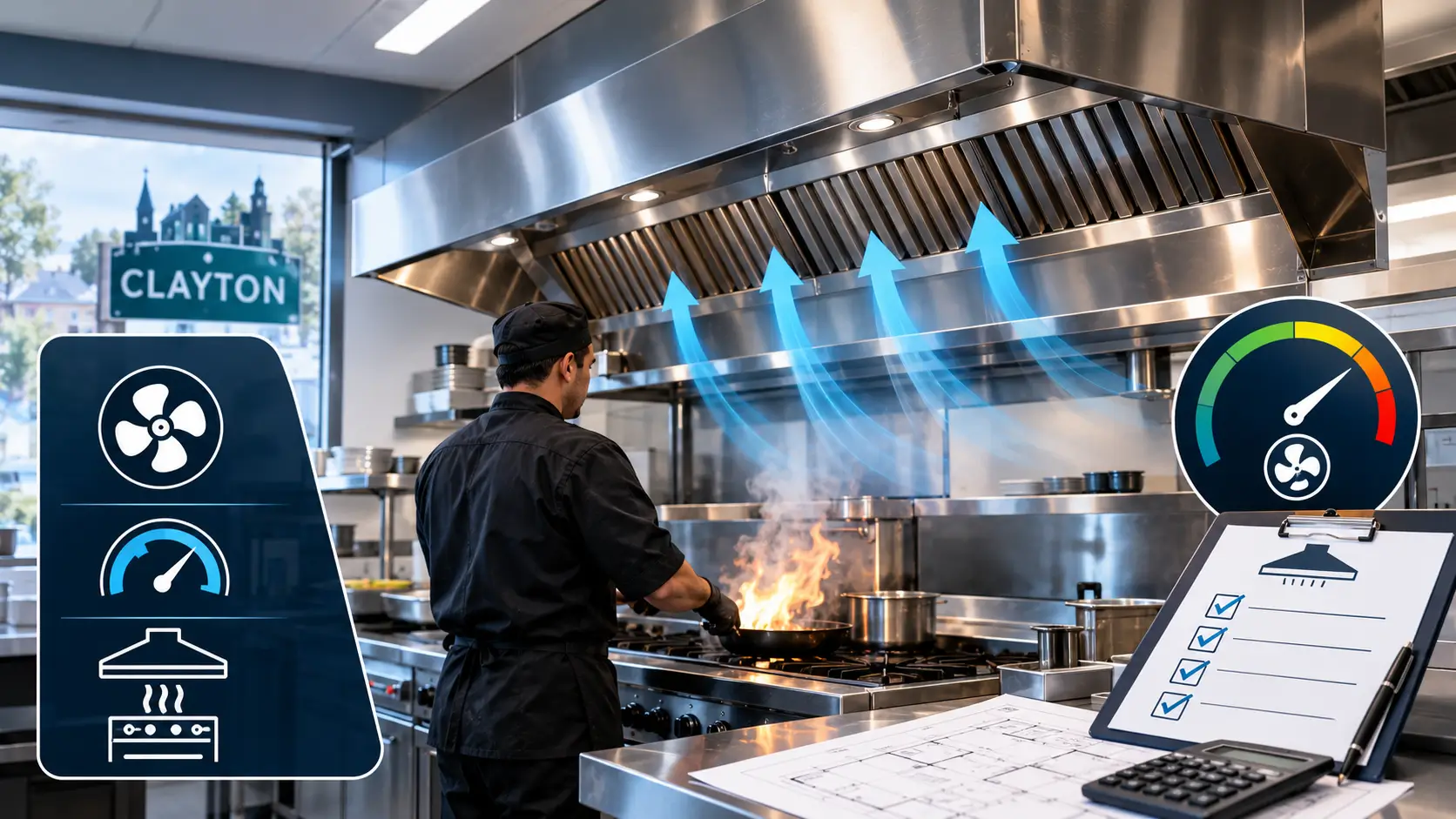
A hood that appears large enough on paper does not automatically capture smoke and heat effectively if its design does not account for how air actually moves through your specific kitchen. Capture efficiency depends on factors like the hood’s overhang relative to the equipment beneath it, how air enters and exits the space, and whether make-up air is properly balanced against the hood’s exhaust volume. A hood chosen based purely on square footage without considering these airflow dynamics can end up underperforming even though it looks appropriately sized.
This is one of the areas where a generic, off-the-shelf approach to hood selection tends to fall short, since capture performance is a design outcome, not just a function of overall dimensions.
Material and Finish Matter More in a Coastal Environment
Because Lewes sits directly on the Delaware coast, hood and exhaust components are exposed to salt air and ocean moisture at a higher rate than they would be further inland. This affects which stainless steel grades and finishes hold up best over the system’s service life, since a specification adequate for an inland kitchen may show accelerated wear in this environment, particularly on exterior components like the exhaust fan and roof curb.
Raising this consideration during hood selection, rather than assuming any standard stainless finish will perform the same way regardless of location, is a meaningful part of choosing a system built to actually last in this specific environment.
Custom Fabrication Versus Standard Sizing
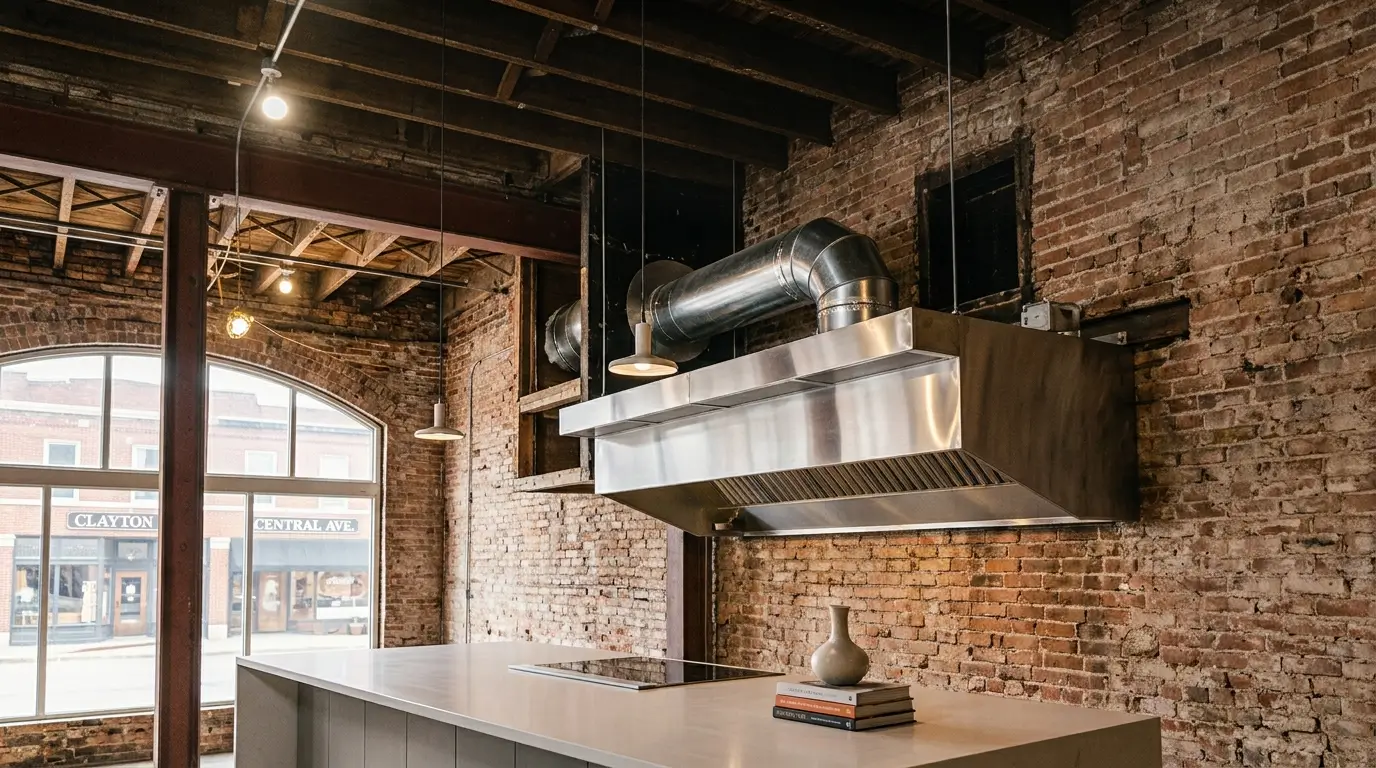
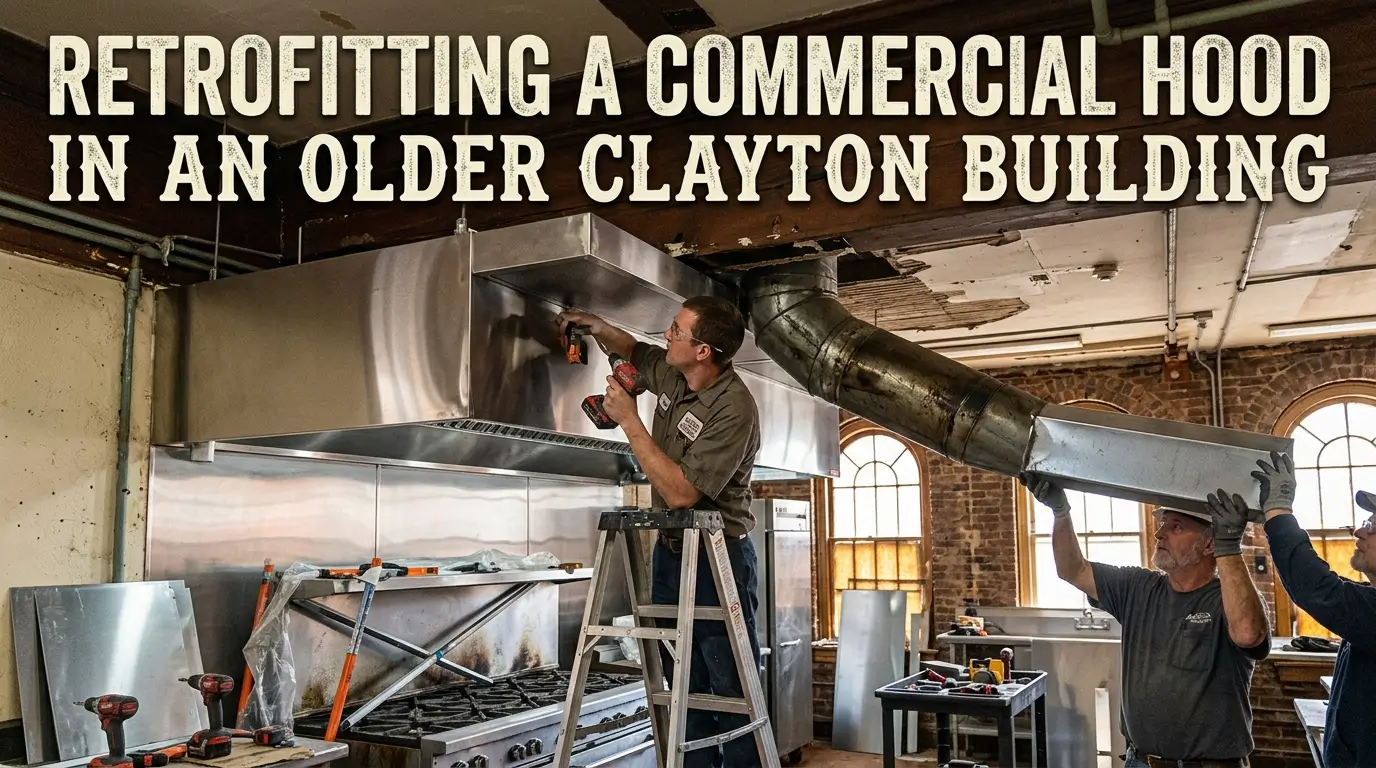
Many commercial kitchens, particularly those in older Lewes buildings with non-standard dimensions or unique layout constraints, do not fit neatly into standard, pre-manufactured hood sizing. Custom fabrication allows the hood to be built to match your kitchen’s actual equipment lineup and physical space, rather than forcing a standard unit into a layout it was never designed for.
This distinction matters most for kitchens with tighter ceiling heights, irregular equipment spacing, or structural constraints common in older or historic buildings, where a standard hood size may not actually fit the space correctly without compromises that affect performance.
Code Classification and Local Permitting Fit
Whatever hood style and classification you land on ultimately needs to align with what your local jurisdiction requires, including any Sussex County or Delaware-specific permitting steps layered on top of NFPA 96 and IMC baselines. Choosing a hood without accounting for how it will be reviewed and permitted locally can lead to design changes later in the process, after fabrication has already begun, which is considerably more disruptive than confirming code alignment during initial selection.
Why Local Fabrication Experience Changes the Outcome
A fabricator with specific experience serving Lewes kitchens understands how coastal exposure, common building constraints, and local permitting patterns tend to interact, which allows hood selection to be informed by conditions this area actually presents rather than general industry assumptions. This is the difference between a hood chosen from a standard catalog and one selected specifically for the kitchen it will serve.
Why This Decision Benefits From a Site Assessment
Because hood selection depends on your specific equipment, layout, and building, the most reliable way to choose correctly is a professional site assessment rather than working from a generic hood specification. A site assessment evaluates your actual kitchen and equipment plans, accounting for the coastal and structural factors relevant to your specific location, before any fabrication decisions are made.
Coordinating Hood Selection With the Rest of Your Build-Out
Choosing a hood typically happens alongside broader kitchen planning, including equipment purchasing and general construction decisions. It is worth being clear that coordinating those related decisions across the project ultimately falls to the owner or the general contractor managing the build. A fabricator’s role is to help you select and build a hood system suited to your specific kitchen, not to manage the broader equipment and construction planning process.
Getting the Choice Right From the Start
The right hood for your Lewes kitchen is not a generic, one-size-fits-all decision. It depends on your equipment, your kitchen’s layout, how well the design accounts for actual airflow, and whether the materials chosen will hold up in a coastal environment. Taking the time to work through these factors before committing to a design is what leads to a hood system that performs well and lasts, rather than one that technically meets code but never quite fits the kitchen it was built for.
Frequently Asked Questions
How do I know if my kitchen needs a Type I or Type II hood?
The classification depends on whether your equipment produces grease-laden vapor, like fryers and grills, or primarily heat and steam, like dishwashers. Some kitchens need both types for different equipment, which is why classification should be evaluated equipment by equipment.
What’s the difference between a wall-mounted and island canopy hood?
Wall-mounted hoods suit a cooking line positioned against a wall, while island canopy hoods are designed for equipment positioned away from walls, often used in open-kitchen layouts where the cooking line is visible to diners.
Does hood size alone determine how well it captures smoke and heat?
No. Capture efficiency also depends on the hood’s overhang relative to the equipment, how air moves through the kitchen, and whether make-up air is properly balanced, not just the hood’s overall dimensions.
Why does coastal exposure affect hood material choices?
Salt air and ocean moisture accelerate wear on exterior components more than an inland environment would, which affects which stainless steel grades and finishes hold up best over the system’s service life in a location like Lewes.
Is custom fabrication necessary for every Lewes restaurant?
Not necessarily, but it becomes more important for kitchens with non-standard dimensions or structural constraints, which is common in older buildings, since a standard hood size may not fit the space correctly without performance compromises.
Does hood selection affect local permitting in Lewes?
Yes. Whatever hood is chosen needs to align with local permitting requirements layered on top of NFPA 96 and IMC baselines, which is why code alignment should be confirmed during selection rather than after fabrication has already begun.