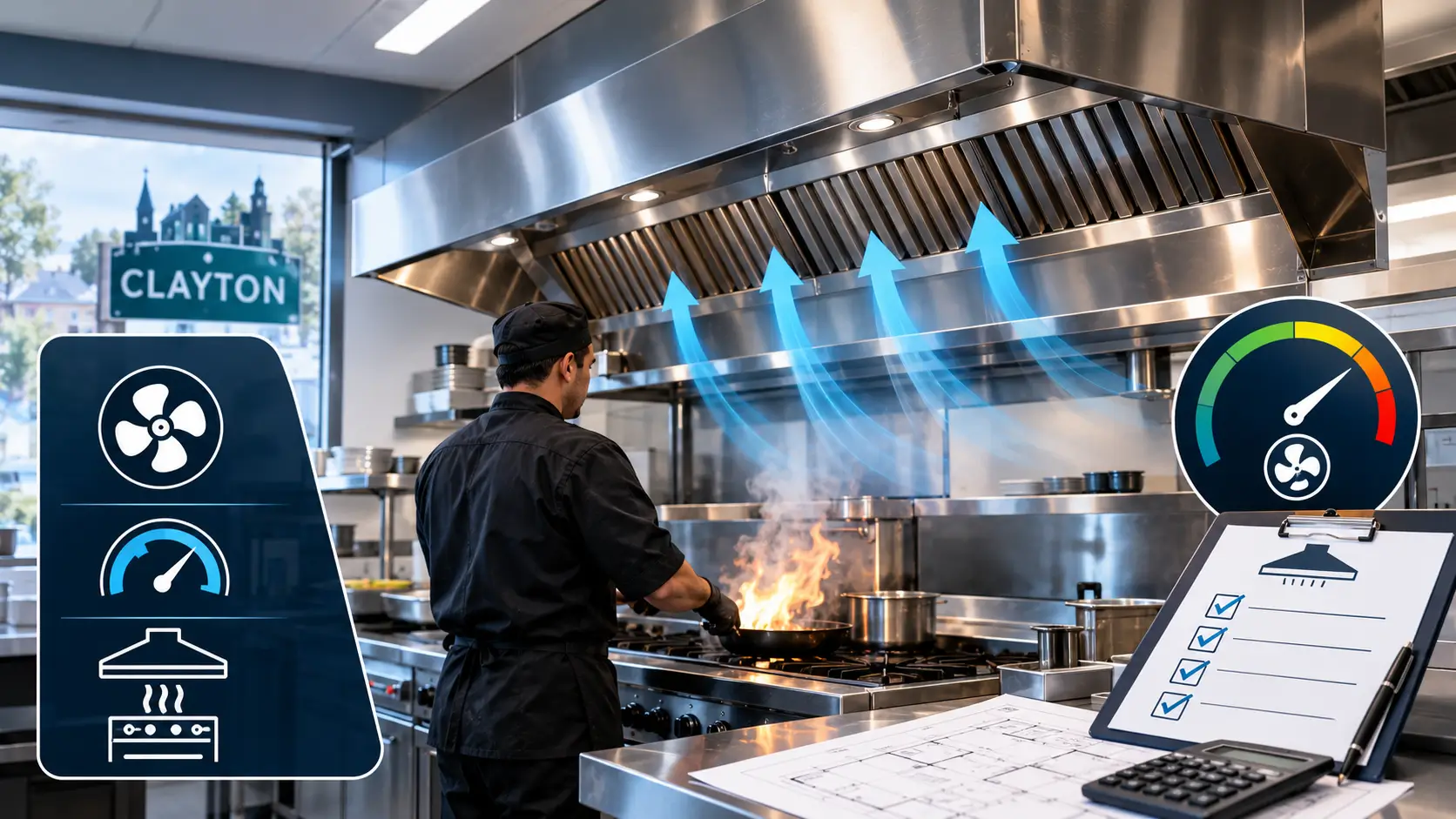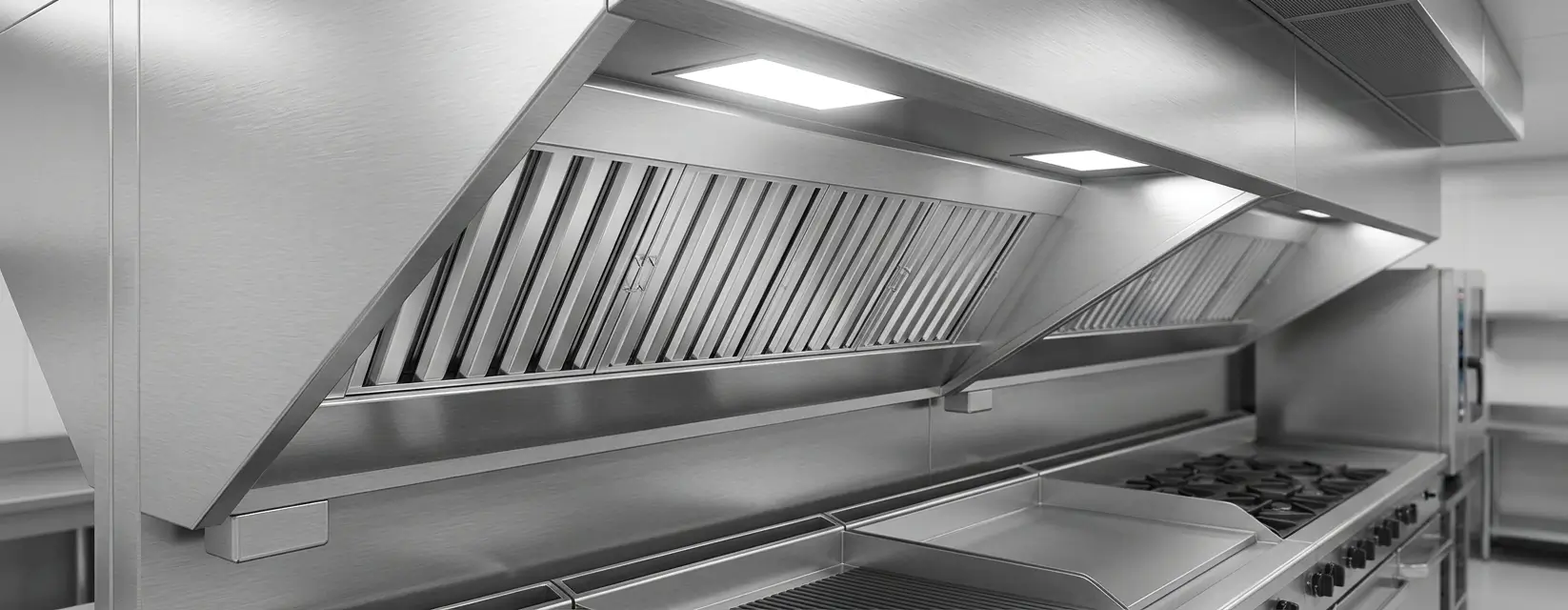

Hood placement affects capture performance as much as, and sometimes more than, hood size or capacity. Mounting height above the cooking equipment, how far the hood overhangs beyond that equipment, where equipment is positioned relative to the hood’s edges, and proximity to doors, HVAC vents, or other airflow sources all shape how effectively a hood actually captures smoke, heat, and grease-laden vapor. A hood placed without accounting for these factors can underperform even when it is correctly sized and properly fabricated, which is why placement deserves as much attention during planning as the hood itself. This is exactly the kind of detail that separates a properly planned commercial hood installation in Clayton, Delaware from one where placement was treated as an afterthought.
Understanding why placement matters this much helps explain why the same hood, installed differently, can produce noticeably different results in two otherwise similar kitchens.
Mounting Height Directly Affects Capture Performance
The distance between a hood and the cooking surface below it plays a direct role in how effectively the hood captures rising heat and vapor. Mount a hood too high above the equipment, and heat and smoke have more room to disperse into the surrounding kitchen air before reaching the hood’s capture zone. Mount it too low, and it can interfere with staff working underneath or create clearance issues relative to the equipment’s heat output.
The right mounting height depends on the specific equipment beneath the hood and its heat output, which means this is not a measurement that can be applied generically across different kitchens or even different sections of the same cooking line.
Overhang Determines How Much Margin the Hood Has
A hood’s overhang, meaning how far it extends beyond the footprint of the equipment it serves, provides a margin of capture area that accounts for how heat and vapor actually rise and drift rather than moving in a perfectly straight vertical line. Minimal overhang leaves little room for error, meaning even small air currents in the kitchen can carry smoke or vapor past the hood’s capture zone before it is pulled in.
Generous overhang, by contrast, gives the hood more room to capture vapor that drifts slightly off-center, which is one of the reasons overhang and mounting height need to be considered together rather than as separate, unrelated specifications.
Equipment Position Within the Hood’s Coverage Area
Where individual pieces of equipment sit relative to the hood’s edges matters just as much as whether the hood is large enough to technically cover the entire cooking line. Equipment positioned near the outer edge of a hood’s coverage area is more vulnerable to losing capture performance than equipment centered well within it, particularly if that edge equipment also happens to be a higher-heat-output appliance like a charbroiler or high-duty fryer.
This is a common oversight in kitchens where equipment placement was finalized without close coordination with the hood’s actual coverage boundaries, resulting in a hood that technically spans the full cooking line but does not perform evenly across it.
Nearby Airflow Sources Can Undermine Hood Performance
A hood does not operate in a sealed environment. Doors that open frequently, HVAC supply vents positioned nearby, or even windows near the cooking line can introduce cross-drafts that disrupt the hood’s capture zone, pulling smoke and vapor away from the hood before it can be exhausted properly. A hood placed without accounting for these nearby airflow sources can underperform even if its mounting height, overhang, and capacity are all otherwise correct.
This is one of the less obvious placement considerations, since it depends on the broader layout of the kitchen and building, not just the equipment the hood is directly serving.
Code Clearance Requirements Tied to Placement
Beyond performance considerations, hood placement is also governed by code requirements around clearance from combustible materials and how the hood integrates with the fire suppression system it works alongside. Placement decisions made purely around capture performance, without accounting for these clearance requirements, can create a design that needs to be revised once code compliance is factored in, which is why placement should be evaluated against both performance and code requirements from the start.
Why Fixing Placement After Installation Is Difficult
Correcting hood placement after installation is rarely as simple as adjusting a bracket. Depending on what needs to change, it can involve modifying ductwork, adjusting structural mounting points, or in some cases relocating equipment to better align with the hood’s actual coverage area. This is considerably more disruptive and costly than getting placement right during initial planning, which is part of why placement deserves the same level of attention as hood sizing and capacity during the design phase.
Why Placement Should Be Planned Alongside Kitchen Layout
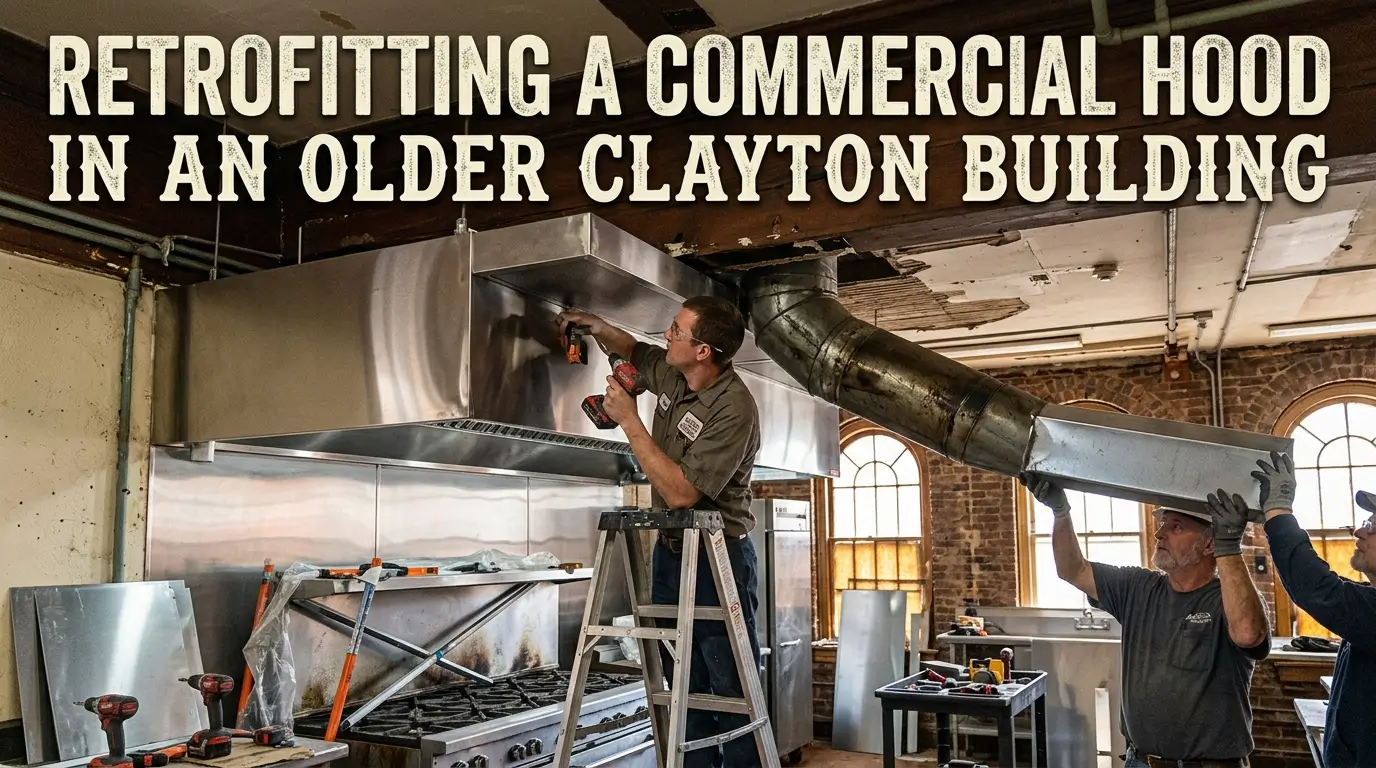
Because placement depends on equipment position, mounting height, overhang, and nearby airflow sources, it works best as part of an integrated kitchen layout planning process rather than a decision made in isolation after equipment and hood specifications have already been finalized separately. Kitchens in Clayton and the surrounding Kent County area, whether newly built or operating in older, repurposed buildings, benefit from having placement evaluated as part of the same planning process that determines equipment positioning and overall kitchen flow.
Why This Requires Licensed, Experienced Evaluation
Determining correct hood placement requires understanding how mounting height, overhang, equipment output, and surrounding airflow interact as a system, not simply following a general rule of thumb. Commercial hood work is specialized, code-governed work, and in several states, purchasing a commercial hood and exhaust system legally requires working with a company holding proper HVACR licensing, reflecting how closely placement decisions are tied to both performance and code compliance.
Why a Site Assessment Should Include Placement, Not Just Sizing
A thorough site assessment evaluates more than just what capacity a hood needs. It should also account for exactly where the hood will sit relative to equipment, mounting height, overhang, and any nearby airflow sources that could affect performance. Treating placement as part of the same evaluation as sizing, rather than a secondary detail addressed later, produces a design far more likely to perform as intended once installed.
Coordinating Placement With the Rest of Your Kitchen Design
Hood placement decisions often intersect with broader kitchen layout planning, including equipment purchasing and general construction. It is worth being clear that coordinating those related decisions across the project ultimately falls to the owner or the general contractor managing the build. A fabricator’s role is to determine and execute the right placement for your specific equipment and kitchen, not to manage the broader layout and construction planning process.
Getting Placement Right From the Start
Hood placement is not a minor detail to finalize after the more important decisions have already been made. Mounting height, overhang, equipment positioning, and nearby airflow sources all shape whether a hood actually performs the way it was designed to, and getting these factors right from the start avoids the far more disruptive process of correcting placement after installation is already complete.
Frequently Asked Questions
Why does mounting a hood too high above the equipment reduce performance?
Greater distance between the hood and the cooking surface gives rising heat and vapor more room to disperse into the surrounding kitchen air before reaching the hood’s capture zone, which reduces how effectively the hood pulls that vapor in.
What does hood overhang actually do?
Overhang extends the hood’s coverage beyond the equipment’s footprint, providing a margin that accounts for how heat and vapor naturally drift rather than rising in a perfectly straight line. Minimal overhang leaves less room for error from air currents in the kitchen.
Can equipment placed at the edge of a hood’s coverage area actually lose performance?
Yes. Equipment positioned near the outer edge of a hood’s coverage is more vulnerable to reduced capture than equipment centered within it, particularly if that edge equipment also produces higher heat output than the rest of the cooking line.
How can something like a nearby door affect hood performance?
Frequently opened doors, HVAC vents, or windows near the cooking line can introduce cross-drafts that disrupt the hood’s capture zone, pulling smoke and vapor away before the hood can properly exhaust it, even when the hood itself is otherwise correctly designed.
Is it expensive to fix hood placement after installation?
It can be. Correcting placement often involves modifying ductwork or structural mounting points, or relocating equipment, which is considerably more disruptive than accounting for placement correctly during the initial design and installation planning process.
Should hood placement be decided before or after finalizing equipment layout?
They should be planned together. Placement depends directly on where equipment sits, its heat output, and surrounding airflow sources, so treating placement and equipment layout as one integrated decision produces better results than finalizing them separately.