
COMMERCIAL HOOD INSTALLATION IN CLAYTON, DE
If you run a restaurant, bakery, café, or commercial kitchen in Clayton, your ventilation system is not optional. It is a critical part of your business. A properly installed commercial hood system keeps your kitchen safe, compliant, and efficient.
We provide professional commercial hood installation in Clayton, Delaware, helping businesses meet local building codes, fire safety regulations, and health standards while improving air quality and kitchen performance.
YOUR KITCHEN HOOD IS NOT JUST ANOTHER APPLIANCE
Why Commercial Hood Installation Matters for Your Business
A commercial kitchen produces heat, grease, smoke, and airborne contaminants. Without a proper exhaust hood system, these can build up quickly and create serious risks.
A well-installed system helps you:
- Maintain safe air quality for staff and customers
- Prevent grease buildup that can lead to fire hazards
- Meet Delaware health and fire code requirements
- Improve kitchen efficiency and comfort
- Pass inspections without costly delays
In Delaware, ventilation hood systems must be designed to prevent grease and condensation buildup on surfaces . This makes professional installation essential.
YOUR KITCHEN HOOD IS NOT JUST ANOTHER APPLIANCE
Here is the truth that every restaurant owner in Clayton, Delaware figures out pretty quickly: the day your hood stops working, or worse, the day an inspector flags it as non-compliant, everything else stops working too. The fryers go cold. The line goes quiet. And the doors stay closed.
At CRS Hoods, we have seen it happen more times than we care to count. A restaurant opens with a hood that was installed by the lowest bidder, or by a general contractor who does not specialize in kitchen ventilation, and six months later the owner is scrambling to fix problems that should never have existed. We built this company to make that story go away.
We specialize in commercial hood installation for restaurants, cafes, ghost kitchens, food service operations, and institutional kitchens throughout Clayton, DE and the greater Kent County area. Every job we take on is NFPA 96-compliant, properly permitted through Delaware’s local authorities, and built to hold up long after the invoice is paid.
CLAYTON, DELAWARE IS GROWING. SO IS THE DEMAND FOR PROPER HOOD WORK.
Clayton sits right along Route 1 in Kent County, about 12 minutes from Dover, with easy access to both Smyrna to the north and the communities spreading toward the coast. The town has a real mix of longtime local businesses and newer commercial developments, and the food service scene reflects that.
What a lot of operators discover when they set up shop in Clayton is that Delaware takes its commercial kitchen codes seriously. The State Division of Fire Prevention enforces NFPA 96 statewide. Kent County has its own building permit process. And the State Fire Marshal’s office has to sign off on any installation that includes a fire suppression system, which for most Type I hood jobs means every installation.
Getting all of that right on the first try is not something you want to leave to a contractor who is guessing. CRS Hoods does this work every day, in this state, with a team that knows Delaware’s permit process the way a local should.
WHAT CRS HOODS DOES FOR CLAYTON BUSINESSES
We are not a one-hood-fits-all kind of operation. The kitchen at a Clayton tavern is a completely different animal from a ghost kitchen commissary or a school cafeteria. Here is a look at what we bring to the table.
Type I Hoods (Grease Hoods)
If your cooking line has fryers, ranges, griddles, charbroilers, woks, or broilers, you need a Type I hood. Full stop. It captures grease-laden vapors, smoke, and heat before they get a chance to coat your ductwork and become a fire hazard. CRS Hoods handles Type I installations from measurement and design all the way through final inspection, including:
- Stainless steel and commercial-grade steel hood sizing and installation
- Baffle grease filters and removable grease cups
- Grease duct fabrication with proper slope, cleanout access doors, and clearance from combustibles
- Upblast exhaust fan installation with hinged access kits per NFPA 96
- Rooftop grease containment to protect your building and satisfy local inspectors
- Coordination and integration with code-compliant fire suppression systems
Type II Hood Installation
Not every piece of equipment in your kitchen produces grease. Dishwashers, steamers, and certain ovens generate heat and moisture but not grease-laden vapors, and those situations call for a Type II hood. Less complex than Type I, but still code-governed and still something CRS Hoods sizes and installs correctly.
Custom Hood Fabrication
Clayton has some older commercial spaces, and older spaces have quirky ceiling heights, unusual wall configurations, and duct routing situations that make off-the-shelf hoods a poor fit. CRS Hoods fabricates custom stainless steel hoods built to the exact dimensions of your kitchen. You get a hood that fits, performs, and looks like it belongs there because it was made for that specific space.
Make-Up Air Systems
Here is something a lot of hood installers gloss over: when your exhaust hood pulls thousands of CFM of air out of your kitchen, that air has to come from somewhere. If your make-up air supply is insufficient or unbalanced, you get negative pressure, back-drafting, uncomfortable working conditions, and a hood that does not actually perform the way it should. CRS Hoods sizes and installs make-up air units that are properly matched to your exhaust system, tempered or untempered depending on your setup.
Grease Duct and Exhaust Fan Work
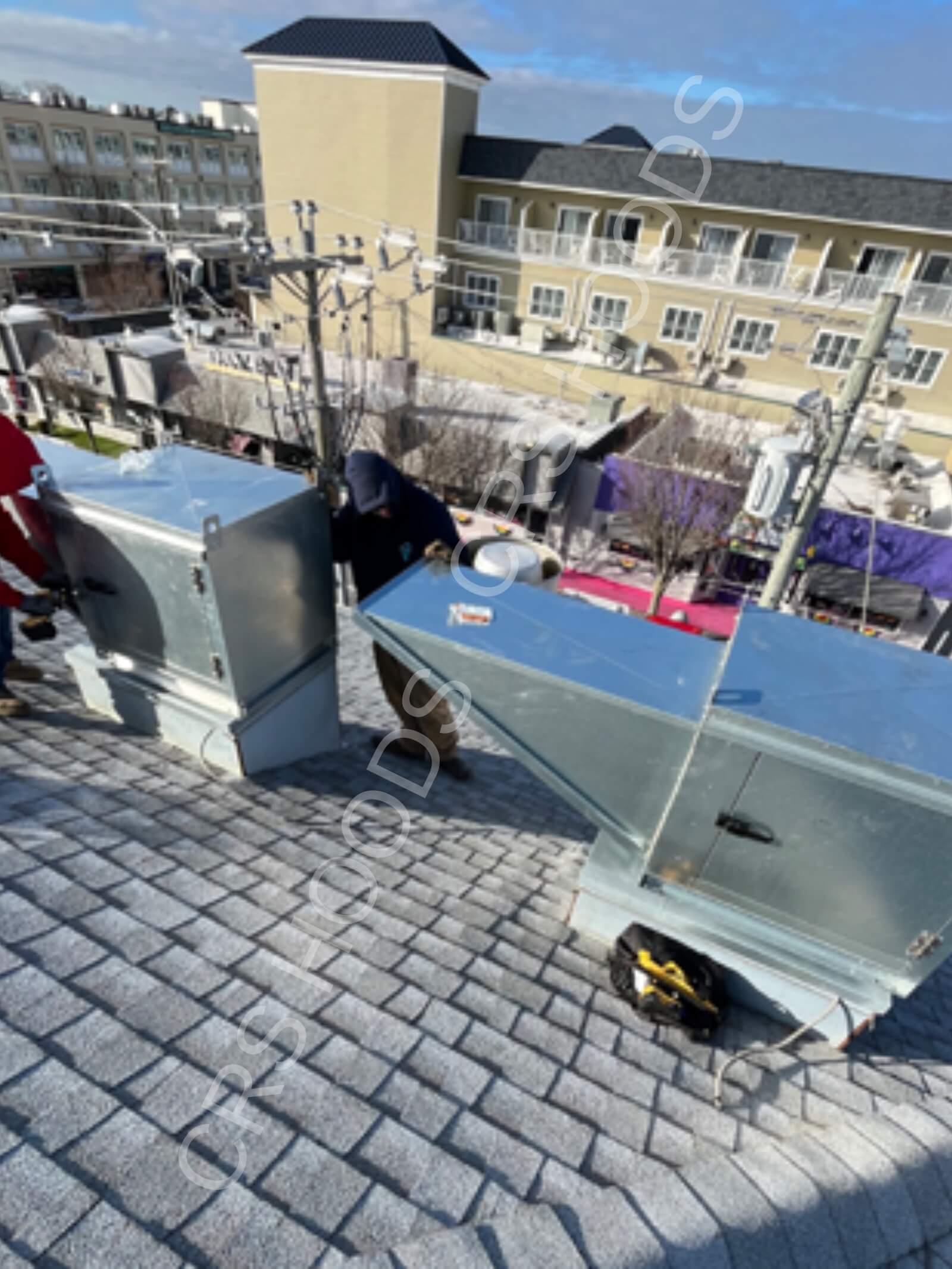
The duct connecting your hood to the exterior is where grease fires typically travel. CRS Hoods fabricates grease ducts to the correct steel gauge with proper slope, liquid-tight seams, and cleanout access panels placed at intervals the code requires. Rooftop upblast exhaust fans are installed with hinge kits and hold-open retainers so cleaning crews can access them without workarounds.
Fire Suppression System Integration
A commercial kitchen fire suppression system is not a standalone purchase you bolt onto an existing hood. The nozzles, detection links, fuel shut-off connections, and manual pull station all have to be positioned and engineered to work with the specific hood and cooking equipment in that kitchen. CRS Hoods coordinates fire suppression integration as part of the hood installation so the whole system functions as one cohesive, code-compliant unit. We coordinate fire suppression integration as part of the hood installation so the whole system functions as one cohesive, code-compliant unit.
Hood System Replacement and Compliance Retrofits
Already have a hood? If it was installed before the NFPA 96 2025 updates, or if a previous contractor cut corners on ductwork, access panels, or suppression integration, you could be sitting on a compliance problem that your next fire inspection will surface. CRS Hoods performs full system assessments, and when replacement or retrofit is the right call, we handle it cleanly and correctly.
HOW CRS HOODS HANDLES YOUR INSTALLATION FROM DAY ONE
Owners in Clayton do not have time for a contractor who shows up, eyeballs the room, and figures it out as they go. Here is exactly how we run a project.
We Start With Your Kitchen, Not a Catalog
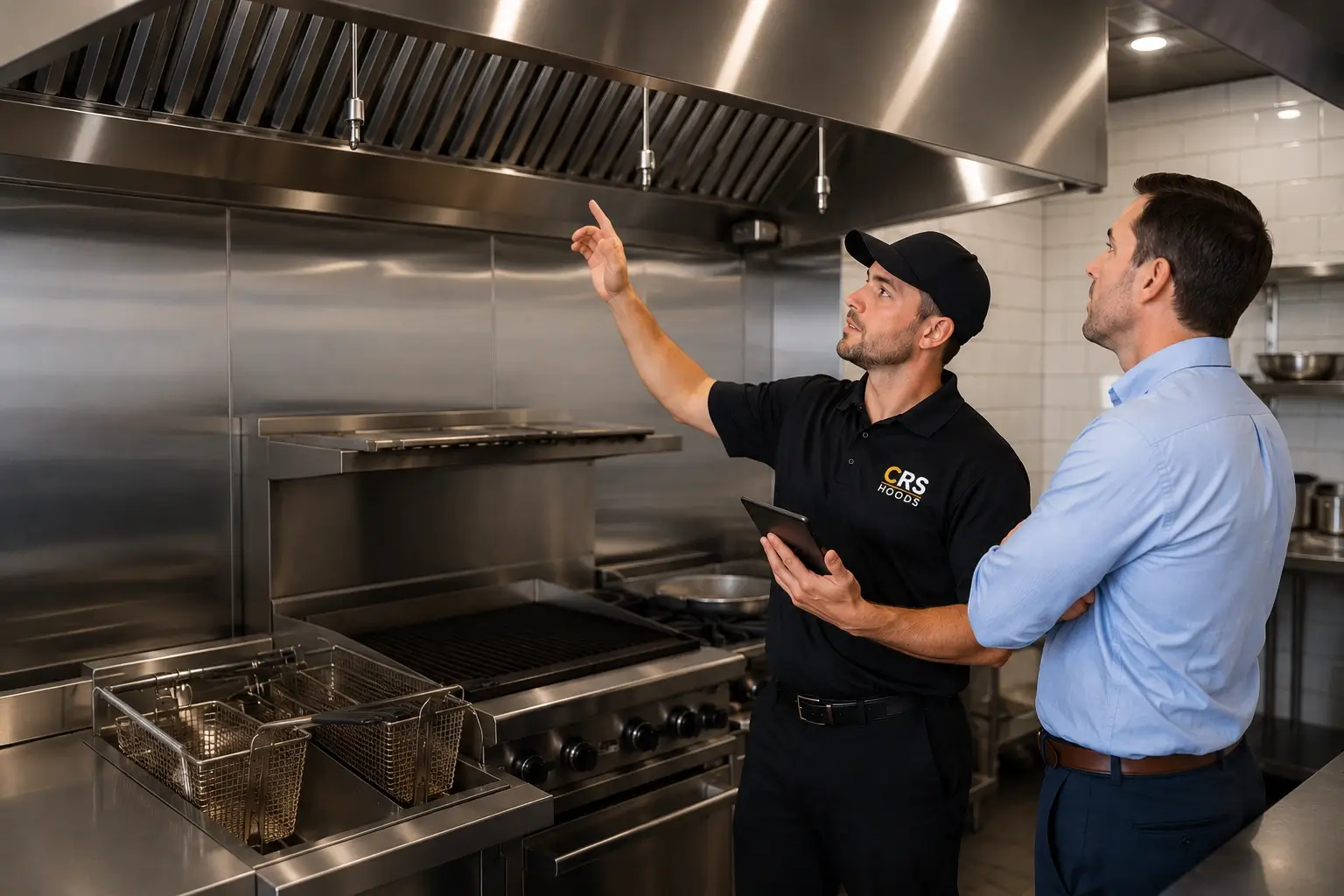
Every CRS Hoods project begins with a site visit. We look at your cooking equipment, your ceiling height, your available duct paths, your building structure, and the specific requirements of your local AHJ in Kent County. We talk through your timeline and project goals, and we leave with enough information to put together a system design that actually fits your situation.
We Design It Right and Pull the Permits
Once we have the measurements and specifications, our team prepares a complete system design including CFM airflow calculations, duct routing plans, make-up air specs, and shop drawings suitable for permit submission. CRS Hoods manages the permit process on your behalf, coordinating with Kent County’s building department and the Delaware State Fire Marshal’s office so you do not have to track down the right forms or chase approvals.
We Install It and We Test It
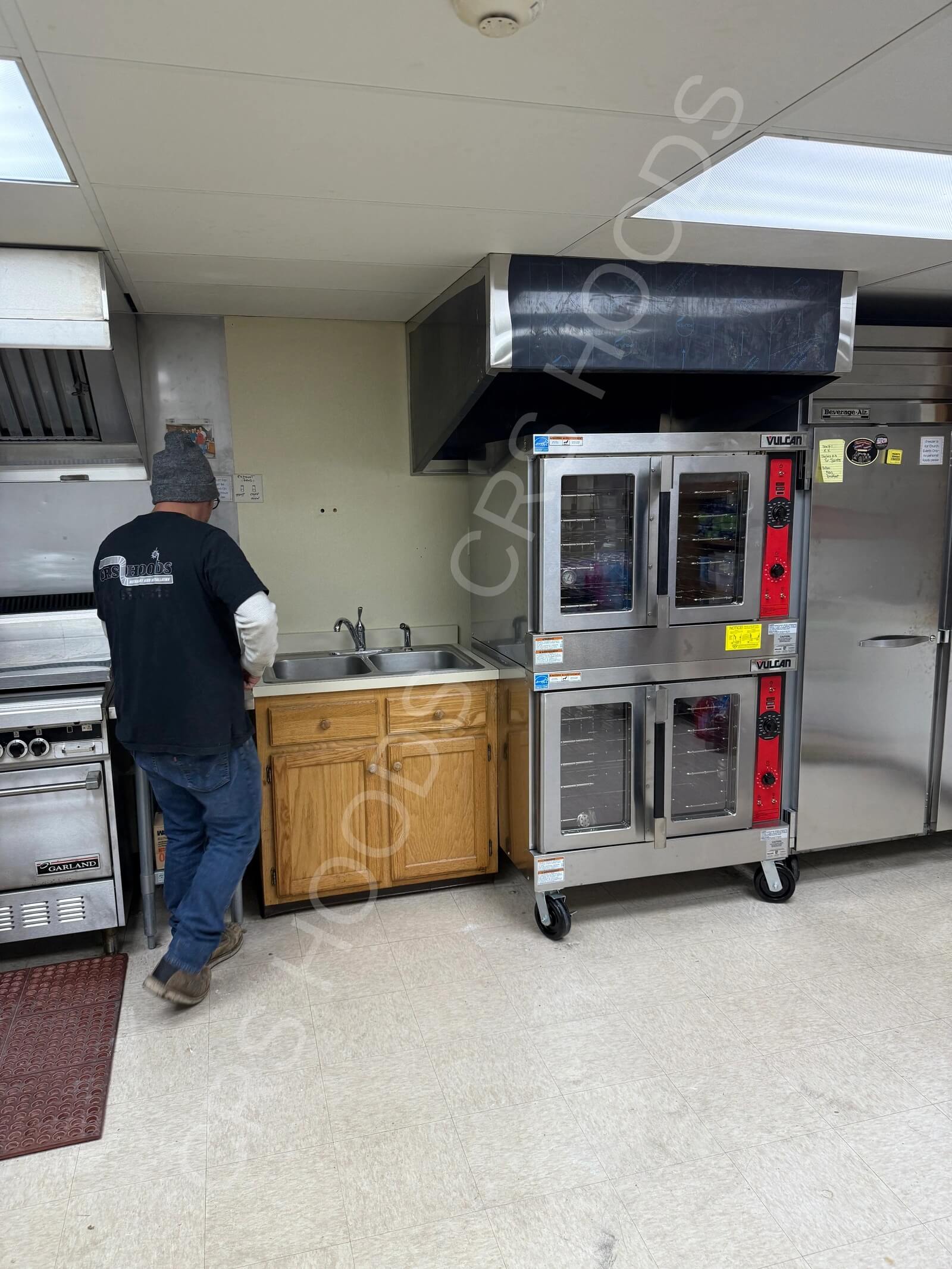
Our licensed installation crew does the work. Not subs. Not day laborers. People who do commercial kitchen ventilation for a living. After installation, we run full system tests: airflow verification, filter seating, exhaust fan performance, make-up air balance, and suppression system function. Then we coordinate your inspections with the AHJ so your certificate of occupancy and health inspection go as smoothly as possible.
We Hand You the Paperwork
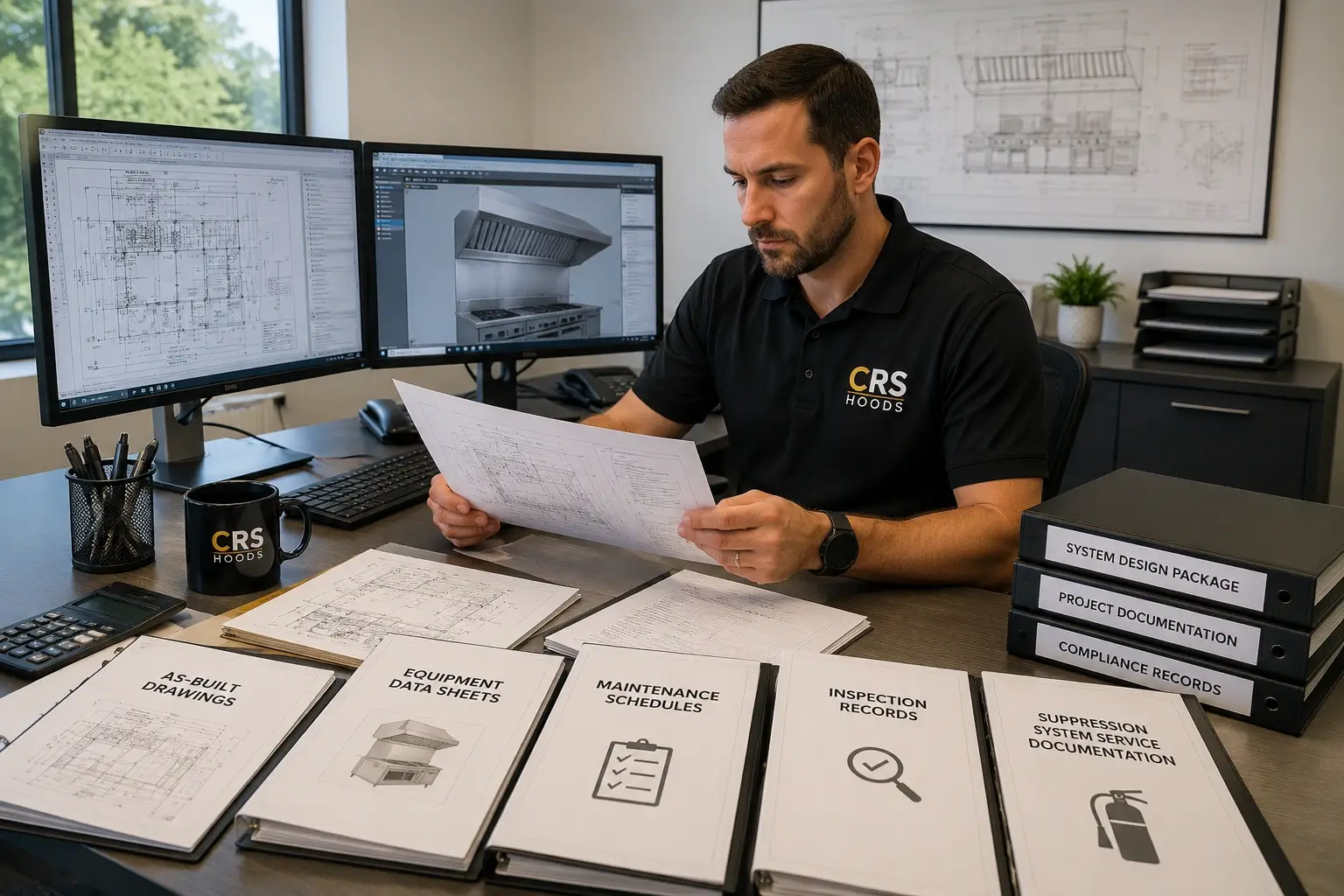
When we are done, you get a complete documentation package: as-built drawings, equipment data sheets, maintenance schedules, inspection records, and suppression system service documentation. Your insurance carrier, health inspector, and fire marshal will ask for this at various points. CRS Hoods makes sure you have it.
WHY CLAYTON RESTAURANT OWNERS CALL CRS HOODS
We Actually Know Delaware
Since 1980, CRS Hoods has installed more than 10,000 commercial kitchen exhaust systems across Pennsylvania, New Jersey, Delaware, and Maryland. We are a Delaware-based company. We do not treat Kent County like a territory we occasionally visit. We have worked with the local AHJ, we know the State Fire Marshal review process, and we have a track record of successful installations and inspections in this state. That local knowledge translates directly into faster permits, fewer inspection surprises, and installations that get signed off the first time.
Licensed, Insured, and Fully Accountable
CRS Hoods holds the appropriate Delaware contractor licenses and carries full liability insurance and workers compensation coverage. When our crew is in your building, you are protected. We do not hand core installation work to unlicensed subcontractors.
One Company, One Contract, No Finger-Pointing
Some contractors handle the hood and tell you to find someone else for the ductwork, and someone else for the suppression system, and someone else for the exhaust fan. When something goes wrong, nobody owns it. With CRS Hoods, one contract covers the complete scope: hood, duct, exhaust fan, make-up air, and suppression integration. You have a single point of contact and a single company that stands behind the whole system.
Clear Scope and No Surprises
Before any work begins, we walk you through the complete scope of your project so you know exactly what is included: hood, ductwork, exhaust fan, make-up air, and fire suppression integration. If unforeseen structural conditions turn up during installation, we document them and talk to you before proceeding. No guesswork, no surprises midway through the job.
We Are Here After the Install Too
CRS Hoods offers ongoing hood cleaning services, annual fire suppression system inspections, exhaust fan maintenance, and filter replacement programs for our Clayton clients. Staying in continuous NFPA 96 compliance is not a one-time event. We make it easy.
Frequently Asked Questions
Does my Clayton restaurant need a commercial hood?
Yes. If your equipment produces grease, smoke, or high heat, a Type I hood is required under NFPA 96 and Delaware fire code. Without it, you will fail inspections. Not sure what you need? Let’s talk
How long does installation take?
Timelines vary based on system complexity, custom fabrication, and permit processing. We provide a project timeline estimate during your initial consultation.
Do I need permits in Clayton, DE?
Yes. You need a mechanical permit, and fire suppression systems require State Fire Marshal approval. CRS Hoods handles the permit process for the hood installation scope and coordinates with licensed fire suppression contractors on the suppression permit.
What is NFPA 96?
NFPA 96 is the Standard for Ventilation Control and Fire Protection of Commercial Cooking Operations. It is the primary code governing how commercial kitchen exhaust systems must be designed, installed, cleaned, and inspected. Delaware enforces NFPA 96 requirements through the State Fire Marshal and local code authorities, meaning your hood system must meet these standards before your kitchen can open or pass inspection.
How often should my hood be cleaned?
- High-volume kitchens: Monthly
- Medium use: Quarterly
- Low use: Every 6 months
Regular cleaning keeps you compliant and prevents fire risks.
Can an unlicensed contractor install my hood?
No. Installation must be done by a licensed contractor. Otherwise, you risk failed inspections, voided insurance, and costly corrections. CRS Hoods holds the professional licenses required for commercial kitchen hood installation in Delaware,
My hood failed inspection. What should I do?
Common issues include poor airflow, missing access panels, or fire suppression deficiencies. Call CRS Hoods to evaluate the specific findings and determine the correct correction on the ventilation and ductwork side.
What equipment does CRS Hoods use?
CRS Hoods fabricates custom ductwork and hood components in our Smyrna, DE shop and installs commercial-grade ventilation and fire suppression equipment built to meet NFPA 96 and Delaware code requirements.
Do you offer maintenance after installation?
Yes. We provide cleaning, inspections, repairs, and ongoing maintenance to keep your system compliant year-round.
How do I know the right hood size?
Hood sizing depends on your equipment, layout, and airflow needs. We calculate everything during the design phase to ensure full compliance.
Ready to Install a Commercial Hood System in Clayton?
From Type I and Type II hood installation to exhaust fans, make-up air, grease duct fabrication, and fire suppression coordination, CRS Hoods designs and installs complete kitchen ventilation systems built to pass inspection. Serving Clayton and all of Kent County, Delaware.
Call 302-653-4111 or fill out the form below.