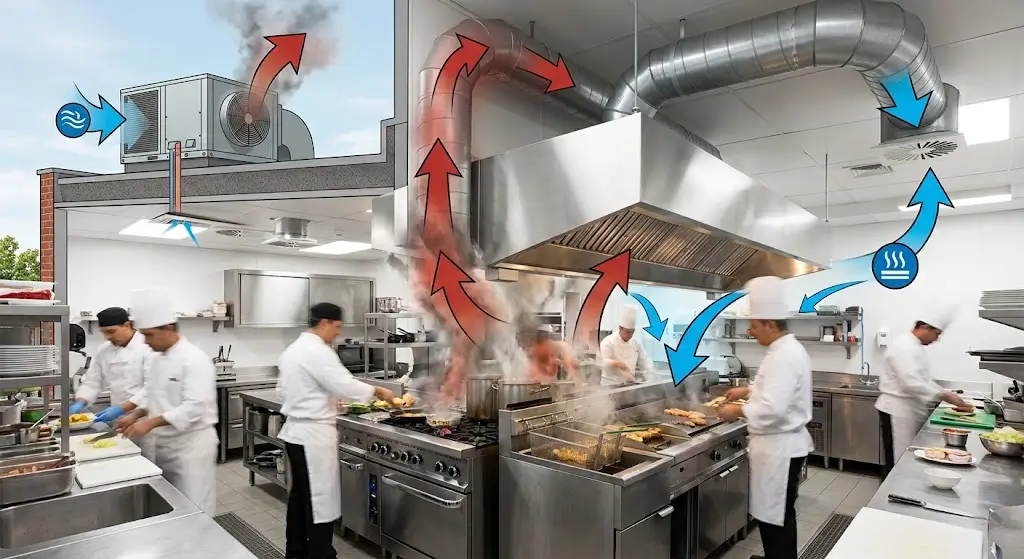


A failed inspection is one of the most expensive setbacks a restaurant owner can face before opening day. Contractors get rescheduled, vendors get pushed back, and a kitchen that should be cooking is instead sitting empty. In most cases, the root cause traces back to one thing: a commercial type II hood installation that was never set up to meet code in the first place.
Unlike Type I hoods, which handle grease-laden vapors from cooking equipment like fryers, griddles, and charbroilers, Type II hoods are designed for heat and steam removal from equipment that does not produce grease, such as dishwashers, steamers, and some ovens. The distinction matters because Type II systems are governed by different code requirements than their Type I counterparts, and confusing the two (or installing the wrong system for the equipment underneath it) is one of the fastest ways to fail an inspection.
Why Type II Hood Installation Fails Inspection So Often
Commercial kitchen exhaust systems are regulated under NFPA 96 and the International Mechanical Code (IMC), and inspectors do not treat these standards as suggestions. A restaurant cannot legally open, and cannot legally continue operating, if its exhaust system does not meet code. That is not a scare tactic. It is simply how commercial kitchen inspections work.
Type II hood installations tend to run into trouble for a few recurring reasons:
- Misclassification of equipment: Not every piece of steam or heat-producing equipment automatically qualifies for a Type II hood. Getting this wrong at the design stage sets the entire project up to fail later.
- Improper ductwork routing or termination: Where and how exhaust ductwork terminates matters just as much as the hood itself.
- Clearance and capture issues: A hood that is undersized, mounted at the wrong height, or positioned without accounting for airflow patterns in the kitchen will struggle to perform even if every component is technically installed.
- Missing documentation: Inspectors expect to see that the system was designed and installed in line with code, not just that it looks reasonable on the surface.
None of these issues have a single universal fix, because every kitchen layout, equipment lineup, and building configuration is different. That is precisely why generic advice tends to fall short. The right specifications for one kitchen are not automatically right for the next one.
What Actually Determines a Code Compliant Installation
Rather than offering blanket numbers that may not apply to your space, it helps to understand the factors that shape a compliant Type II hood installation:
Equipment type and heat output: The specific appliances under the hood, and how much heat or steam they generate, influence hood sizing and airflow requirements.
Kitchen layout and ceiling height: Ductwork routing, hood positioning, and clearance requirements shift depending on the physical space available and how the kitchen is laid out around existing structural elements.
Building and local jurisdiction requirements: NFPA 96 and the IMC set the baseline, but local jurisdictions can layer on additional requirements. What passes inspection in one municipality is not automatically guaranteed to pass in another.
Airflow and makeup air balance: A hood does not operate in isolation. Makeup air systems need to be balanced correctly, or the hood will underperform regardless of how well it was fabricated.
Because these variables differ from project to project, a properly designed Type II hood installation depends on someone actually assessing the kitchen, not applying a one-size-fits-all template. This is also why detailed sizing charts or DIY installation steps are intentionally left out of educational content like this. Installing or configuring a hood system incorrectly creates real safety and compliance risk, and that work belongs with a licensed professional who can evaluate the specific site.
Why Licensing Matters More Than Most Owners Realize
In several states, including Maryland, purchasing a commercial hood system legally requires working with a company holding proper HVACR licensing. That is not a minor technicality. It reflects a broader reality across the industry: commercial kitchen exhaust systems are specialized fabrication and installation work, not a side offering that general HVAC companies or general contractors are necessarily equipped to handle correctly.
Hiring an unlicensed or unqualified installer creates downstream risk that shows up later, often at the worst possible time:
- Failed inspections that delay opening
- Costly rework to correct improperly sized or positioned hoods
- Project delays that ripple into other trades
- Ongoing compliance issues that resurface at future inspections
A licensed hood fabricator brings something a general contractor typically does not: specific expertise in how exhaust systems interact with NFPA 96 and IMC requirements, day in and day out. This is not a knock on general contractors, who play a critical role in a build-out. It is a recognition that hood systems are their own discipline, closer to a licensed trade than a general capability.
Fabrication Is the Real Differentiator
There is a meaningful difference between a company that installs pre-manufactured hoods off a shelf and one that custom fabricates systems to match the exact kitchen in front of them. Custom fabrication means the hood, ductwork, and supporting components are built to fit the actual equipment lineup and physical space, rather than forcing a standard unit into a layout it was not designed for.
Since 1980, CRS Hoods has installed more than 10,000 commercial kitchen exhaust systems, with systems that consistently pass inspection on the first attempt.
That track record comes from treating hood systems as a fabrication discipline first. Custom work extends beyond hoods themselves, into related components like ductwork, and can support broader kitchen and bar area build-outs where a tailored, welded approach matters more than an off-the-shelf fit.
Coordinating the Bigger Picture
A Type II hood installation does not happen in isolation. It typically overlaps with other trades on a build-out, including general contractors, equipment suppliers, and inspectors. It is worth being clear that trade coordination across a project ultimately sits with the owner or the general contractor managing the build. A hood fabricator’s role is to design and install a system that meets code for the space and equipment involved, not to manage the other moving parts of a construction timeline.
Owners who understand this upfront tend to have smoother projects, because expectations are clear from the start about who is responsible for what.
Getting It Right the First Time
A commercial Type II hood installation that passes code is not the result of luck or a generic template. It comes from a fabricator who understands how equipment type, kitchen layout, local jurisdiction requirements, and airflow balance interact, and who builds the system to match those specific conditions rather than forcing a standard solution into a non-standard space.
If you are planning a Type II hood installation and want it built around your kitchen’s actual conditions, a professional site assessment is the right starting point. It is the only way to know what your specific project actually requires.
Frequently Asked Questions
What is the difference between a Type I and Type II commercial hood?
Type I hoods are designed for equipment that produces grease-laden vapors, such as fryers and griddles, and are built with grease-specific fire suppression components. Type II hoods instead handle heat and steam from equipment like dishwashers, steamers, and certain ovens, which do not produce grease, and are regulated differently under NFPA 96 and the IMC.
Does every steam or heat-producing appliance require a Type II hood?
Not automatically. Whether a specific appliance requires a Type II hood depends on its heat output, moisture level, and how it is classified under code. This is why equipment lineups should be evaluated individually during a site assessment rather than assumed to fit a general category based on appearance alone.
Can a general contractor install a Type II hood system?
Commercial hood systems are specialized fabrication and installation work, not a general HVAC or construction task. In several states, purchasing a hood system legally requires working with a company holding proper HVACR licensing, which is why hood installation is typically handled by licensed hood fabricators rather than general contractors.
What happens if a Type II hood installation fails inspection?
A failed inspection typically means the restaurant cannot legally open, or cannot continue operating, until the issue is corrected. This can lead to costly rework, delayed timelines, and additional expenses, which is one of the main reasons working with a licensed, experienced fabricator from the start matters so much.
Does ductwork routing affect whether a Type II hood passes inspection?
Yes. Where and how exhaust ductwork is routed, sized, and terminated is evaluated as part of the overall system, not just the hood unit itself. Improper routing, undersized ducts, or poor termination points are among the more common and preventable reasons Type II installations run into inspection issues.
Who is responsible for coordinating the hood installation with other trades on a project?
Coordination across trades, including general contractors, equipment suppliers, and inspectors, is ultimately the responsibility of the owner or the general contractor managing the build-out. A hood fabricator’s role is to design and install a code compliant system for the specific space and equipment involved, not manage other trades.