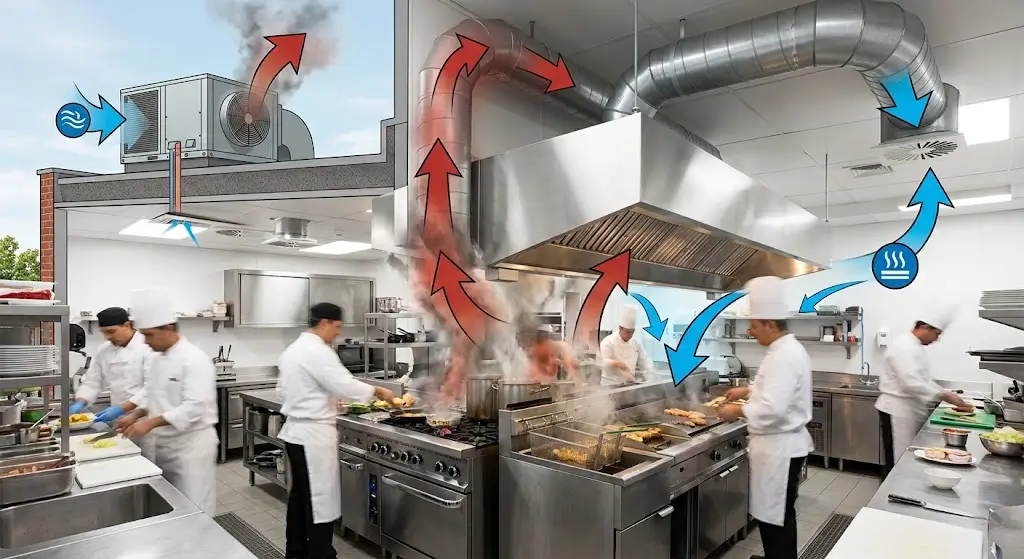

A commercial Type II hood installation typically takes several weeks from initial site assessment to final inspection sign-off. That said, the exact timeline is never truly fixed. It depends on the specific kitchen, the equipment involved, and the fabrication and permitting process behind the scenes. For restaurant owners racing toward an opening date, few questions matter more than timing, and understanding what actually drives a commercial type II hood installation schedule will help you plan far more accurately than a generic number ever could.
Factors That Influence Your Installation Timeline
Equipment lineup and heat output
The type, number, and heat output of the appliances under the hood affect how the system needs to be sized and configured, which in turn shapes how much fabrication work is involved before installation can begin.
Kitchen layout and existing infrastructure
Ceiling height, ductwork paths, and how much of the space is new construction versus an existing build-out all influence how straightforward or complex the physical installation will be.
Custom fabrication requirements
A hood system built to match your kitchen’s exact dimensions and equipment takes longer to design and fabricate than pulling a generic unit off a shelf. That extra time upfront is what allows the system to fit correctly and function properly once it is installed, rather than requiring adjustments later.
Local code and permitting requirements
NFPA 96 and the IMC set the baseline, but local jurisdictions can add their own permitting steps and inspection scheduling, which affects how quickly a project can move from design to final sign-off.
Coordination with other trades
A hood installation often overlaps with electrical, plumbing, and general construction work happening at the same time. How well those trades are sequenced on the build-out schedule has a direct effect on how smoothly the hood installation itself proceeds.
Site readiness
A kitchen space that is fully prepped and ready for the fabrication team tends to move faster than one where other construction work is still in progress or where access is limited.
Because these variables shift from project to project, the only way to get an accurate timeline is through a professional site assessment that accounts for your specific equipment, layout, and jurisdiction.
What the Process Generally Looks Like
While exact timeframes vary, most Type II hood installations move through a similar sequence of stages:
Site assessment and design: A fabricator evaluates the kitchen, the equipment lineup, and local code requirements to determine what the system actually needs to look like. This step is where sizing, clearances, and ductwork routing get worked out based on the real conditions of the space, not generic assumptions.
Fabrication: Once the design is finalized, the hood and supporting components are custom built to match those specifications. This is where a fabrication-first approach differs from installing a pre-manufactured unit, since the components are made to fit the project rather than adapted to fit a standard product.
Installation: The fabricated system is installed on-site, including ductwork connections and any coordination needed with makeup air systems already in place or being installed alongside it.
Inspection: The completed system is reviewed against NFPA 96 and IMC requirements before the kitchen can legally operate. A system designed and fabricated correctly from the start has a far better chance of passing this step without delay.
Skipping steps or rushing any one of these stages tends to be exactly where delays creep in later, usually in the form of a failed inspection or rework that pushes the whole project back further than a properly sequenced installation would have.
Why Licensed Fabricators Help Keep Projects on Schedule
An unlicensed or unqualified installer might promise a faster timeline upfront, but that speed often comes at the expense of accuracy. Incorrect sizing, improper ductwork routing, or missed code requirements do not just create safety risks, they create the kind of rework that adds weeks back onto a project that looked fast on paper.
In several states, including Maryland, purchasing a commercial hood system legally requires working with a company holding proper HVACR licensing. That requirement exists because hood systems are specialized fabrication work, not a task that fits neatly into a general HVAC or construction scope. A licensed fabricator who understands how NFPA 96 and IMC requirements apply to your specific kitchen is far more likely to get the installation right the first time, which is ultimately what keeps a project on schedule.
Coordinating With Other Trades
Because a hood installation typically overlaps with other work on a build-out, sequencing matters. It is worth being clear that coordinating general contractors, equipment suppliers, and inspection scheduling across the full project ultimately falls to the owner or the general contractor managing the build. A hood fabricator’s role is to design, fabricate, and install a code compliant system for the specific kitchen involved, on the timeline that project’s conditions actually allow.
What to Expect Moving Forward
There is no shortcut to an accurate installation timeline that skips understanding your specific kitchen. Equipment lineup, layout, local permitting, and how ready the space is for fabrication and installation all play a role, and no two projects move through those factors the same way.
If you are planning a Type II hood installation and want a realistic timeline based on your actual project, a professional site assessment is the place to start. It is the only way to know what your kitchen truly requires and how long getting there will take.
Frequently Asked Questions
What is the biggest factor that affects a Type II hood installation timeline?
The equipment lineup and how much custom fabrication it requires tends to have the largest impact. A hood built to match specific appliances and kitchen dimensions takes more design and fabrication time than a generic unit, but it also fits and performs correctly once installed.
Does site readiness affect how long the installation takes?
Yes. A kitchen space that is fully prepped, with other construction work completed or clearly sequenced, allows the fabrication and installation team to move efficiently. Ongoing construction or limited access can slow the process regardless of how quickly the hood itself was fabricated.
Can permitting affect the overall timeline?
Yes. NFPA 96 and the IMC set baseline requirements, but local jurisdictions can add their own permitting steps and inspection scheduling. These local requirements can shift how quickly a project moves from design approval to final installation and sign-off.
Does hiring an unlicensed installer actually save time?
Not usually. Incorrect sizing, improper ductwork, or missed code requirements from an unqualified installer often lead to failed inspections and rework, which typically adds more time back onto a project than a properly licensed fabricator would have taken from the start.
Is the installation timeline the same for every type of kitchen?
No. A small dishwashing station and a multi-station kitchen with several steamers or ovens require different levels of fabrication and ductwork complexity, which means their timelines will differ even though both fall under Type II hood requirements.
Who is responsible for coordinating the hood installation timeline with other trades?
That responsibility ultimately sits with the owner or the general contractor managing the overall build-out. A hood fabricator focuses on designing, fabricating, and installing a code compliant system for the specific kitchen, not on managing the broader construction schedule.