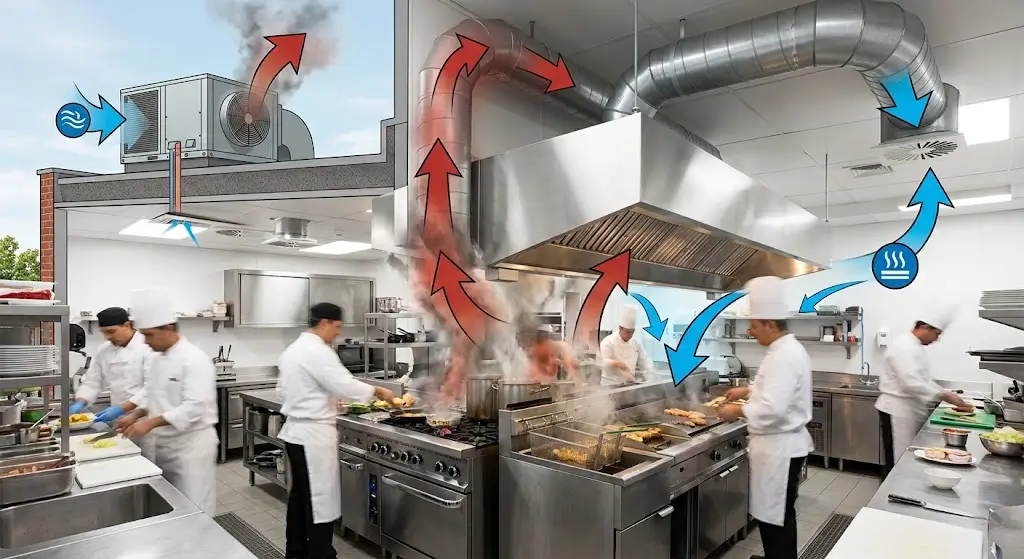


Inspection frequency for a kitchen ventilation system isn’t a single fixed number, NFPA 96 sets frequency requirements based on how much and what type of cooking a kitchen does, ranging from monthly to annual depending on volume and equipment. There’s no one-size-fits-all schedule that applies to every restaurant, which is why “how often” is really a question about your kitchen’s specific cooking operation, not a flat industry standard.
Understanding how NFPA 96 categorizes cooking volume helps owners know what schedule actually applies to their kitchen, rather than guessing or defaulting to whatever a cleaning company recommends.
Why Inspection Frequency Isn’t a Flat Number
It’s common to hear a generic answer like “inspect twice a year” applied to every kitchen, but that isn’t how NFPA 96 actually defines the requirement. The standard sets inspection and cleaning frequency based on the type and volume of cooking a kitchen produces, because a high-volume kitchen running solid fuel or heavy grease-producing equipment accumulates grease at a very different rate than a lower-volume kitchen with lighter cooking equipment.
Treating every kitchen as if it needs the same schedule ignores the actual variable that matters: how much grease is being generated and captured by the system in the first place.
How NFPA 96 Categorizes Cooking Volume
NFPA 96 groups kitchens into categories based on cooking volume and equipment type, and the required inspection frequency follows from that category. Generally, the standard recognizes distinctions such as:
- Solid fuel cooking operations, which produce heavy grease loads and require the most frequent inspection.
- High-volume cooking operations, such as 24-hour kitchens or those running continuous heavy-duty equipment like char broilers.
- Moderate-volume operations, typical of many full-service restaurants running standard cooking equipment on a regular schedule.
- Low-volume or seasonal operations, such as kitchens that operate on a limited schedule or produce comparatively little grease-laden exhaust.
Each category carries its own required inspection interval under NFPA 96, which is why the correct answer for any individual kitchen depends on where that kitchen’s actual operation falls, not a number pulled from a general industry article.
Why Equipment Type Matters as Much as Volume
Two kitchens cooking similar hours can still fall into different inspection categories depending on what equipment they’re running. A kitchen with char broilers or wok stations, for example, produces grease at a different rate than a kitchen primarily using ovens or steamers, even at similar volume. This is another reason a generic answer doesn’t hold up, the type of cooking equipment underneath the hood is just as relevant to inspection frequency as how many hours the kitchen operates.
What Inspection Actually Involves
An inspection under NFPA 96 isn’t just a visual check of the hood. It typically involves examining the hood, filters, ductwork, and exhaust fan for grease accumulation, verifying that the system is operating as designed, and confirming that fire suppression integration is intact. The findings from that inspection determine whether cleaning is needed immediately or whether the system remains within acceptable limits until the next scheduled review.
This is why inspection and cleaning are related but separate steps. An inspection identifies the condition of the system, cleaning addresses what the inspection finds.
Why Getting the Frequency Wrong Creates Risk
Underestimating how often a kitchen’s system needs inspection allows grease to accumulate beyond what the system was designed to handle safely, increasing fire risk in exactly the way described in NFPA 96’s grease-related fire prevention requirements. It can also create problems during a routine fire marshal or health inspection, since documentation of inspection and cleaning history is typically part of what’s reviewed.
On the other side, treating every kitchen as high-volume when it isn’t leads to unnecessary service calls without addressing the actual variable that matters, which is the kitchen’s real cooking volume and equipment mix.
Why This Should Be Assessed for Your Specific Kitchen
Because inspection frequency depends on cooking volume and equipment type, the right schedule for any kitchen should come from an assessment of that kitchen’s actual operation, not a generalized answer. A fabricator familiar with NFPA 96’s categories can evaluate a kitchen’s cooking equipment and volume and identify which schedule actually applies, rather than defaulting to a single frequency across every account.
Frequently Asked Questions
Does every restaurant need the same inspection schedule?
No. NFPA 96 sets inspection frequency based on cooking volume and equipment type, meaning a high-volume kitchen running heavy grease-producing equipment requires more frequent inspection than a lower-volume kitchen.
What’s the difference between inspection and cleaning?
Inspection evaluates the condition of the hood, filters, ductwork, and exhaust fan to determine whether grease accumulation or other issues require attention. Cleaning is the service performed based on what the inspection identifies.
What happens if a kitchen ventilation system isn’t inspected on schedule?
Skipping inspections allows grease to accumulate beyond safe levels, increasing fire risk, and can create compliance issues during a fire marshal or health department review, since inspection history is often part of what’s documented and checked.
Does the type of cooking equipment affect inspection frequency?
Yes. Equipment like char broilers or solid fuel cooking produces grease at a faster rate than lighter cooking equipment, which is factored into how NFPA 96 categorizes a kitchen’s required inspection schedule.
Who determines the correct inspection frequency for a kitchen?
The correct frequency is based on an assessment of the kitchen’s actual cooking volume and equipment type against NFPA 96’s categories, ideally evaluated by a fabricator or service provider familiar with how those requirements apply.