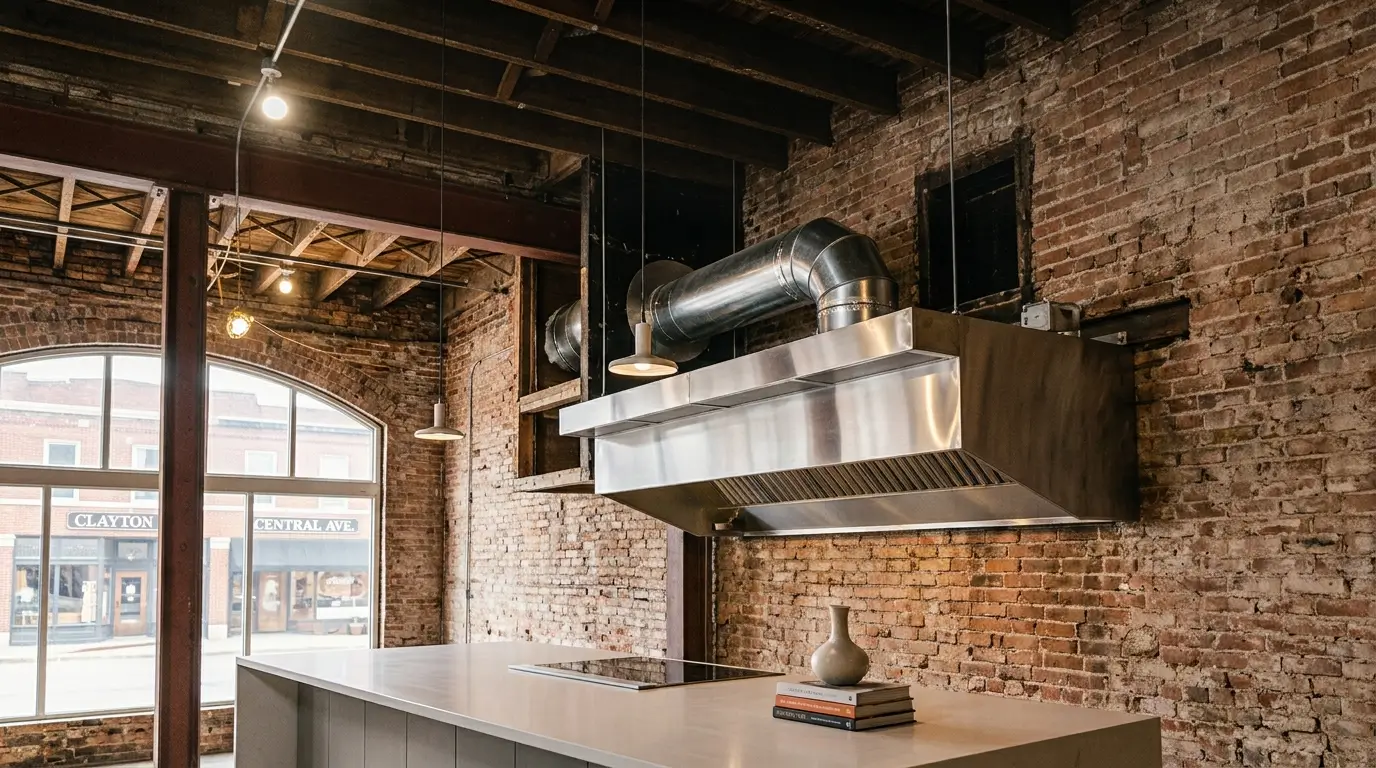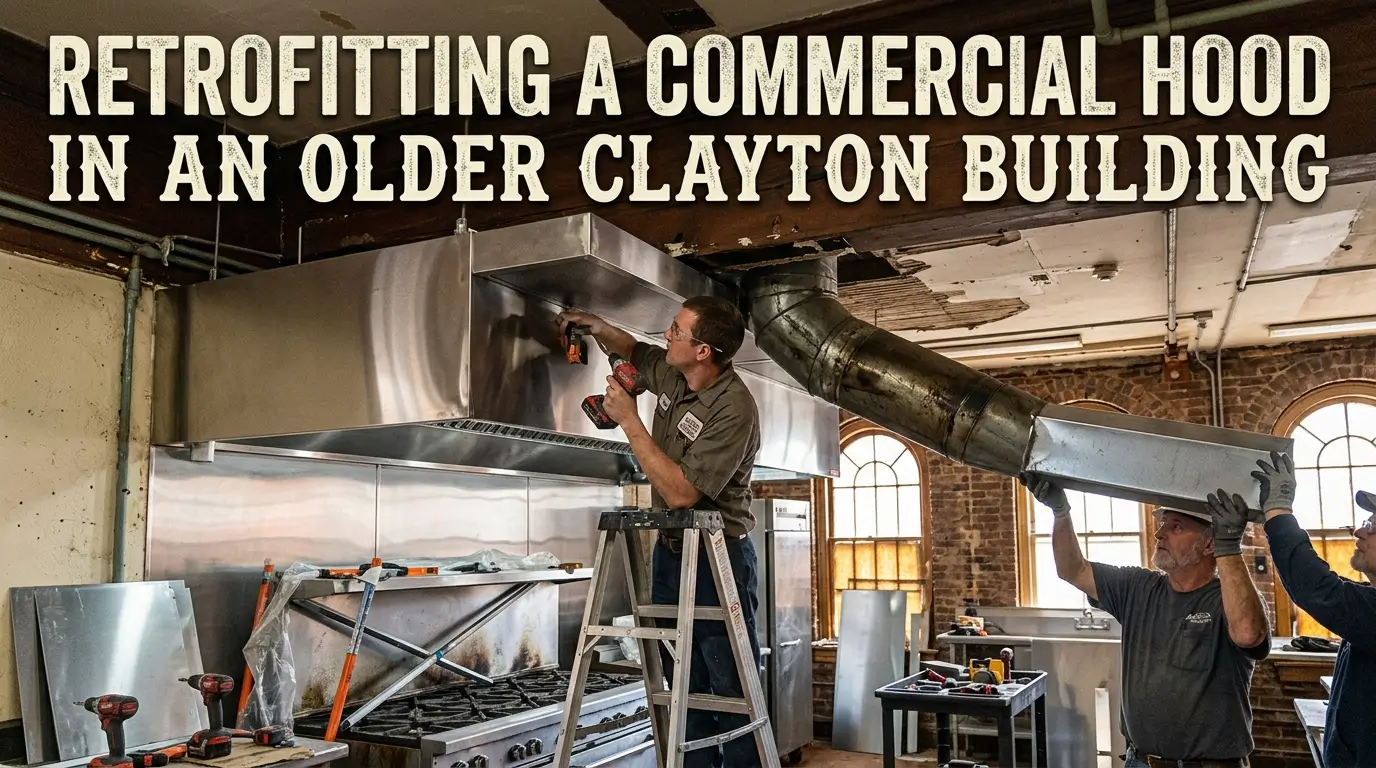

Welded grease duct fabrication is the process of custom building the ductwork that carries grease-laden vapor away from a commercial kitchen exhaust hood, using continuous welded seams rather than mechanical fasteners or sealants to join the duct sections together. This distinction matters because grease duct is not treated like standard HVAC ductwork under code. It carries hot, grease-laden exhaust that presents a real fire risk if the duct itself is not fully sealed, which is why welded grease duct fabrication is specified rather than assembled from generic ducting components.
Understanding what welded fabrication actually involves, and why it is required rather than optional, helps explain why grease duct work is handled by specialized fabricators rather than general sheet metal or HVAC contractors.
Why Grease Duct Cannot Be Treated Like Standard Ductwork
Standard HVAC ductwork moves conditioned air and is often assembled using snap-lock seams, sealant, or mechanical fasteners. That approach works fine for air handling, but it is not acceptable for grease duct, because grease-laden exhaust behaves differently than ordinary airflow. Grease vapor condenses inside the duct as it travels, and any seam that is not fully sealed becomes a point where grease can accumulate and eventually leak.
A leaking seam is not just a maintenance nuisance. Grease duct routes hot exhaust through a building, sometimes through concealed spaces, chases, or areas near combustible materials. A seam that allows grease to escape creates a fire risk in exactly the kind of space where a fire would be hardest to detect early and most dangerous to contain.
What Welded Fabrication Actually Means
Welded grease duct fabrication involves joining duct sections with continuous, liquid-tight welds along every seam, rather than relying on fasteners, tape, or sealant that can degrade over time or fail under heat exposure. The result is a duct system with no gaps for grease to escape through, regardless of how the duct is routed through the building.
This is not a detail that can be approximated. NFPA 96 specifically addresses grease duct construction, requiring continuous external welding on all seams and joints for a reason: it is the standard that reliably prevents grease leakage under the conditions grease ducts actually operate in, including heat cycling, vibration, and long-term exposure to grease-laden vapor.
Why Custom Fabrication Matters More Than Prefabricated Ducting
Grease duct routing is rarely a straight, predictable path. It typically has to navigate around structural elements, through specific chase locations, and up through however many floors separate the kitchen from the roof termination point. A prefabricated or generic ducting approach struggles to account for this kind of building-specific routing, which often results in more field modifications, more seams, and more opportunities for a joint to be less than fully sealed.
Custom fabrication takes the opposite approach. Duct sections are built and welded to match the specific routing a building requires, which reduces the number of field-modified joints and keeps the quality of each weld consistent with how the duct was engineered to fit. This is also why custom fabrication, rather than manufacturer specifications or prefabricated components, is the credibility marker that matters most in this work. A welded seam is either fully sealed or it is not, and that outcome depends far more on fabrication quality than on which supplier’s raw materials were used.
How Welded Duct Fits Into the Larger Exhaust System
Grease duct does not function as a standalone component. It connects the hood above the cooking equipment to the exhaust fan, typically routed through the building to a roof or exterior termination point. Every part of that path, from clearances around combustible materials to the duct’s slope and support, is governed by code requirements meant to keep the system operating safely over years of continuous use.
Because the duct is one piece of a larger exhaust system, its design and fabrication need to account for how it interacts with the hood and fan on either end, not just the duct run in isolation. A duct sized or routed without that broader context in mind can create airflow or clearance issues even if every individual weld is technically sound.
Why This Work Requires Specific Licensing and Experience
Welded grease duct fabrication is specialized work governed by fire and mechanical code, not a general sheet metal task. In several states, purchasing a commercial hood and exhaust system, including the grease duct that connects to it, legally requires working with a company holding proper HVACR licensing. This requirement reflects how closely grease duct construction is tied to fire safety, not just mechanical function.
A fabricator with specific experience in grease duct welding understands the code requirements around clearances, access panels for inspection and cleaning, and how the duct needs to be supported and sloped, in addition to the welding itself. General sheet metal experience alone does not necessarily translate into meeting these requirements correctly.
What Determines the Right Duct Design for a Given Kitchen
There is no universal duct configuration that applies to every commercial kitchen. The right design depends on several project-specific factors:
The hood’s exhaust volume and how much air the duct needs to carry, the building’s layout and available routing paths between the hood and the termination point, local code requirements and any jurisdiction-specific amendments to NFPA 96 or the IMC, and how the duct needs to be accessed for the ongoing cleaning and inspection code requires over the life of the system.
Because these factors vary from building to building, grease duct design should come from an evaluation of the specific kitchen and building, not a standard template applied across different projects.
Access and Maintenance Are Part of the Design, Not an Afterthought
Grease duct is not a install-it-and-forget-it component. Code requires it to remain accessible for regular cleaning and inspection throughout its service life, which means access panels and cleanout points need to be planned into the duct’s design and routing from the beginning. A duct fabricated without this in mind can meet code at installation and still create ongoing maintenance headaches, or worse, become difficult to properly inspect and clean over time.
This is another reason grease duct fabrication benefits from being planned as part of the overall exhaust system design, evaluated by a fabricator who understands both the welding requirements and the practical realities of keeping the system maintained afterward.
Coordinating Grease Duct Work With the Rest of a Project
Grease duct installation often overlaps with structural work, roofing, and general construction as part of a larger build-out or renovation. It is worth being clear that coordinating those other trades and vendors across a project ultimately falls to the owner or the general contractor managing the build. A fabricator’s role is to design, fabricate, and install a code compliant grease duct system for the specific kitchen and building involved, not to manage the surrounding construction schedule.
Why This Detail Is Worth Understanding Before You Hire
Grease duct might seem like a background detail compared to the hood itself, but it carries real fire safety weight and is one of the more heavily code-regulated parts of an exhaust system. Understanding that welded fabrication is a requirement, not an upgrade, makes it easier to evaluate whether a fabricator’s approach actually meets what your kitchen and local code require.
If you are planning a new installation or replacing existing ductwork, a professional site assessment is the most reliable way to determine how your grease duct should be routed, sized, and fabricated for your specific building.
Frequently Asked Questions
Why can’t grease duct be assembled with sealant or fasteners like standard ductwork?
Grease-laden exhaust condenses inside the duct as it travels, and any seam that is not fully sealed can allow grease to leak. Because grease duct often runs through concealed spaces, a leaking seam creates a fire risk that continuous welding is specifically designed to prevent.
What does NFPA 96 require for grease duct construction?
NFPA 96 requires continuous external welding on all grease duct seams and joints, without gaps that could allow grease to escape. This standard exists because welded construction reliably withstands the heat cycling and vibration that grease ducts are exposed to over time.
Why does custom fabrication matter more than prefabricated duct components?
Grease duct routing typically has to navigate specific building layouts, structural elements, and chase locations. Custom fabrication reduces the number of field-modified joints compared to prefabricated components, which helps maintain consistent, fully sealed welds throughout the run.
Does grease duct need to stay accessible after installation?
Yes. Code requires grease duct to remain accessible for regular cleaning and inspection, which means access panels and cleanout points need to be planned into the design and routing from the start, not added as an afterthought later.
Can a general sheet metal contractor fabricate grease duct correctly?
Grease duct fabrication is governed by fire and mechanical code, including specific welding, clearance, and access requirements. In several states, this work legally requires a company holding proper HVACR licensing, which general sheet metal experience alone does not necessarily satisfy.
Does grease duct design depend on the hood and fan it connects to?
Yes. Grease duct functions as part of a larger exhaust system, and its sizing and routing need to account for the hood’s exhaust volume and how it connects to the fan, not just the duct run considered on its own.