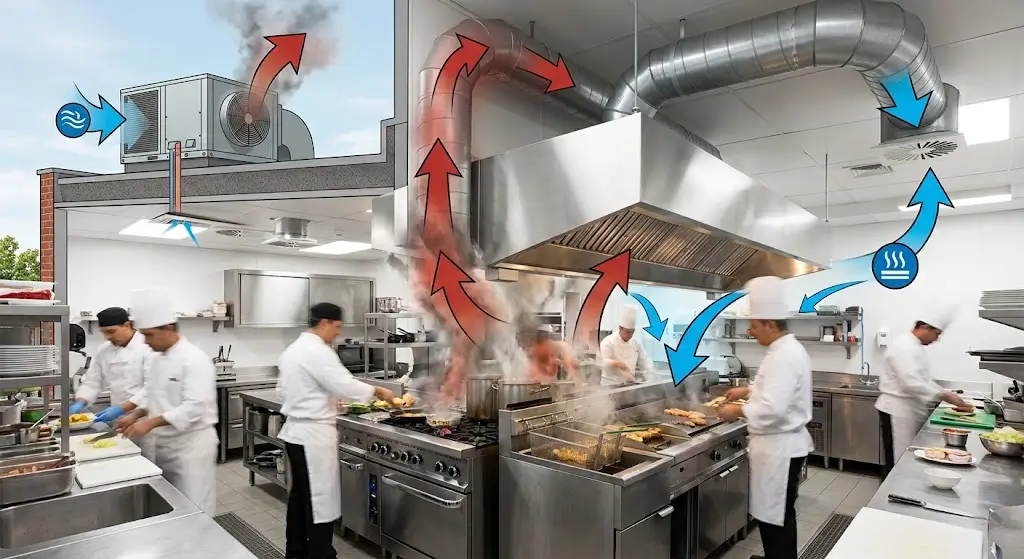

Without proper make-up air, a kitchen does not fail all at once. It degrades gradually, in layers, starting with minor inconveniences that most owners write off as unrelated quirks and ending, in the more serious cases, with safety hazards, failed inspections, or a shortened lifespan on equipment that had nothing to do with cooking in the first place. Understanding this progression matters because the earlier stages are easy to dismiss, and by the time the later ones show up, the fix is usually more expensive and more disruptive than a properly planned Make-Up Air Unit installation would have been from the start.
Rather than treating these consequences as a checklist, it helps to think of them as a timeline. What starts as a minor pressure imbalance tends to compound, quietly, until it touches nearly every part of the kitchen’s operation.
The Early Stage: Small Frictions That Seem Unrelated
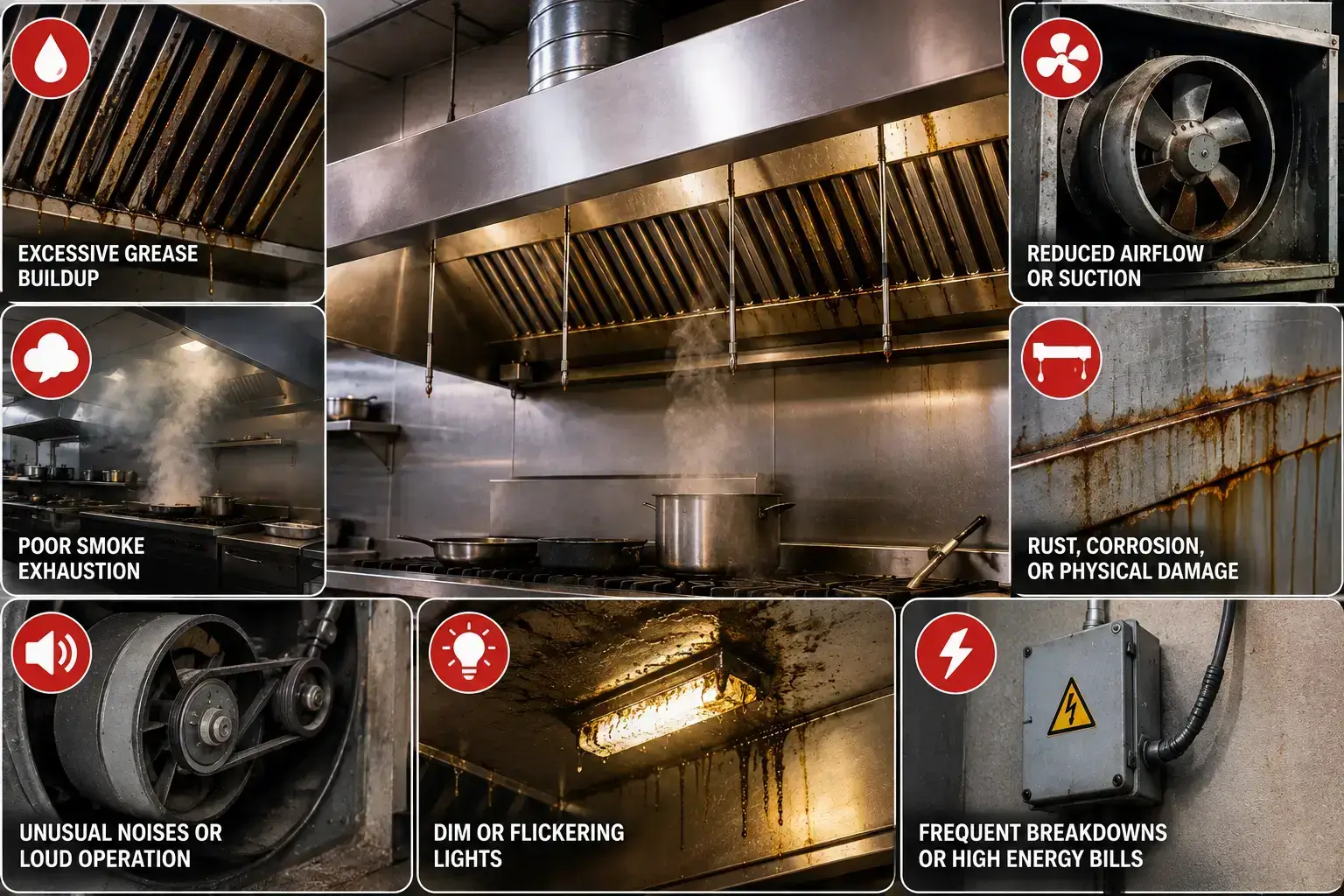
The first consequences of insufficient make-up air rarely look like a make-up air problem at all. A door becomes a little harder to pull open. A room near the kitchen runs a few degrees warmer or cooler than it should. The air feels slightly stagnant on a busy shift, even with the hood running. None of these are dramatic on their own, and that is exactly why they get missed. Most kitchens absorb this stage without anyone connecting the dots, treating each symptom as its own isolated annoyance rather than a sign that the space is not getting back the air its exhaust hood is removing.
The Middle Stage: Performance Starts to Suffer
Left unaddressed, the imbalance eventually starts affecting the systems the kitchen actually depends on. The exhaust hood, still mechanically sound, begins struggling to capture smoke, steam, and grease vapor the way it was designed to, simply because it does not have enough replacement air moving through the space to work at full capacity. Cooking equipment that relies on a steady flow of combustion air can start behaving inconsistently. Gas water heaters and other appliances with pilot lights or standing flames become more prone to disruption, since the negative pressure inside the kitchen can pull combustion byproducts back down a flue instead of allowing them to vent outward as designed.
This is also the stage where energy costs tend to creep upward without an obvious cause. HVAC systems elsewhere in the building often end up compensating for air the kitchen is pulling from surrounding spaces, working harder to maintain temperature and humidity levels that the imbalance keeps disrupting. None of this shows up as a single alarming event. It shows up as a utility bill that is a little higher every month, for reasons that are not immediately clear.
The Serious Stage: Safety and Compliance Risk
If the imbalance continues unaddressed, the consequences move from inconvenient to genuinely dangerous. Back-drafting gas appliances is not just a performance issue at this point, it becomes a carbon monoxide risk, since combustion byproducts that should be venting outside are instead being pulled back into occupied space. This is the point where a make-up air issue stops being a comfort or cost problem and becomes a life safety concern.
At the same time, NFPA 96 and the International Mechanical Code treat make-up air as part of a properly functioning exhaust system, not an optional add-on. A kitchen operating without adequate make-up air is, from a code perspective, operating with an incomplete exhaust system, regardless of how well the hood itself was installed. A restaurant cannot legally continue operating if its exhaust system falls out of compliance, which means an unresolved make-up air issue can eventually put the entire operation at risk, not just a single door or appliance.
The Long-Term Cost: Equipment Wear and Compounding Repairs
One of the less obvious consequences of inadequate make-up air is what it does to equipment lifespan over time. HVAC systems working overtime to compensate for pressure imbalance experience more wear than they would under normal conditions. Gas appliances that repeatedly cycle due to back-drafting face more strain on their ignition systems than appliances operating under stable airflow. Exhaust fans working against an imbalanced system can experience more mechanical stress than fans operating in a properly balanced kitchen.
None of these effects happen quickly. They accumulate. A kitchen that never addresses its make-up air problem often ends up dealing with premature equipment failures across several systems, not because any single piece of equipment was defective, but because all of it was operating under conditions it was never designed for.
Why the Fix Gets More Expensive the Longer It Waits
A kitchen in the early stage of this progression, dealing with a stiff door or a slightly warm back room, is generally looking at a straightforward make-up air evaluation and installation. A kitchen that has reached the later stages, with equipment wear, failed inspections, or a safety incident already in its history, is usually looking at a more complex and more expensive fix, one that may involve replacing strained equipment in addition to correcting the underlying air balance.
This is the core reason make-up air is worth addressing at the first sign of an issue rather than waiting to see whether it resolves on its own. It rarely does. The imbalance tends to persist and compound until something forces the issue, whether that is a failed inspection, a safety incident, or equipment failure that finally gets attention.
Why This Requires a System-Level Fix, Not a Quick Patch
Because these consequences stem from an imbalance between exhaust and replacement air, addressing individual symptoms, like adjusting a door hinge or servicing a pilot light repeatedly, does not resolve the underlying cause. The fix has to account for the exhaust hood’s actual airflow, the building’s construction, and how much make-up air the space genuinely needs, which is why this work benefits from a fabricator evaluating the full system rather than a series of disconnected repairs.
Commercial hood and exhaust work, including make-up air, is specialized and code-governed. In several states, purchasing a commercial hood and exhaust system legally requires a company holding proper HVACR licensing, reflecting how closely these systems are tied to safety and compliance rather than general maintenance.
Where Responsibility Sits
Make-up air consequences often intersect with other building systems, from HVAC performance to gas equipment servicing. It is worth being clear that coordinating those related systems and vendors ultimately falls to the owner or the facilities manager overseeing the property. A fabricator’s role is to evaluate the kitchen’s exhaust and air balance and correct the underlying issue, not to manage every downstream system the imbalance may have affected.
Catching It Before It Compounds
The consequences of inadequate make-up air rarely arrive all at once, which is part of why they are so easy to underestimate early on. What begins as a stiff door or a slightly uncomfortable kitchen can, over time, progress into equipment strain, safety hazards, and compliance failures that are far more disruptive to correct. If your kitchen is showing any early signs of this pattern, a professional evaluation now is almost always simpler and less costly than addressing the consequences later.
Frequently Asked Questions
Does inadequate make-up air get worse over time if left unaddressed?
Yes. What starts as a minor pressure imbalance tends to compound, progressing from small comfort issues to exhaust performance problems and eventually to safety or compliance risks if it continues without correction.
Can insufficient make-up air actually shorten equipment lifespan?
Yes. HVAC systems, gas appliances, and exhaust fans all experience additional strain when operating under an imbalanced kitchen, which can lead to more frequent repairs and earlier replacement than equipment operating under proper airflow conditions.
Is back-drafting from insufficient make-up air really a safety issue?
Yes, and a serious one. Negative pressure can pull combustion byproducts, including carbon monoxide, back into occupied space instead of allowing them to vent outside, which is a genuine life safety concern rather than just a performance issue.
Can a kitchen fail inspection specifically because of make-up air?
Yes. NFPA 96 and the IMC treat make-up air as part of a complete exhaust system, so a kitchen without adequate make-up air can be considered out of compliance even if the hood itself was installed correctly.
Is it more expensive to fix make-up air issues later rather than early?
Generally, yes. Early-stage issues typically require a straightforward evaluation and installation, while unresolved problems that have caused equipment wear or compliance issues often require a more involved and costlier correction.
Can adjusting individual symptoms, like a door or pilot light, solve the underlying problem?
No. These fixes address individual effects, not the air imbalance causing them. Because the root cause remains, the same or related issues tend to resurface elsewhere in the kitchen over time.