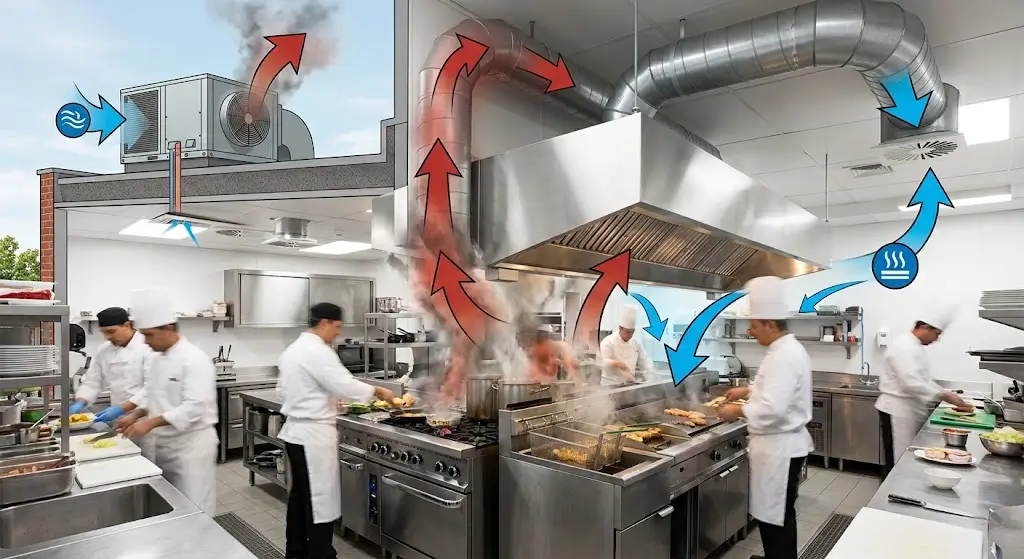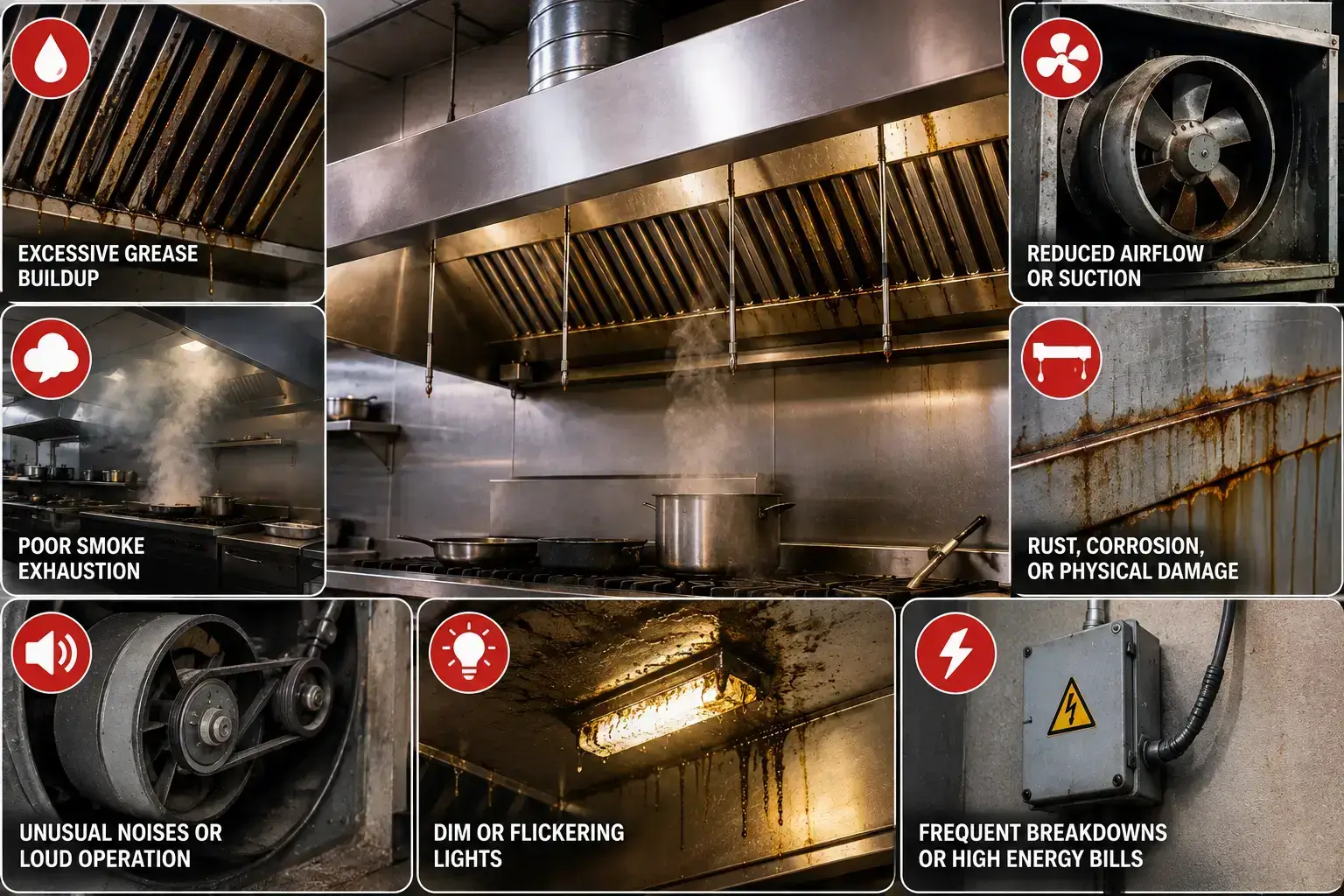


You do not need an engineering background to notice when a kitchen’s air balance is off. Most owners and kitchen managers pick up on it through everyday details: a door that fights back when you push through it, a window that fogs up no matter the season, or a utility bill that keeps climbing without a clear reason. These small, easy-to-dismiss details are often the first clue that your exhaust hood is removing more air than the space is getting back, and that a Make-Up Air Unit Installation may be overdue.
Below is a practical way to check for these signs yourself, organized by how they typically show up day to day, followed by what actually determines whether your kitchen needs a dedicated unit.
What You’ll Feel
Air balance problems tend to announce themselves physically before anyone thinks to connect them to the exhaust system.
- A back door or side entrance near the kitchen that takes real effort to pull open, or one that has started slamming shut on its own
- Cold or hot spots near the kitchen that do not match the rest of the building, even when the HVAC system seems to be working fine
- A kitchen that feels stuffier or more humid than the cooking equipment alone would explain
Staff are usually the first to notice these, often describing them as “the door’s been weird lately” long before anyone frames it as an air pressure issue.
What You’ll See
Some signs are visual and easy to check for directly.
- Condensation or fogging on windows near the kitchen, particularly in cooler months, which can point to humid interior air being trapped rather than properly exchanged
- Grease film building up faster than usual on surfaces near the hood, suggesting the exhaust system is not capturing vapor as efficiently as it should
- A pilot light on a water heater or gas appliance that has gone out more than once without an obvious cause
What You’ll Hear (or Not Hear)
Sound is an underrated indicator here. A properly balanced kitchen tends to run quietly in terms of airflow. A kitchen without enough make-up air often does not.
- A noticeable whooshing or rushing sound around door frames or window seams when the exhaust hood is running
- An exhaust fan that seems to be working harder or louder than it used to, even without any recent repair or replacement
What Your Utility Bill and Equipment Tell You
Some signs show up outside the kitchen entirely, in places owners do not always think to check first.
- A gas or electric bill that has crept upward without a corresponding change in kitchen usage, which can point to HVAC and combustion equipment working overtime to compensate for pressure imbalance
- Recurring service calls on gas equipment that keeps flagging issues technicians cannot fully explain
- A CO detector that has triggered, even briefly, with no other clear cause identified
A triggered CO detector in particular should never be treated as a minor inconvenience. It can be an early warning that combustion appliances are back-drafting due to negative pressure in the space.
Does the Season Change What You Notice?
Air balance issues do not always show up the same way year-round. In colder months, a tightly sealed building with the heat running can make negative pressure symptoms, like sticking doors or window condensation, more noticeable. In warmer months, the same underlying imbalance might show up more as HVAC strain or uneven cooling instead. If you have only ever noticed these issues seasonally, that does not mean the underlying problem is seasonal too. It often just means the symptoms are easier to notice at certain times of year.
When More Than One Sign Shows Up Together
Any single item on this list could have an unrelated explanation on its own. A door might just need adjusting. A pilot light might have a separate issue. What tends to be more telling is when several of these signs show up around the same timeframe, since that pattern points toward one shared cause rather than several unrelated ones.
What Actually Determines If You Need a Dedicated Unit
Noticing these signs tells you something is off. It does not automatically tell you what the fix should look like. Whether your kitchen needs a dedicated make-up air unit, and how it should be sized, comes down to a few project-specific factors:
- How much air your exhaust hood removes
- How tightly sealed your building is, and how much air naturally infiltrates through construction gaps
- What your local code jurisdiction requires under NFPA 96 and the IMC, since thresholds and amendments vary by location
- Whether your existing HVAC setup already contributes any partial make-up air
Because these factors differ from building to building, guessing at a fix based on the signs alone can lead to an undersized or mismatched system. A site assessment that looks at the exhaust hood and building together is the only reliable way to know what your kitchen actually needs.
Why This Isn’t a DIY Diagnosis
It can be tempting to treat a sticking door with a new hinge or a fogging window with a dehumidifier, but those responses address the symptom without touching the underlying air balance. Commercial hood and make-up air systems are specialized, code-governed work, and in several states, purchasing a commercial hood and exhaust system legally requires a company holding proper HVACR licensing. A licensed fabricator evaluating your exhaust hood and air balance together is in a much better position to identify the real cause than troubleshooting each symptom individually.
Who Handles What
Make-up air problems sometimes surface alongside other building concerns, like HVAC performance or gas appliance servicing. It is worth being clear that coordinating those related systems and vendors ultimately falls to the owner or the facilities manager overseeing the building. A fabricator’s role is to evaluate the kitchen’s exhaust and air balance and recommend the right make-up air solution, not to manage unrelated building systems.
Trust the Pattern, Not Just One Symptom
A sticking door, a foggy window, a climbing utility bill, and a fan that runs louder than it used to can each seem minor on their own. Together, they often tell a consistent story about a kitchen that is not getting back the air its exhaust hood is removing. If several of these signs sound familiar, the next step is a professional evaluation that looks at the whole picture, not a fix aimed at just one symptom.
Frequently Asked Questions
Can weather or season affect whether I notice make-up air problems?
Yes. Cold months can make symptoms like sticking doors or window condensation more noticeable due to sealed buildings and active heating. Warm months might show the same underlying issue through HVAC strain instead, so seasonal timing does not mean the cause itself is seasonal.
Do I need to see multiple signs before it’s worth investigating?
Not necessarily, but a pattern of several signs appearing around the same time is a stronger indicator than any one symptom alone, since individual issues like a sticking door can sometimes have unrelated causes.
Can my existing HVAC system compensate for a lack of make-up air?
Partially, in some cases, but this usually means your HVAC system is working harder than it should to offset the imbalance, which often shows up as rising energy costs rather than solving the underlying issue.
Is a triggered carbon monoxide detector always related to make-up air?
Not always, but negative pressure causing gas appliances to back-draft is a known cause worth ruling out immediately. A CO detector alert should always be treated as urgent regardless of the suspected cause.