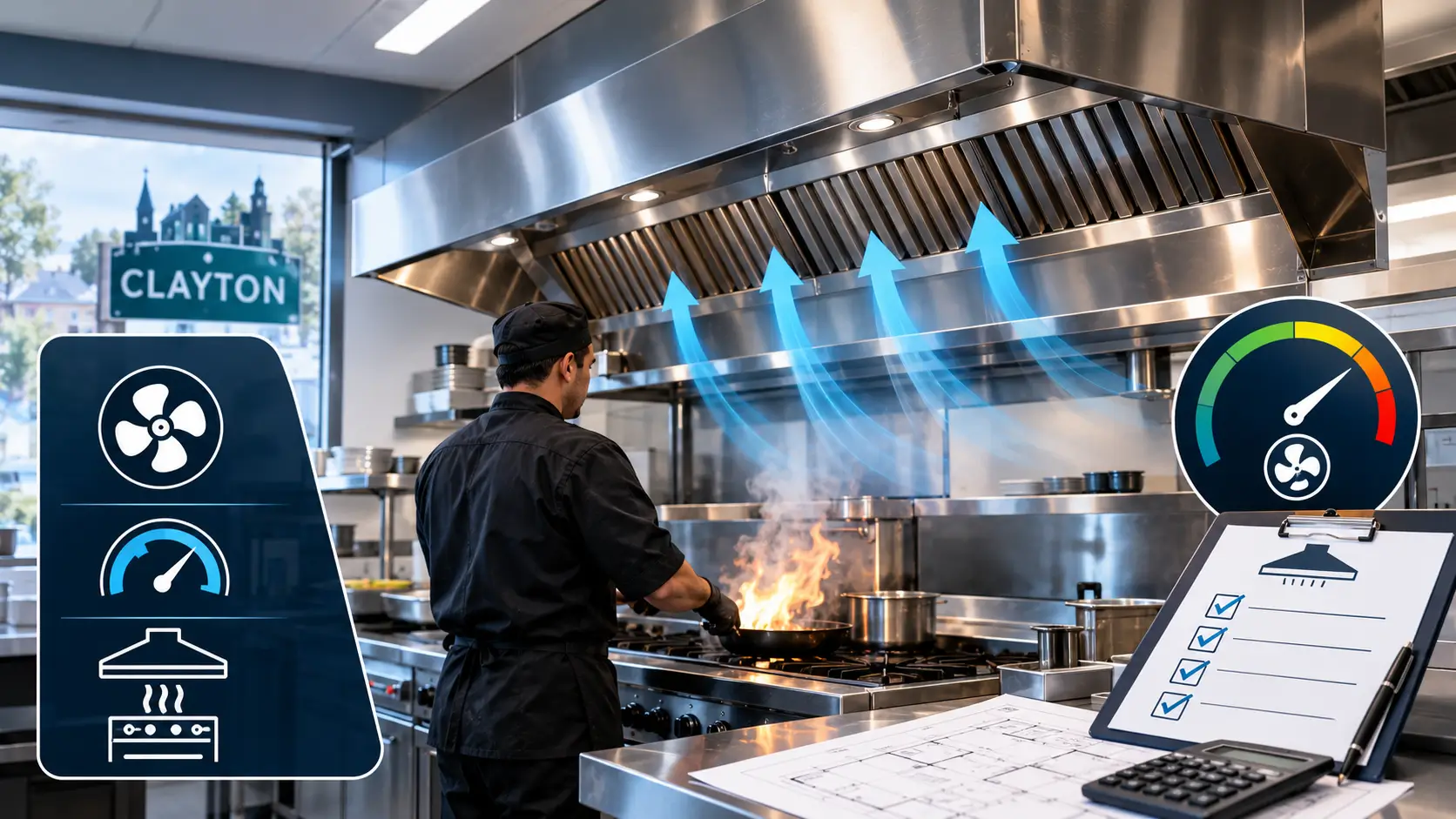

Skipping a scheduled hood cleaning rarely causes an immediate, visible problem, which is exactly why it is so easy to push off. But the consequences do not disappear just because they are not obvious right away. A missed cleaning cycle can lead to a failed inspection, complications with your insurance coverage, a more expensive and more disruptive cleaning job down the road, faster wear on exhaust equipment, and an elevated fire risk that only becomes apparent when it is already too late to prevent. Staying on schedule with Commercial Hood Cleaning Services is what keeps these consequences from becoming your kitchen’s reality.
Rather than treating a skipped cleaning as a single missed task, it helps to think through what actually happens on the other side of that decision, since the effects tend to show up in places owners do not always expect.
The Inspection You Weren’t Expecting to Fail
One of the more immediate risks of skipping a scheduled cleaning is walking into a routine inspection without realizing your exhaust system no longer meets the standard it did the last time it was checked. Inspectors evaluate grease accumulation as part of a broader fire safety review, and a system that has gone past its appropriate cleaning interval can fail this portion of an inspection even if every other part of the kitchen is fully compliant.
A failed inspection over something as specific as overdue cleaning is also one of the more avoidable outcomes on this list, since it comes down entirely to scheduling rather than a design or equipment issue that would take longer to resolve.
What It Can Mean for Your Insurance Coverage
Many commercial property and liability insurance policies reference maintenance and code compliance, including hood cleaning records, as part of what coverage assumes is being maintained. If a kitchen fire were to occur and an investigation revealed the exhaust system was significantly overdue for cleaning, that finding can complicate a claim, since insurers may view neglected maintenance as a contributing factor rather than an unrelated coincidence.
This is not something most owners think about until a claim is actually in question, which is part of why maintaining consistent cleaning records matters beyond just passing inspections. It protects your position if you ever need to rely on your coverage.
A Cleaning Job That Gets Harder, Not Easier, the Longer You Wait
Grease that has had extra time to accumulate does not clean the same way as grease removed on a normal schedule. Buildup that has sat for multiple missed cycles is often thicker, more baked-on from repeated heat exposure, and harder to fully remove, which can mean a longer, more labor-intensive service call than a routine cleaning would have required.
In more extreme cases, extended buildup can make certain areas of the system more difficult to bring back into full compliance in a single visit, sometimes requiring follow-up service to fully address what accumulated during the time cleaning was skipped.
Equipment That Wears Out Sooner Than It Should
Skipping cleaning does not just affect the grease itself. It affects how hard the rest of the system has to work around that buildup. An exhaust fan compensating for restricted airflow experiences more strain than it would in a properly maintained system, and that added strain tends to shorten how long the fan performs reliably before needing repair or replacement. A kitchen that skips cleaning cycles is often, without realizing it, also shortening the usable life of equipment that has nothing to do with cooking itself.
The Fire Risk You Don’t See Coming
Perhaps the most serious consequence of skipping hood cleaning is the one that does not show up as an inconvenience at all, at least not until it does. Accumulated grease is combustible fuel sitting inside a system that routes hot exhaust air. A kitchen that has skipped multiple cleaning cycles is carrying more of that fuel than a properly maintained system would, and the risk that a flare-up from cooking equipment below could ignite it grows correspondingly. This is not a risk that announces itself in advance. It is a risk that exists quietly until conditions align for it to become an actual incident.
Complaints, Odor, and the Reputation Cost
Skipping cleaning can also show up in ways that affect day-to-day operations before any of the more serious consequences occur. Persistent grease odor, visible residue near the hood, or staff comments about air quality in the kitchen are common early signs. In some cases, health department complaints or customer-facing issues can arise well before a fire marshal or insurance concern ever enters the picture, adding a reputational cost to what started as a scheduling oversight.
Why “Just This One Cycle” Rarely Stays That Way
It is easy to justify skipping a single cleaning cycle, particularly during a busy period or when budgets are tight. The difficulty is that one skipped cycle often makes the next cleaning more involved, which can create pressure to push it off again rather than absorb a bigger service call. This pattern is how a single missed cleaning can turn into a kitchen that is meaningfully behind schedule, with consequences that compound the longer the gap continues.
Why Staying on Schedule Is the More Practical Choice
None of the consequences described here are inevitable. They are what happens specifically when cleaning falls behind schedule, which makes staying current the more straightforward path compared to managing the fallout of having skipped it. A properly maintained cleaning schedule, based on your kitchen’s actual cooking volume and equipment, keeps your system out of the position where any of these outcomes become a real possibility.
Why This Requires Professional, Documented Service
Because grease accumulates throughout the entire exhaust path, including sections not visible during daily operation, effectively catching up after a skipped cleaning, or staying ahead of the schedule in the first place, requires a professional service capable of accessing and cleaning the full system, along with documentation confirming the work was completed. This documentation matters just as much as the physical cleaning itself, since it is what demonstrates compliance if your maintenance history is ever reviewed.
Getting Back on Track
If your kitchen has fallen behind on its cleaning schedule, the most practical next step is addressing it directly rather than continuing to push it off, since the consequences described here only become more likely the longer the gap continues. A professional evaluation can confirm where your system currently stands and get you back onto a schedule that reflects your actual cooking volume going forward.
Frequently Asked Questions
Can a single skipped cleaning cycle actually cause a failed inspection?
Yes. Inspectors evaluate grease accumulation as part of a broader fire safety review, and a system that has gone past its appropriate cleaning interval can fail that portion of an inspection even if the rest of the kitchen is fully compliant.
Does skipping hood cleaning really affect insurance coverage?
It can. Many policies assume ongoing maintenance and code compliance, and if a kitchen fire investigation reveals significantly overdue cleaning, insurers may view that as a contributing factor, which can complicate how a claim is evaluated.
Why does a delayed cleaning job take longer than a routine one?
Grease that has accumulated over multiple missed cycles tends to be thicker and more baked-on from repeated heat exposure, which generally requires more labor to fully remove compared to grease cleaned on a normal, consistent schedule.
Can skipping cleaning shorten the life of an exhaust fan?
Yes. A fan compensating for airflow restricted by grease buildup experiences more mechanical strain, which can accelerate wear and shorten how long it performs reliably before needing repair or replacement.
Are odor complaints usually an early sign of overdue cleaning?
Often, yes. Persistent grease odor or visible residue near the hood tend to show up before more serious consequences, making them one of the earlier and more noticeable signs that a cleaning cycle has been skipped or delayed.
What’s the best way to catch up if a kitchen has fallen behind schedule?
The most reliable approach is a professional evaluation to confirm the system’s current condition and bring it back into compliance, followed by returning to a cleaning schedule based on the kitchen’s actual cooking volume rather than continuing to delay service.