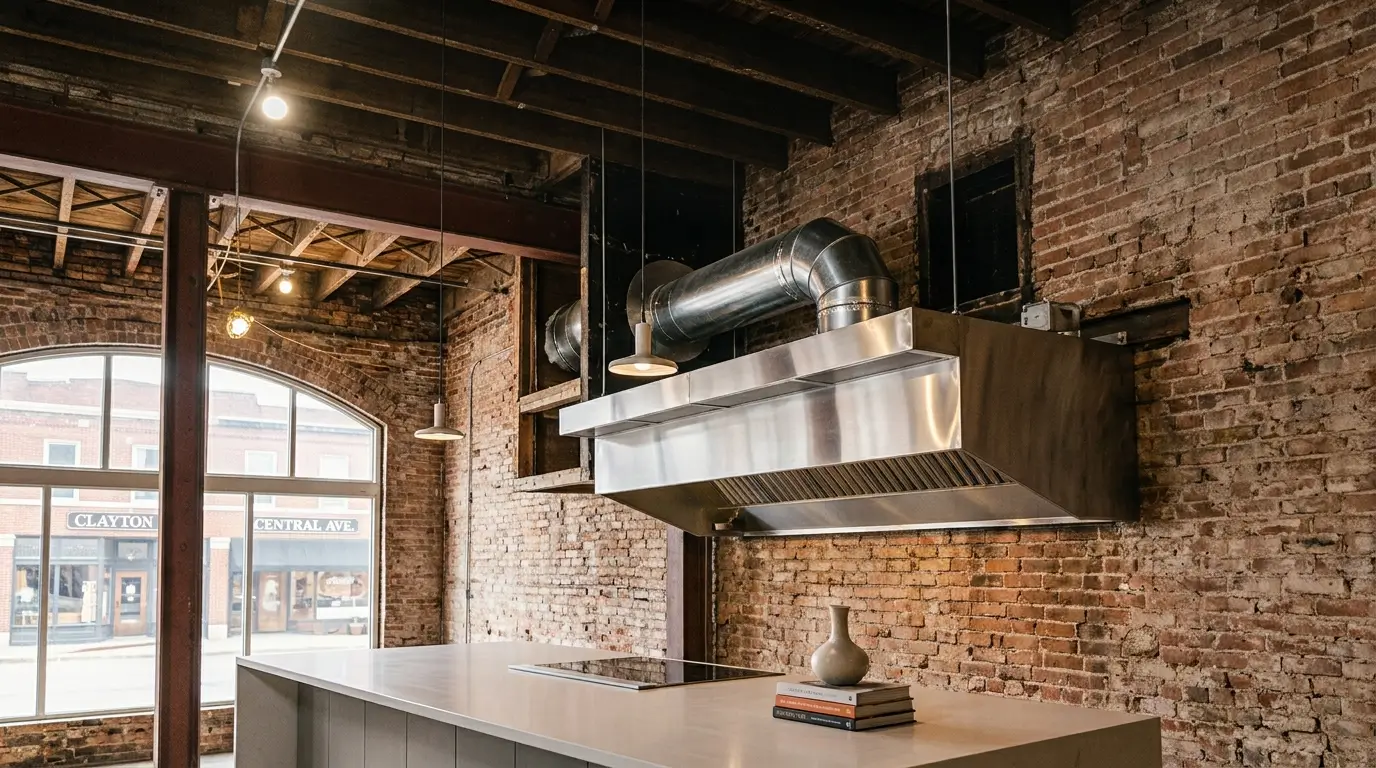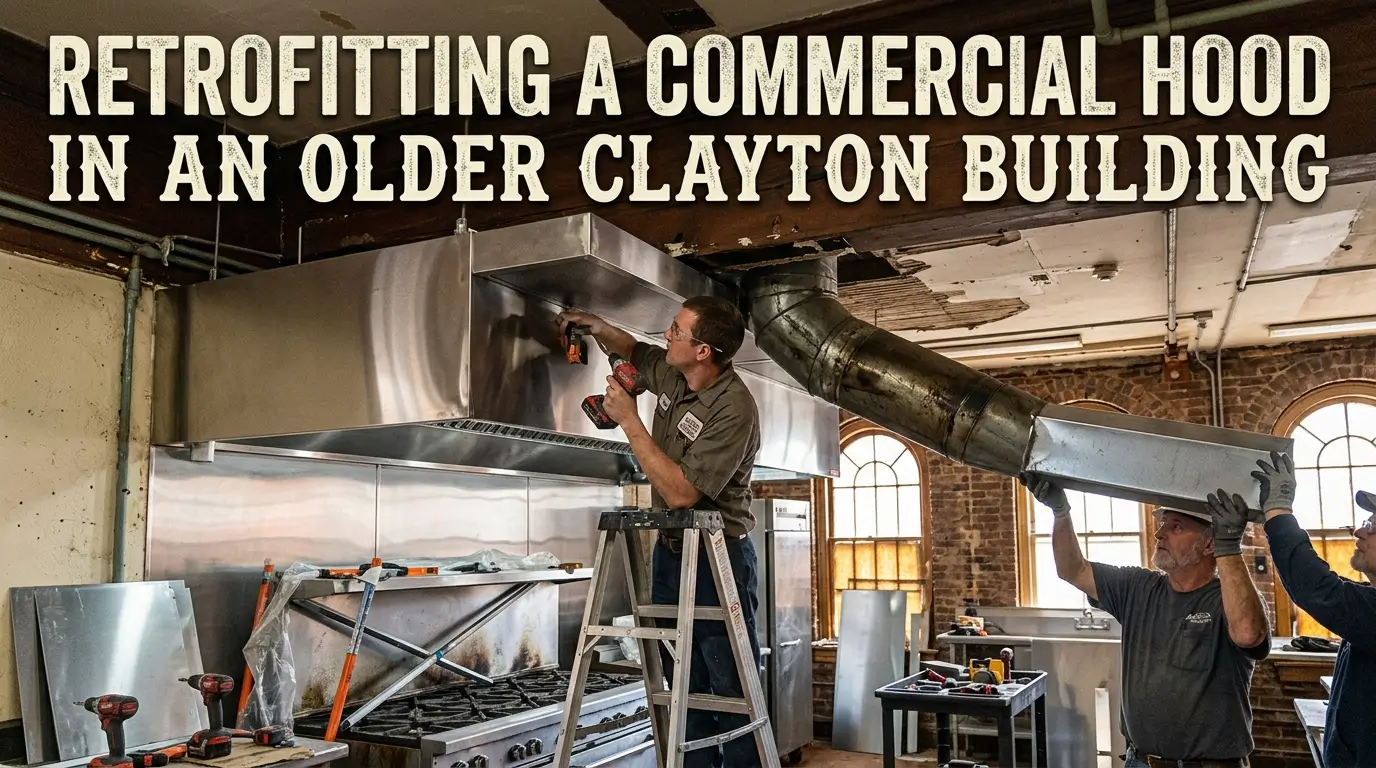

Welded grease duct fabrication matters because the alternative, a duct system with even one imperfectly sealed seam, creates a fire hazard that can develop unseen inside walls, ceilings, and chases long before anyone notices a problem. It is also the difference between a system that passes inspection and one that does not, and between ductwork that holds up for years and ductwork that eventually needs to be cut open and repaired. Custom welded grease duct fabrication is not a premium upgrade on top of standard ductwork. It is the baseline that grease duct is held to, for reasons that become clearer once you understand what happens when a duct is built without it.
A Fire Hazard That Hides Where You Cannot See It
Most fire risks in a commercial kitchen are visible: an open flame, a hot surface, a grease trap that needs attention. Grease duct is different. It routes hot, grease-laden exhaust through spaces that are often concealed entirely, behind drywall, above ceilings, or through vertical chases that run between floors. A seam that is not fully sealed becomes a point where grease can accumulate inside that hidden space, out of sight and out of mind, until conditions are right for it to ignite.
This is precisely the scenario welded fabrication exists to prevent. A continuous weld leaves no gap for grease to escape through, which means the hazard a leaking seam would otherwise create simply does not have anywhere to develop. The importance of welded construction is not really about the weld itself. It is about eliminating a fire risk that would otherwise be building quietly in a place no one checks on a daily basis.
What Happens When a Seam Is Not Fully Sealed
A duct joint that relies on sealant, tape, or mechanical fasteners instead of a continuous weld does not fail immediately. It fails gradually, as heat cycling, vibration, and repeated exposure to grease-laden vapor slowly degrade whatever was holding that joint together. Sealant that looked adequate at installation can dry out and crack years later. A mechanical fastener that seemed secure can loosen as the duct expands and contracts through normal use.
By the time a leak becomes visible, whether through staining, odor, or a maintenance technician noticing residue in an unexpected place, grease has often already been accumulating for some time. Addressing it at that point usually means opening up whatever wall, ceiling, or chase the duct runs through, which turns a fabrication issue into a construction project.
Why Inspectors Take Duct Seams Seriously
Grease duct construction is one of the more specifically scrutinized elements of a commercial kitchen exhaust system during inspection, precisely because NFPA 96 addresses it in detail. A hood system with a well-installed hood and a properly functioning fan can still fail inspection if the duct connecting them was not fabricated to the continuous welded standard the code requires.
This matters for restaurant owners because a duct issue is not always something that shows up as an obvious problem during day-to-day operation. A system can run without any visible sign of trouble and still not meet the construction standard an inspector is specifically trained to check for. That gap between “seems fine” and “meets code” is exactly why welded fabrication is treated as a requirement rather than a preference.
The Cost of Getting It Wrong the First Time
Correcting improperly fabricated grease duct after the fact is rarely a simple fix. Because the duct is often routed through concealed spaces, addressing a leaking or non-compliant seam typically means accessing that space, which can mean cutting into finished walls or ceilings that were never designed to be reopened. What would have been a straightforward fabrication decision at the time of installation becomes a disruptive repair once the building has already been finished around it.
This is one of the clearest reasons welded fabrication is worth prioritizing from the start rather than treating duct quality as a place to cut corners. The cost difference between doing it right initially and correcting it later is rarely close.
Long-Term Reliability Under Real Operating Conditions
Grease duct does not operate under gentle conditions. It carries hot exhaust continuously during operating hours, expands and contracts as temperatures shift, and experiences vibration from the exhaust fan connected to it. A welded seam is built to hold up under this kind of sustained stress in a way that mechanically fastened or sealed joints generally are not, which is part of why welded construction is specified for a system that needs to perform reliably for years, not just at the moment of installation.
This reliability also affects how the system holds up to routine cleaning and inspection over its service life. A duct with sound, welded seams maintains its integrity through repeated cleaning cycles far more consistently than a duct with joints that were never designed to be fully sealed in the first place.
Why This Work Should Not Be Treated as a Commodity
Because the consequences of a poorly fabricated duct are largely invisible until something goes wrong, it can be tempting to treat grease duct as a minor line item rather than a critical part of the exhaust system. In practice, the quality of the fabrication behind the duct matters just as much as the quality of the hood itself, since both are working together as one system governed by the same code requirements.
This is why welded grease duct fabrication should come from a fabricator with specific experience in this type of work, not a general sheet metal shop applying standard ductwork practices to a grease application. In several states, purchasing a commercial hood and exhaust system, including the duct that connects to it, legally requires a company holding proper HVACR licensing, which reflects how seriously this work is regulated.
Coordinating Duct Work With the Rest of a Project
Grease duct fabrication often overlaps with structural planning, roofing, and general construction during a build-out. It is worth being clear that coordinating those other trades and vendors across a project ultimately falls to the owner or the general contractor managing the build. A fabricator’s role is to design, fabricate, and install a code compliant duct system for the specific building involved, not to manage the surrounding construction schedule.
The Bigger Picture
Welded grease duct fabrication matters because it addresses a risk that is easy to overlook precisely because it is hidden. A properly welded system protects the building from a fire hazard that would otherwise develop out of sight, keeps the kitchen aligned with the code an inspector is specifically checking, and avoids the far more expensive and disruptive correction that comes with fixing improperly sealed ductwork after the fact.
If you are planning a new hood installation or evaluating existing ductwork, a professional site assessment is the most reliable way to confirm that your grease duct meets the standard it needs to.
Frequently Asked Questions
Why is a hidden grease leak inside a duct more dangerous than a visible one?
Because it develops out of sight, often inside walls or ceilings, a hidden leak can accumulate for a long time before anyone notices staining, odor, or residue. By the time it is discovered, grease has often been building up in a concealed space for an extended period.
Can a hood system fail inspection because of the duct even if the hood itself is fine?
Yes. Inspectors specifically evaluate grease duct construction against NFPA 96 requirements, so a well-installed hood and functioning fan will not offset a duct that was not fabricated to the continuous welded standard the code requires.
Why does correcting a bad duct seam later cost more than doing it right the first time?
Grease duct often runs through concealed spaces, so correcting a leaking or non-compliant seam typically requires accessing finished walls or ceilings. That kind of repair is usually far more disruptive and costly than fabricating the duct correctly during initial installation.
Does grease duct experience wear over time the way other equipment does?
Yes. It is exposed to continuous heat, temperature cycling, and vibration from the exhaust fan during regular operation. Welded seams are built to withstand this ongoing stress more reliably than mechanically fastened or sealed joints.
Is welded grease duct fabrication only relevant to new construction?
No. Existing ductwork can develop issues over time, particularly at joints that were not originally welded, which makes evaluating existing duct construction relevant during renovations, hood replacements, or if leak-related symptoms appear.
Why does grease duct fabrication require a specialized fabricator rather than a general sheet metal contractor?
Grease duct construction is governed by specific fire and mechanical code requirements, including continuous welding standards. A fabricator experienced specifically in grease duct work understands these requirements in a way general sheet metal experience does not automatically cover.