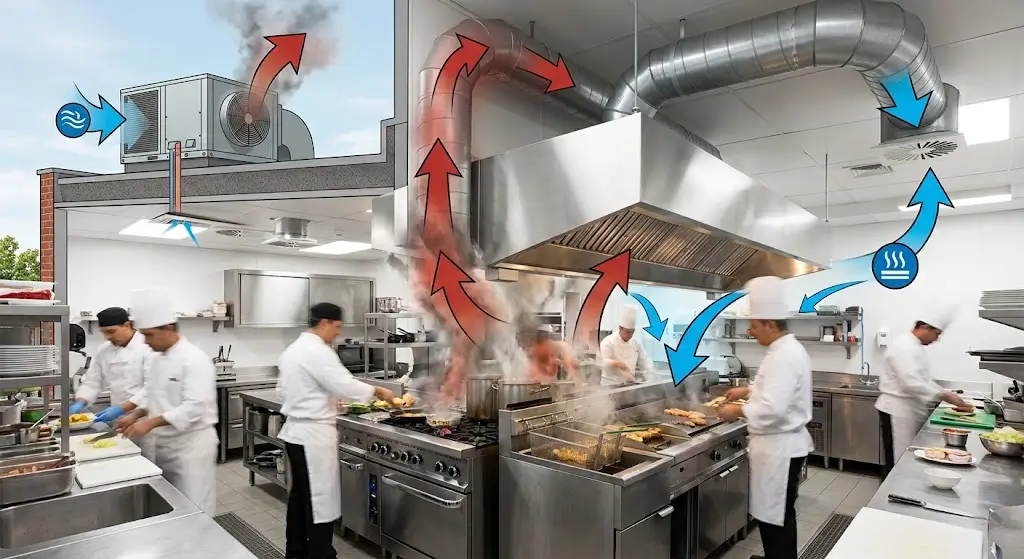


The clearest signs a commercial exhaust fan needs repair or replacement are unusual noise or vibration, weak or inconsistent airflow, visible grease buildup around the fan, rising energy costs tied to motor strain, and physical damage like rust or corrosion. Any one of these on its own is worth addressing. Several appearing together usually means the system is past due for a professional evaluation. If you have noticed any of these issues and are researching commercial exhaust fan repair services in Delaware, understanding what each sign actually means will help you know how urgent the problem is before you call anyone out.
An exhaust fan rarely fails without warning. Most problems show up gradually, through small changes in sound, airflow, or performance that are easy to dismiss until they become a bigger issue. Catching these signs early is not just about avoiding an inconvenient breakdown. It is about staying compliant, since a malfunctioning exhaust system can put a kitchen out of code before anyone realizes there is a problem.
Unusual Noise or Vibration
A healthy exhaust fan runs with a fairly consistent sound. Grinding, rattling, high-pitched squealing, or noticeable vibration through the roof or ductwork are signs that something inside the fan assembly has shifted, worn down, or come loose. This can include bearing wear, an unbalanced fan wheel, or a motor that is struggling under load.
Noise changes are often one of the earliest indicators of a developing problem, which makes them worth taking seriously even if the fan still appears to be exhausting air. Left unaddressed, the underlying issue tends to get worse, sometimes leading to a full fan failure at an inconvenient time.
Weak or Inconsistent Airflow
If the kitchen feels hotter than usual, smoke or steam lingers longer than it should, or staff notice the exhaust system does not seem to be pulling air the way it used to, weak airflow is likely at play. This can stem from several sources: a failing motor, a damaged fan wheel, blocked or restricted ductwork, or a buildup of grease and debris reducing the fan’s effective capacity.
Weak airflow is not just a comfort issue. It directly affects how well the exhaust system is removing heat, smoke, and grease-laden vapor from the kitchen, which ties back to both air quality and fire safety.
Grease Buildup and Residue Around the Fan
A certain amount of grease accumulation is expected in any Type I exhaust system over time, which is why regular cleaning is part of standard maintenance. But excessive buildup, especially grease pooling near the fan base or visible residue extending beyond normal cleaning intervals, can indicate the fan is not exhausting effectively or that airflow patterns have shifted in a way that is depositing more grease than the system was designed to handle.
This matters beyond aesthetics. NFPA 96 treats grease accumulation as a direct fire safety concern, and a fan contributing to abnormal buildup patterns is a sign the system needs a closer look.
Rising Energy Costs Without a Clear Explanation
A motor that is working harder than it should, whether due to bearing wear, an imbalanced fan wheel, or general mechanical strain, tends to draw more energy to maintain the same output. If energy costs tied to kitchen ventilation have crept upward without an obvious explanation, a struggling exhaust fan motor is worth ruling out.
This sign is easy to miss because it shows up gradually on a utility bill rather than as an obvious mechanical symptom, which is part of why routine inspection matters even when nothing seems visibly wrong.
Visible Rust, Corrosion, or Physical Damage
Because exhaust fans are typically mounted outdoors on the roof, they are exposed to weather, moisture, and temperature swings year-round. Visible rust, corroded housing, damaged blades, or a curb that has started to deteriorate are all signs that the fan’s structural integrity may be compromised, not just its performance.
Corrosion in particular can be difficult to fully assess without a hands-on inspection, since surface rust does not always indicate how much internal damage has occurred. A fan with significant corrosion is often a stronger candidate for replacement than repair, depending on how far the damage extends.
Repeated Inspection Issues
If an exhaust fan or the broader exhaust system has come up as a concern during more than one inspection cycle, that pattern is worth paying attention to on its own. Recurring issues, even minor ones, often point to an underlying problem that a one-time fix did not fully resolve. A restaurant cannot legally continue operating if its exhaust system falls out of code, which makes repeated inspection flags one of the more serious signs to act on quickly.
Age of the System
There is no single universal lifespan that applies to every exhaust fan, since how long a system lasts depends on usage intensity, maintenance history, kitchen type, and environmental exposure. That said, an older fan approaching or exceeding its expected service life is more likely to develop the issues described above, and it is worth factoring age into the conversation when deciding between repair and replacement, alongside the specific symptoms the fan is showing.
Repair or Replacement: What Actually Determines the Right Call
Whether a struggling exhaust fan should be repaired or replaced depends on several factors working together, not a fixed rule based on any single sign:
Extent of the damage: A worn bearing or minor vibration issue is often a straightforward repair. Significant corrosion, motor failure, or damage to the fan housing itself may point toward replacement instead.
Frequency of the problem: A fan that has needed the same repair more than once is often signaling a deeper issue that a repeated fix will not resolve.
Age and remaining service life: An older fan nearing the end of its expected lifespan may not be worth repairing if a major component fails, since the cost and effort of a significant repair can approach what a new, properly sized system would require.
Compatibility with the current system: If the kitchen’s equipment lineup or code requirements have changed since the original fan was installed, replacement can be an opportunity to correct a sizing or configuration issue rather than repairing a fan that was never quite right for the space to begin with.
These factors do not point to the same answer for every kitchen, which is why an accurate repair-versus-replacement decision should come from a hands-on evaluation rather than a general guideline applied from a distance.
Why This Work Belongs With a Licensed Fabricator
Diagnosing and correcting exhaust fan issues involves more than swapping a part. It requires understanding how the fan interacts with the hood, ductwork, and makeup air system it is part of, along with the code requirements that govern commercial kitchen exhaust systems under NFPA 96 and the IMC. In several states, purchasing or servicing a commercial hood and exhaust system legally requires a company holding proper HVACR licensing, which reflects how specialized this work actually is compared to general HVAC or maintenance tasks.
A repair performed without accounting for the full system can resolve a symptom temporarily while leaving the underlying cause in place, which often means the same issue resurfaces later.
Coordinating Repairs Within a Larger Project
Exhaust fan repair or replacement sometimes overlaps with roofing work, electrical updates, or other kitchen maintenance happening around the same time. It is worth being clear that coordinating those other trades and vendors ultimately falls to the owner or the general contractor managing the property. A fabricator’s role is to evaluate the exhaust fan and system, and recommend and perform the right repair or replacement, not to manage the surrounding maintenance schedule.
When to Have Your System Evaluated
Noise, weak airflow, grease buildup, rising energy costs, visible damage, and repeated inspection issues are all signs worth acting on rather than waiting out. Because the right response depends on the specific condition of your system, the most reliable next step is a professional evaluation that looks at the fan, hood, and ductwork together, rather than guessing based on a single symptom alone.
Frequently Asked Questions
What does unusual noise from an exhaust fan usually indicate?
Grinding, rattling, or squealing noises often point to bearing wear, an unbalanced fan wheel, or a motor under strain. These issues tend to worsen over time, so noise changes are usually one of the earliest signs worth investigating.
Can weak airflow happen even if the fan is still running?
Yes. A fan can still operate while pulling significantly less air due to motor wear, ductwork blockages, or grease buildup reducing capacity. Weak airflow affects how well heat, smoke, and grease-laden vapor are removed from the kitchen.
Is some grease buildup around the fan normal?
A certain amount is expected between regular cleanings. Excessive buildup or grease pooling beyond normal intervals can indicate the fan is not exhausting effectively, which NFPA 96 treats as a fire safety concern rather than just a maintenance issue.
How do I know if my exhaust fan needs repair or replacement?
The right call depends on the extent of the damage, how often the problem recurs, the fan’s age, and whether it still matches your kitchen’s current equipment and code requirements. These factors are best evaluated together during a professional inspection.
Does an older exhaust fan always need to be replaced?
Not necessarily. Age is one factor among several, and an older fan without significant damage may still be a candidate for repair. However, a major component failure on an aging system often makes replacement the more practical option.
Why does exhaust fan repair need a licensed fabricator instead of general maintenance staff?
Exhaust fan issues are often tied to how the fan interacts with the hood, ductwork, and makeup air system, along with NFPA 96 and IMC requirements. A licensed fabricator can diagnose the full system rather than addressing a symptom in isolation.