
So you are opening a restaurant, finishing a kitchen buildout, or replacing an old ventilation system, and you already know one thing: the hood has to be installed right. Commercial kitchen hoods are installed by licensed kitchen ventilation specialists, sheet metal fabricators, and fire suppression professionals working together as a coordinated team, the kind of work CRS Hoods has been doing since 1980.
It is not a simple call to the first general contractor you find online, because this job involves ductwork, mechanical work, fire suppression, electrical connections, and strict code compliance. This work requires specialized fabrication, fire protection, and grease-handling expertise that falls outside standard mechanical contractor licensing, which is why hood installation calls for a different kind of specialist entirely.
Hire the wrong team, and you risk failed inspections, insurance problems, and safety issues. Hire the right one, and your kitchen is compliant, safe, and ready to operate.
This guide breaks down exactly who installs commercial kitchen hoods, what qualifications they need, and how to vet them before you sign a contract.
Why You Cannot Just Hire Anyone for This Job
Here is something worth saying upfront: a commercial kitchen hood installation is not a handyman job, and it is definitely not a DIY project. The complexity goes well beyond hanging a metal box over a stove.
A properly installed commercial hood system involves calculating precise airflow rates in cubic feet per minute (CFM), designing and fabricating ductwork to welded steel specifications, integrating a fire suppression system, balancing a makeup air unit, pulling multiple permits, and coordinating with the fire marshal and local building department. Every jurisdiction has its own specific requirements layered on top of the national baseline set by NFPA 96, the Standard for Ventilation Control and Fire Protection of Commercial Cooking Operations.
Miss any of those pieces, and the system either fails inspection, creates a fire hazard, or both. This is why the people who do this work professionally are specialized, licensed, and experienced in ways that general tradespeople simply are not.
The Main Types of Contractors Who Install Commercial Kitchen Hoods
There is no single job title that exclusively owns commercial kitchen hood installation. In practice, several different types of contractors do this work, sometimes individually and sometimes in teams. Here is who they are and what each brings to the table.
Kitchen Ventilation Specialists
A kitchen ventilation specialist is essentially an HVAC contractor who has narrowed their entire practice to commercial kitchen exhaust systems. These contractors know the nuances of Type I and Type II hood configurations, CFM calculations for different cooking equipment categories, makeup air integration, and NFPA 96 compliance in a way that a generalist HVAC shop simply does not.
If you are opening a high-volume restaurant, running multiple cooking stations, or dealing with a complex kitchen layout, a ventilation specialist is often worth the premium. They have seen edge cases that general contractors have not, and they are less likely to need a do-over when the fire marshal comes to inspect.
Companies like CRS Hoods, which has been installing commercial kitchen exhaust systems since 1980, are a good example of what this specialization looks like in practice. Their entire operation is built around kitchen ventilation, which means faster installs, first-time inspection passes, and fewer surprises during the project.
Sheet Metal Fabricators and Installers
Ductwork for commercial kitchen exhaust systems is not off-the-shelf, especially for Type I installations. It must be fabricated from durable, noncombustible material with continuous liquid-tight welds, with the exact gauge and specification depending on the system design and local code requirements. That is the work of a licensed sheet metal contractor, and in many jurisdictions it must be performed by a registered sheet metal technician or apprentice.
Some kitchen ventilation specialists have in-house sheet metal fabrication, which streamlines the project significantly. Others subcontract it out. Either way, the quality of the ductwork fabrication has a direct impact on how the system performs and whether it passes inspection. Gaps, screwed seams, or improper gauge material are grounds for an instant fail.
General Contractors Working with Sub-Trades
In new construction or major renovation projects, a general contractor (GC) often takes the lead role and coordinates multiple subcontractors. The GC may hire a licensed kitchen ventilation specialist for the hood and ductwork design, a fire suppression company for the suppression system, and an electrician for the hood lighting and fan motor wiring.
This approach works well when the GC has strong experience managing commercial kitchen projects and knows which subs to trust. It works less well when the GC is primarily a residential contractor who is learning as they go. In that situation, the kitchen hood installation often becomes the most complex and error-prone part of the whole project.
If you are working with a GC, always ask specifically who they plan to use for the kitchen ventilation and fire suppression work, and vet those subcontractors directly.
What Licenses and Certifications Should They Have?
Fire Suppression Certification
If your cooking equipment requires a Type I hood (which covers fryers, charbroilers, open-flame ranges, and most high-heat cooking), you also need a licensed fire suppression contractor. Wet chemical fire suppression systems must be installed by technicians certified to National Institute for Certification in Engineering Technologies NICET standards or certified directly by the manufacturer.
The suppression system must meet code-required fire suppression standards and be interconnected with a gas shut-off valve that automatically cuts fuel to cooking equipment when the system activates.
Electrical and Mechanical Permits
Commercial hood installations require mechanical permits, and often electrical permits as well for the exhaust fan motor wiring and hood lighting. Only licensed contractors can pull these permits in most jurisdictions.
The permit process varies by city and county. Many cities require a separate fire suppression permit in addition to the standard mechanical permit, so it’s worth confirming both with your local building department before work begins.
How the Installation Process Actually Works
Understanding the installation process helps you hold your contractor accountable and spot problems before they become expensive mistakes.
Site Assessment and System Design
Every legitimate commercial kitchen hood installation starts with a thorough site visit. The contractor or ventilation specialist measures your kitchen, documents your cooking equipment, assesses ceiling height and structural conditions, and evaluates existing HVAC infrastructure. From that information, they design the hood system, calculate CFM requirements, and map out the ductwork routing.
This design phase is not a formality. It is where the critical decisions get made: what hood type and size you need, where the exhaust fan goes, how makeup air gets introduced, and how the duct takes its path from hood to exterior. Skipping or rushing this phase leads to undersized systems, negative pressure problems, and failed inspections.
Permit Pulling and Code Review
Once the design is finalized, the contractor pulls the required permits from your local building department. For commercial kitchen exhaust systems, this typically involves submitting hood specifications, exhaust fan data, ductwork drawings, and sometimes ventilation calculations if the plans examiner requests them.
This stage can take anywhere from a few days to several weeks depending on your jurisdiction. Factor this into your project timeline, especially if you have a hard opening date. A contractor experienced with your local permit office can often move things faster because they know exactly what documentation the examiner expects.
Physical Installation and Coordination
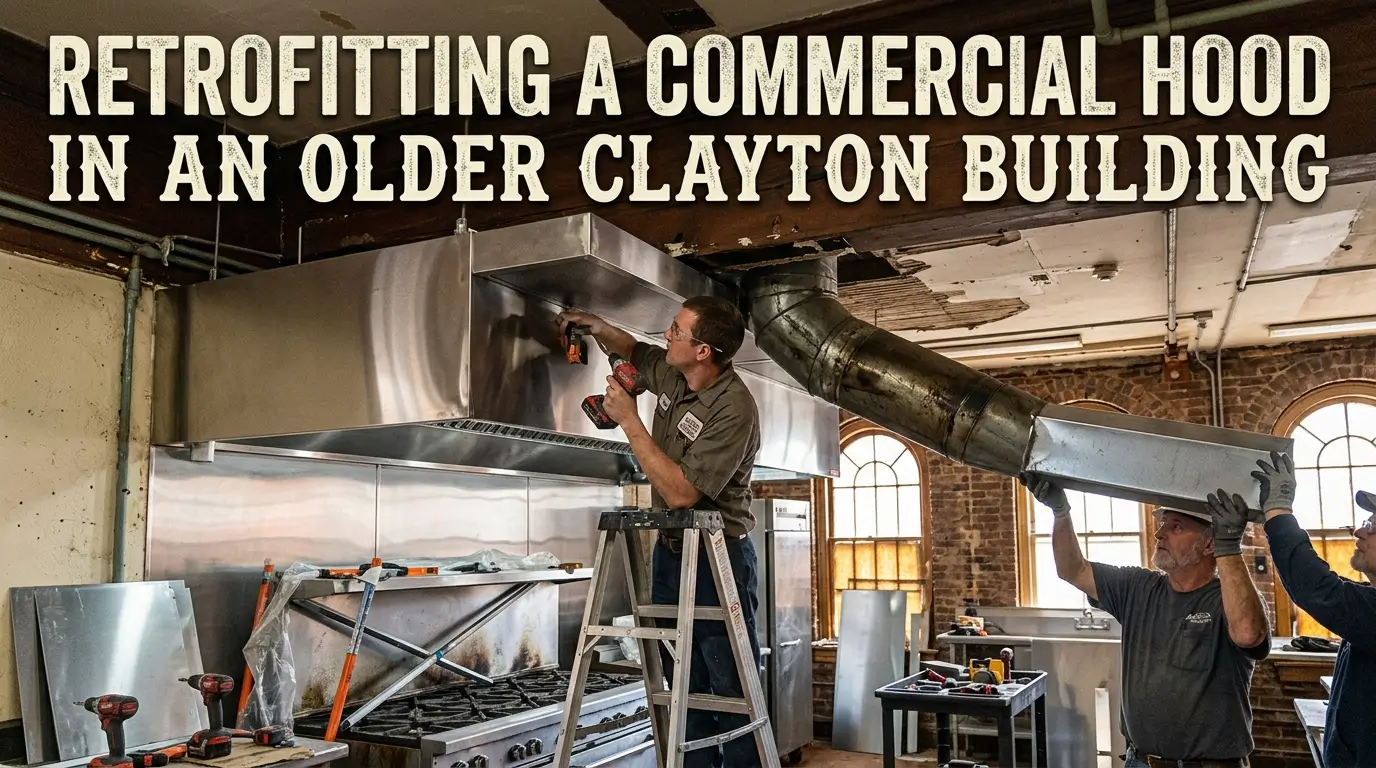
The actual installation phase involves multiple trades working in sequence. Ductwork gets fabricated and roughed in first. Then the hood body gets mounted and connected to the duct. The exhaust fan goes on the roof or exterior wall. Electrical connections happen next. Finally, the fire suppression contractor installs and connects the suppression system, including the fuel interlock.
Physical Installation and Coordination
Coordinating these trades well is where experienced kitchen ventilation contractors earn their fee. When one trade gets behind or does their work in the wrong order, everyone else on the project gets delayed. A specialist who manages this process regularly has systems in place to keep things moving.
Final Inspection and Sign-Off
Before your kitchen can legally operate, the installation must pass inspection. Depending on your jurisdiction, this could involve a mechanical inspection from the building department, a fire suppression inspection from the fire marshal, and a health department inspection as part of your operating permit review.
Contractors who are experienced with local inspection processes know exactly what inspectors look for and design and install accordingly. The gold standard is passing every inspection on the first visit without a punch list of corrections. That is achievable, but only with a contractor who is thorough and knows your local codes.
Red Flags to Watch for When Hiring
Not every contractor who claims to install commercial kitchen hoods is actually qualified to do so. Here are warning signs that should give you pause.
No verifiable state license. This is an automatic disqualifier. Ask for the license number and check it yourself with your state licensing board.
Vague answers about permits. Any contractor who says permits are not needed, or who offers to skip them to save time or money, is setting you up for serious problems down the road.
No experience with fire suppression systems. If they cannot clearly explain how the suppression system integrates with the hood and fuel supply, they do not have enough experience for this job.
Unable to provide references from similar projects. A commercial kitchen ventilation contractor should be able to point you to restaurants, cafeterias, or food service facilities where they have done similar work. If they cannot, ask why.
Lowest bid by a wide margin. In commercial kitchen ventilation, a price that is significantly below every other quote almost always means something is being left out, whether that is the makeup air system, proper duct materials, permits, or fire suppression coordination.
Questions to Ask Before You Hire
Walking into contractor conversations with the right questions puts you in control and helps you separate the qualified professionals from the pretenders. Here is a shortlist to keep in your back pocket.
How many commercial kitchen exhaust systems have you installed? You want real numbers and ideally references you can contact.
Are you licensed in this state for commercial mechanical work? Ask for their license number on the spot.
Who handles the fire suppression installation, and what is their certification? They should have a clear answer and a ready name.
Have you worked with our local building department and fire marshal before? Local experience matters more than people realize.
What happens if we do not pass inspection? A confident, experienced contractor will stand behind their work and correct any issues at no extra cost.
Can you provide a written scope of work that covers ductwork, makeup air, fire suppression, permits, and final inspection? If their quote does not clearly cover all of these, get clarity before you sign anything.
Conclusion
So, who installs commercial kitchen hoods? The short answer is: licensed, experienced professionals who specialize in commercial kitchen ventilation, mechanical systems, fire suppression, and local code compliance. That could be a kitchen ventilation specialist, a sheet metal fabricator, a fire suppression contractor, or a team of coordinated sub-trades managed by a general contractor.
The long answer is that who you hire matters enormously. The right contractor passes inspection the first time, installs a system that actually captures what it is supposed to, coordinates fire suppression and makeup air properly, and stands behind their work. The wrong one costs you time, money, and potentially your operating permit. Since 1980, CRS Hoods has built its entire business around getting this right, passing inspections, coordinating every trade involved, and standing behind the work.
Do your homework, verify licenses, ask the right questions, and do not let price alone drive the decision. Your commercial kitchen hood is too important to gamble on.
FAQs
Can a regular HVAC company install a commercial kitchen hood?
No. Commercial kitchen hood installation is a specialized scope of work that licensed hood and ventilation specialists handle, not general HVAC contractors. It involves grease duct fabrication, fire suppression integration, and code requirements specific to commercial cooking operations that fall outside standard HVAC licensing and training.
Do I need a permit to install a commercial kitchen hood?
Yes, in virtually every jurisdiction. Commercial kitchen hood installations require mechanical permits at minimum, and often fire suppression permits as well. Any contractor who tells you otherwise is not being straight with you. Pulling permits is what protects you legally and ensures the work gets inspected.
How long does a commercial kitchen hood installation take?
Timeline depends heavily on project complexity and permit processing speed. A relatively straightforward installation in a market with fast permit turnaround might take one to two weeks from start to final inspection. More complex projects with custom ductwork, multiple hoods, or slow local permit offices can take four to eight weeks or longer.
Can I buy the hood myself and just hire someone to install it?
Technically yes, but this is only advisable if you have already consulted with your installer on the hood specs before purchasing. An experienced contractor will often source equipment at better pricing through trade relationships, and they know exactly what specifications are needed to pass local inspections. Buying first without guidance risks purchasing the wrong size or configuration.
What is the difference between a Type I and Type II hood, and does it affect who I need to hire?
Type I hoods are required over grease-producing cooking equipment like fryers and charbroilers. They require grease filters and a fire suppression system, meaning you need a certified fire suppression contractor in addition to your ventilation specialist. Type II hoods handle heat and steam only, with no fire suppression required, making the contractor coordination simpler.
How do I verify that a contractor is properly licensed?
Ask for their state contractor license number, then look it up directly on your state licensing board’s website. Most states have a free online lookup tool. Also ask for their certificate of insurance, proof of general liability coverage, and workers’ compensation coverage. Do not skip this step regardless of how professional they seem.
What should a commercial kitchen hood installation contract include?
Your contract should clearly specify the hood type and dimensions, ductwork materials and routing, makeup air system design, fire suppression system and certification, permit responsibilities, inspection coordination, payment schedule, and a warranty on workmanship. If any of these are missing from the written scope, ask for them to be added before you sign.