

Make-Up Air Unit (MUA) Installation & Kitchen Air Balancing
Keep doors operable, stop smoke from drifting, and give your staff a comfortable kitchen. A properly sized and balanced make-up air unit is the missing piece in many Type I hood systems. This page explains what MUAs do, when you need one, how we size and install them, and how we verify performance so your kitchen runs smoothly and passes inspection.
What is a Make-Up air unit and why it matters
A make-up air unit replaces the volume of conditioned air your hood exhausts. Without it, kitchens go into negative pressure. Negative pressure causes these real problems:
Doors that slam shut or are hard to open
Smoke or cooking odors pulled back into the kitchen or dining room
Smoke or cooking odors pulled back into the kitchen or dining room
HVAC systems working harder and rising energy costs
Failed mechanical or fire inspections when airflow is uncontrolled
A correctly specified MUA prevents these issues by supplying the right volume, temperature, and control strategy so exhaust and supply work as a single system.
Why install an MUA now
Your Equipment Changed
You remodeled or changed cooking equipment and the system feels unbalanced — airflow no longer matches the demand.
Pressure Problems During Service
Doors are hard to open or smoke drifts during peak service — a classic sign of negative pressure from missing make-up air.
Inspection Red Flags
You received inspection comments about negative pressure or insufficient make-up air — don’t wait for a failed re-inspection.
Comfort & Efficiency
You want to improve staff comfort and lower HVAC strain — proper air balance reduces energy waste and keeps your team working safely.
A Real Solution, Not a Band-Aid
You need a permanent fix rather than temporary fans or door stops — those workarounds cost more in the long run and won’t pass code.
OUR WORK
Why choose CRS Hoods
We design MUAs around real kitchen loads and inspection expectations. We size units based on measured CFM needs, integrate controls with your hood and building systems, and document the results for inspectors. Our approach focuses on performance, durability, and minimal disruption during install.
Our Proven Service Process
Site pressure and airflow diagnostics with real cooking loads
MUA sizing and specification including tempered or modulating options
MUA installation and rooftop or wall-mounted terminations
Ductwork integration and controls wiring for coordinated operation
Air balancing under load with vane anemometer and manometer verification
VFD and sequencing controls to match exhaust changes and demand
Seasonal recalibration and preventive maintenance plans
Documentation and verification reports for inspections
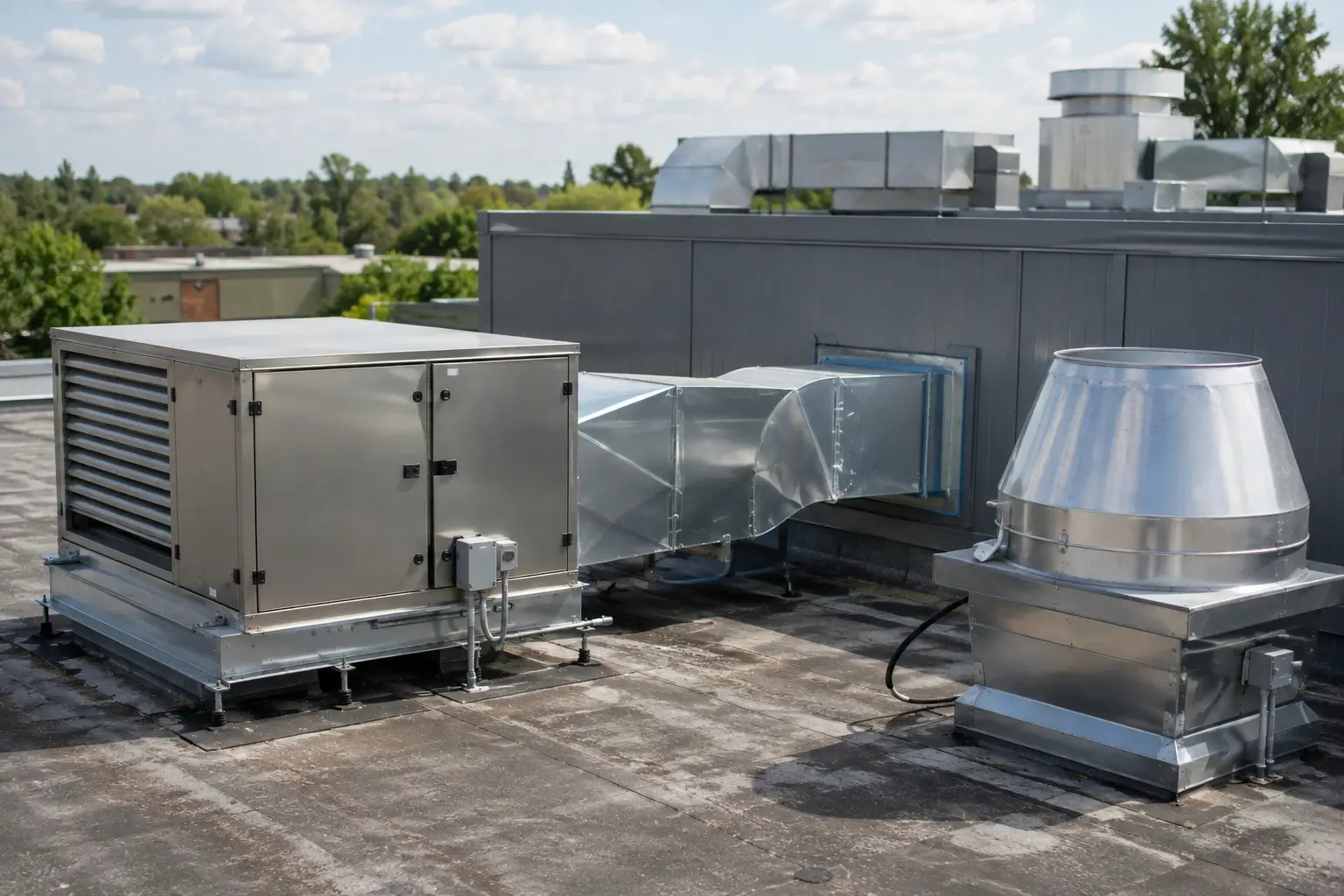
How we size and select an MUA — clear, code-focused steps
- Measure the actual exhaust CFM of your hood system while cooking is active.
- Calculate required make-up air considering pressurization limits and code needs.
- Determine whether tempered air, modulating capacity, or economizer options are needed for comfort and energy savings.
- Specify unit capacity, controls, and filtration as required by the building.
- Produce drawings and a phased installation plan to minimize disruption.
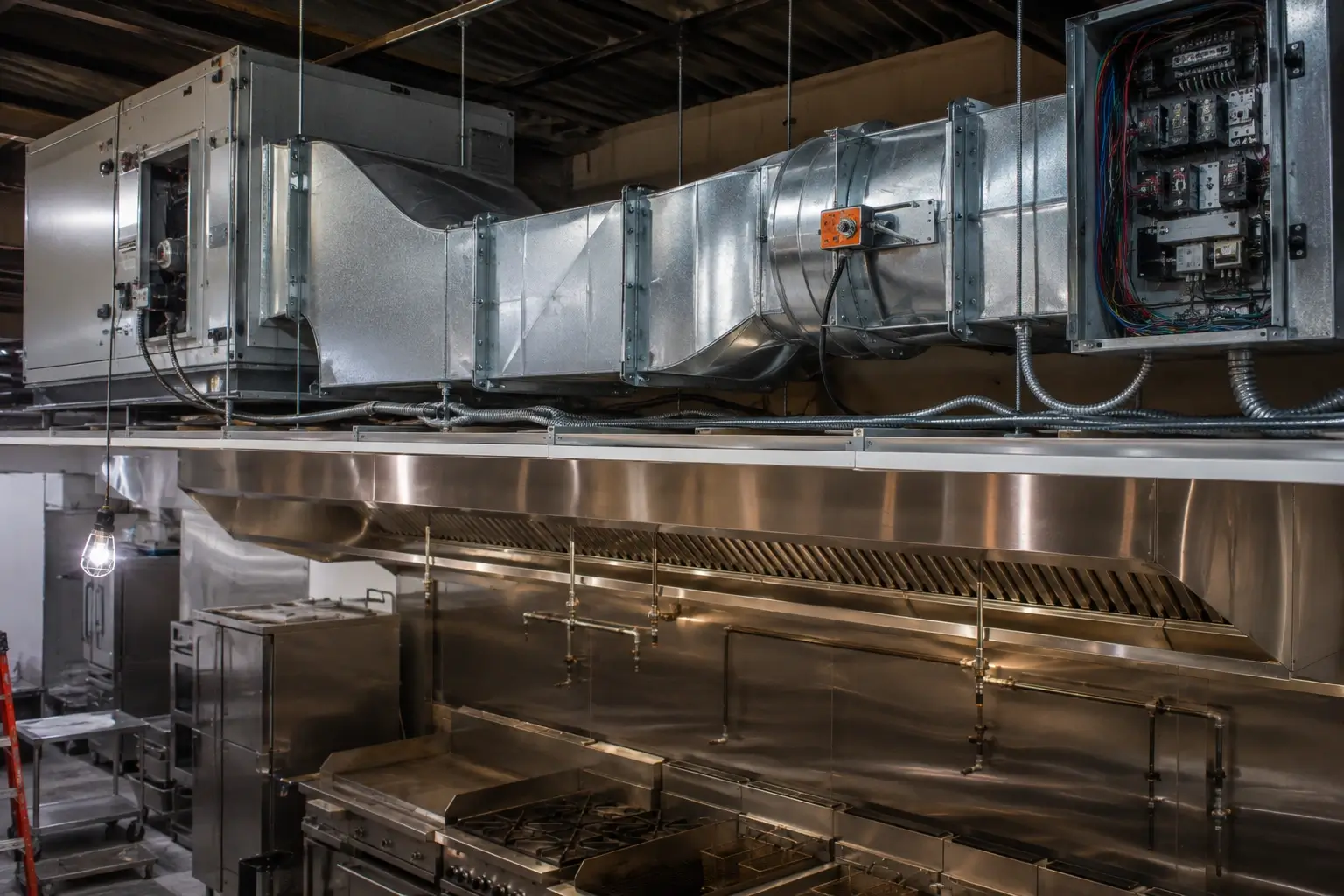
Installation and balancing process — what you will see on site
- Pre-install inspection and coordination with kitchen schedule.
- Install MUA, duct transitions, and controls. Rooftop curb and curb adapters provided if needed.
- Wire controls and interlock with hood exhaust and building automation if present.
- Perform air balancing while the kitchen runs real equipment. We measure supply and exhaust CFM, adjust dampers, and tune controls to keep pressure within the target range.
- Deliver an inspection-ready report with before and after readings and control settings.
Common problems we solve
Problem: Doors slam, staff complain about drafts.
Problem: Smoke backflows during peak service.
Solution: Increase make-up air, add modulating controls, and retune hood capture velocities.
Problem: HVAC overlap causes wasted energy.
Solution: Install VFD and sequencing logic to reduce supply when not needed and recover energy when possible.
Problem: Old MUA creates noise or vibration.
Solution: Replace with modern units with isolation, sound attenuators, and proper mounting.
How we size and select an MUA — clear, code-focused steps
- Variable frequency drives for smooth ramp and lower energy use
- Modulating dampers to match demand and maintain neutral pressure
- Tempering heat with gas or electric options for winter comfort
- Building automation integration for remote monitoring and alarm notifications
Inspection, code, and documentation
We size and document MUAs to satisfy inspection criteria and local code. After balancing we provide:
- Signed airflow test sheets and CFM reports
- Control schematics and interlock documentation
- Commissioning notes and recommended maintenance intervals
These deliverables smooth approval at final walkthroughs and keep your records audit-ready.
What to expect on cost and scheduling
- Diagnostic visit and assessment first. This gives a fixed price for equipment and install.
- Simple installs can be completed within a few days. Complex ductwork or rooftop access can extend timelines.
- We provide phased plans to keep kitchens operational where possible.
Trust and guarantees
- We follow industry best practices and deliver inspection-ready documentation.
- Professional installations with secure roofing work and weatherproof terminations.
- Post-install commissioning and a clear handover that explains controls and maintenance.
- Follow-up support and seasonal recalibration available.
FREQUENTLY ASKED QUESTIONS
Do all Type I hoods need make-up air?
Not necessarily. Make-up air requirements depend on the exhaust system, building conditions, airflow, and applicable mechanical code requirements. A project-specific evaluation is needed to determine the appropriate solution.
Can make-up air be heated?
Yes, make-up air can be designed with heating where appropriate. The required approach depends on the building, ventilation system, climate, equipment, and applicable mechanical requirements.
Will an MUA fix smoke spillage by itself?
Not always. Smoke spillage can have several causes, including exhaust airflow, hood performance, ductwork, and building pressure. The complete ventilation system should be evaluated rather than assuming the MUA is the only problem.
How long does balancing take?
Balancing time depends on the size and complexity of the ventilation system. The system must be evaluated and adjusted based on actual airflow conditions and applicable requirements.
Do you provide maintenance for MUAs?
MUA maintenance can be part of ongoing commercial kitchen ventilation service. The required maintenance depends on the unit, operating conditions, and system design.
Ready to fix negative pressure and restore balance?
Call 302-653-4111 or request an assessment now. We will measure, design, and deliver a make-up air solution that keeps your kitchen comfortable and inspection-ready.