Skip to content

Of all the systems in a new restaurant, the exhaust hood is the one that most often decides whether you open on schedule. It shapes your kitchen layout, determines what utilities and roof work you need, affects your permits, and has to pass inspection before you can legally serve a single customer. That is why new owners are better off treating the hood as a foundation decision rather than a detail to sort out after the menu, equipment, and floor plan are locked in. At CRS Hoods, the projects that go smoothest are the ones where the hood was part of the conversation from the beginning.
If you are opening a restaurant in Dover, here is why the hood deserves an early seat at the table and what starting right looks like.
The Hood Is the First Domino
In a new kitchen, decisions cascade. The cooking equipment you choose determines what kind of hood you need. The hood determines where the duct runs and where the exhaust fan sits. The duct and fan affect roof access, structural support, and ceiling height. The exhaust volume determines how much make-up air the kitchen needs. Fire suppression has to match the equipment under the hood. Change the first domino late, and the rest have to be revisited.
This is why hood planning that begins after construction drawings are finished so often leads to redesign, delays, and added scope.
Match the Hood to Your Concept
Your menu determines your equipment, and your equipment determines your hood. A concept built around fryers, griddles, and charbroilers needs grease-handling exhaust with grease-rated duct and suppression. A concept with mostly steam and heat from dishwashing or certain ovens may fall under a different hood classification. Many restaurants need a combination.
Thinking through your menu and cooking methods before finalizing the kitchen design gives your fabricator what they need to design a system that fits, and it prevents the situation where equipment is chosen first and the hood is forced to accommodate it.
Why the Hood Can Control Your Opening Date
A restaurant cannot open until its exhaust system passes inspection. That makes the hood a gating item on your schedule. Permits need to be secured, the system needs to be fabricated and installed, and it needs to be reviewed against NFPA 96 and the International Mechanical Code before the kitchen is cleared to operate. Local jurisdictions in Kent County can add permitting and inspection steps of their own.
Because these steps depend on each other, a hood that was started late or installed incorrectly can hold up an opening even when everything else is ready. Starting early gives you room to absorb the unexpected.
Choose the Space With the Hood in Mind
If you have not yet signed a lease, the building itself is your first hood decision. Ceiling height, roof access, structural support, and available routing for duct all affect whether and how a commercial exhaust system can be installed. A former restaurant space may already have infrastructure in place, while a space that was never a commercial kitchen may need substantial work. If you lease, confirm what your landlord allows for roof penetrations and exhaust routing before you commit.
Dover has restaurants in a range of building types, from newer commercial spaces to older properties, and evaluating a prospective space for hood feasibility early can prevent a costly surprise.
Get a Site Assessment Early
Because every project is custom, there is no responsible way to estimate your hood project from a generic formula. A professional site assessment evaluates your actual space and equipment plan and gives you an accurate picture of what the installation involves. This is the foundation of a well-planned commercial hood installation in Dover, and it is far more useful to have it early, when your design can still adjust, than late, when changes are expensive.
Plan Make-Up Air and Fire Suppression Together
New restaurants often focus on the hood itself and overlook two connected systems. Make-up air replaces the air the hood removes, keeping the kitchen balanced and appliances venting safely. Fire suppression must align with the hood and the equipment beneath it. Fire suppression coordination is handled with certified fire protection contractors, and designing for both alongside the hood prevents retrofits that are more disruptive and harder to fit into a finished space.
Put a Licensed Fabricator on Your Team
Commercial hood work is specialized and code-governed. It should be handled by a licensed hood fabricator and installer, not by a general contractor or a general HVAC company. In several states, purchasing a commercial hood and exhaust system legally requires working with a company holding proper HVACR licensing. A fabricator who builds the system to fit your kitchen, rather than adapting a standard product, is better positioned to deliver a system that passes inspection and performs well.
What Happens When the Hood Is an Afterthought
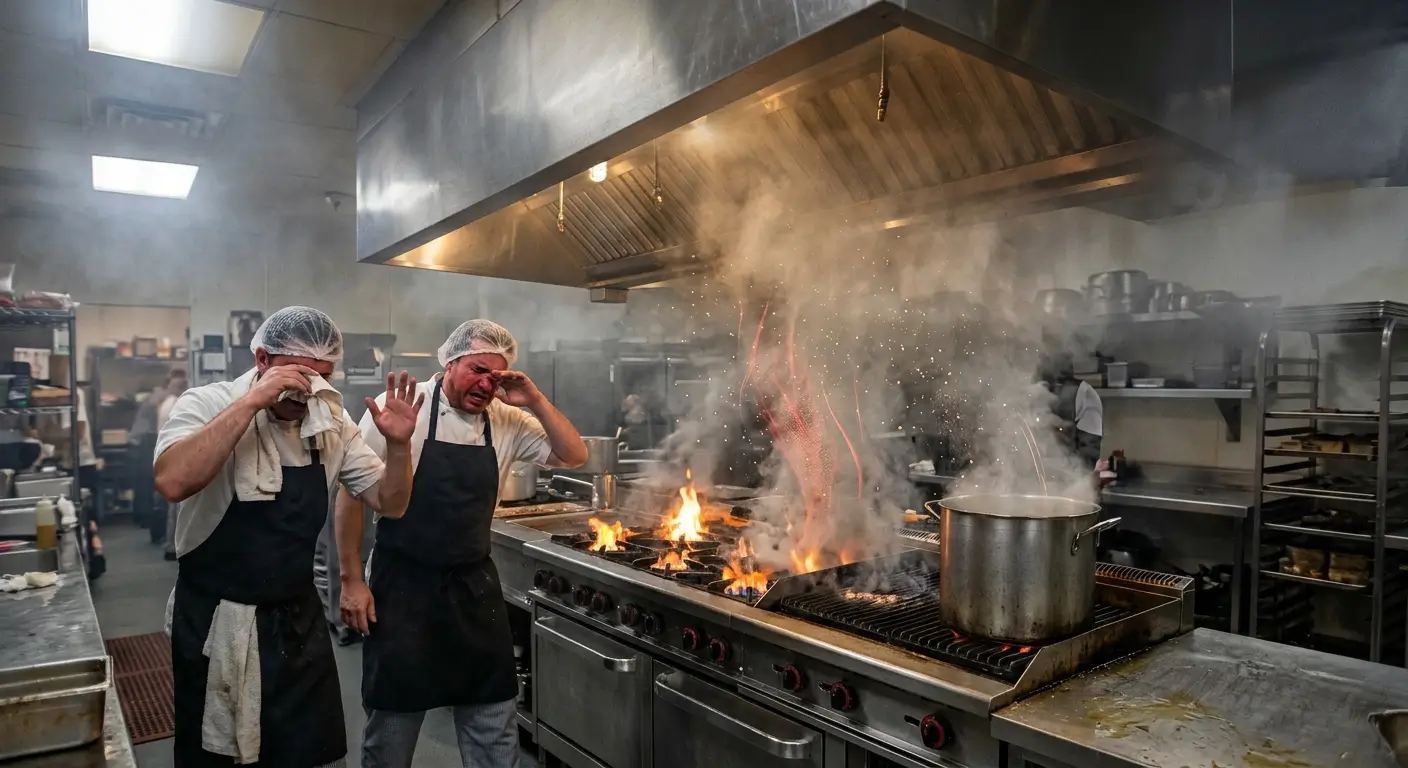
When the hood is addressed late, owners tend to face the same problems. Equipment has already been ordered and may not match what the hood needs to cover. Duct routing options have been narrowed by finished construction. Make-up air and suppression have to be squeezed in. The result is redesign, rework, and delay, all at the point in the project when time is tightest.
Where Responsibility Sits
Opening a restaurant means managing many moving parts, including your general contractor, equipment suppliers, a fire protection contractor, and inspectors. It is worth being clear that coordinating those parties ultimately falls to the owner or the general contractor managing the build. A hood fabricator’s role is to design, fabricate, and install a code compliant exhaust system, not to manage the other trades on the owner’s behalf. Knowing this from the beginning helps you staff your project team appropriately.
A Simple Order of Operations
For a new Dover restaurant, a sensible sequence looks like this. Define your concept and cooking methods. Evaluate your space for hood feasibility. Schedule a site assessment. Settle major equipment. Confirm permitting. Design the hood, make-up air, and suppression integration together. Fit the installation into your build-out schedule. Each step makes the next easier.
Build Your Opening on a Solid Foundation
Your hood system affects your layout, schedule, safety, and ability to open. Starting with it, rather than leaving it for last, gives your project the best chance of staying on track. A professional site assessment is the right place to begin.
Frequently Asked Questions
Why should the hood be planned before the rest of the kitchen is finished?
Hood decisions affect layout, duct routing, roof work, make-up air, and suppression. Planning it late often forces redesign of things already built or ordered, which is why early planning keeps projects on schedule.
Can the hood really delay my opening date?
Yes. A restaurant cannot open until its exhaust system passes inspection, so permitting, fabrication, installation, and review all sit on your critical path. Starting late or installing incorrectly can hold up an opening.
Does my menu affect what hood I need?
Yes. Grease-producing equipment such as fryers and griddles requires grease-handling exhaust and duct, while steam and heat equipment may fall under a different hood classification. Many kitchens need a combination.
Should I check a space’s hood feasibility before signing a lease?
It is wise to. Ceiling height, roof access, structure, and duct routing all affect whether a commercial exhaust system can be installed, and landlord approval for roof penetrations can affect your schedule.
Why does a licensed fabricator matter for a new restaurant?
Hood work is code-governed, and in several states legally requires a company holding proper HVACR licensing. A fabricator who builds to fit your kitchen is better positioned to deliver a system that passes inspection.
Who coordinates my general contractor and the hood fabricator?
That ultimately falls to the owner or the general contractor managing the build. The fabricator designs, fabricates, and installs the exhaust system but does not manage other trades on the owner’s behalf.