Professional installation matters for commercial kitchen hoods because a hood system is a fire safety requirement under NFPA 96, not an appliance you simply mount and connect. When it’s installed by an unlicensed or unqualified contractor, the consequences don’t show up immediately. They show up during inspection, when a kitchen can’t open, or during a grease fire, when a suppression system that was never correctly integrated fails to activate.
Getting installation right the first time isn’t about being overly cautious. It’s about understanding what’s actually at stake when a commercial kitchen ventilation system is treated like a general construction task rather than the specialized, code driven work it is.
A Hood System Is Code Compliance First
It helps to think about NFPA 96 and the International Mechanical Code the same way you’d think about traffic laws when you’re learning to drive. They’re not suggestions you follow when convenient. A commercial kitchen cannot legally open or continue operating unless its hood system meets these standards, full stop. There’s no partial credit for a hood that was almost installed correctly, and there’s no grace period while you fix what an unlicensed contractor got wrong.
This is the context that makes professional installation so important. The work has to be right because the consequences of it being wrong are real and immediate: failed inspections, delayed openings, fire risk that isn’t abstract, and rework that has to happen on someone else’s schedule rather than yours.
What an Unlicensed Installer Can’t Account For
A general contractor or an HVAC technician without specific hood experience isn’t automatically incompetent at other work. The problem is that commercial hood installation requires a specific body of knowledge that general licensing simply doesn’t cover. Several states recognize this formally. Maryland’s HVACR licensing law, for example, treats commercial hood system work as its own category, separate from general heating and cooling systems, because the fire code obligations and fabrication standards involved are distinct enough to warrant it.
An unlicensed installer working on a commercial hood typically hasn’t dealt with grease duct clearance requirements, makeup air calculations, or the integration of a wet chemical fire suppression system with fuel and electrical shutoffs. Those aren’t minor details. They’re the components that determine whether the hood actually does its job when a grease fire starts, which is the only moment any of this truly gets tested.
The Real Cost of Getting It Wrong
Failed inspections are the most visible consequence of improper installation, but they’re not the most serious one. A hood system that passes a surface level inspection but was never correctly fabricated or integrated still leaves a kitchen exposed. Grease accumulation in ductwork that wasn’t properly sealed or routed is one of the most commonly documented causes of commercial kitchen fires. A suppression system that wasn’t correctly tied into the hood and equipment shutoffs doesn’t function as designed when it’s needed.
Beyond the safety risk, the practical business impact of a failed inspection is significant. A kitchen that can’t open on schedule carries real costs in delayed revenue, extended lease payments, and the rework itself, which often costs more than getting it right the first time would have. Rework also happens under pressure, with a contractor trying to fix problems quickly rather than carefully, which is rarely the ideal condition for code compliant work.
Why Custom Fabrication Changes the Outcome
One of the clearest differences between a professional hood installation and an amateur one is whether the hood was custom fabricated for the specific kitchen or pulled from a standard product catalog. Every commercial kitchen has a different equipment lineup, ceiling height, duct routing path, and code jurisdiction. A hood that’s custom built around those conditions performs differently than one that was made to generic specifications and adjusted to fit after the fact.
Custom fabrication also means the installer has already thought through the integration between the canopy, the ductwork, the exhaust fan, and the fire suppression system before anything goes on the wall. That upfront engineering work is exactly what prevents the mismatches that show up during inspection, and it’s something only a fabricator with deep experience in this specific trade is equipped to do.
What Professional Installation Actually Looks Like
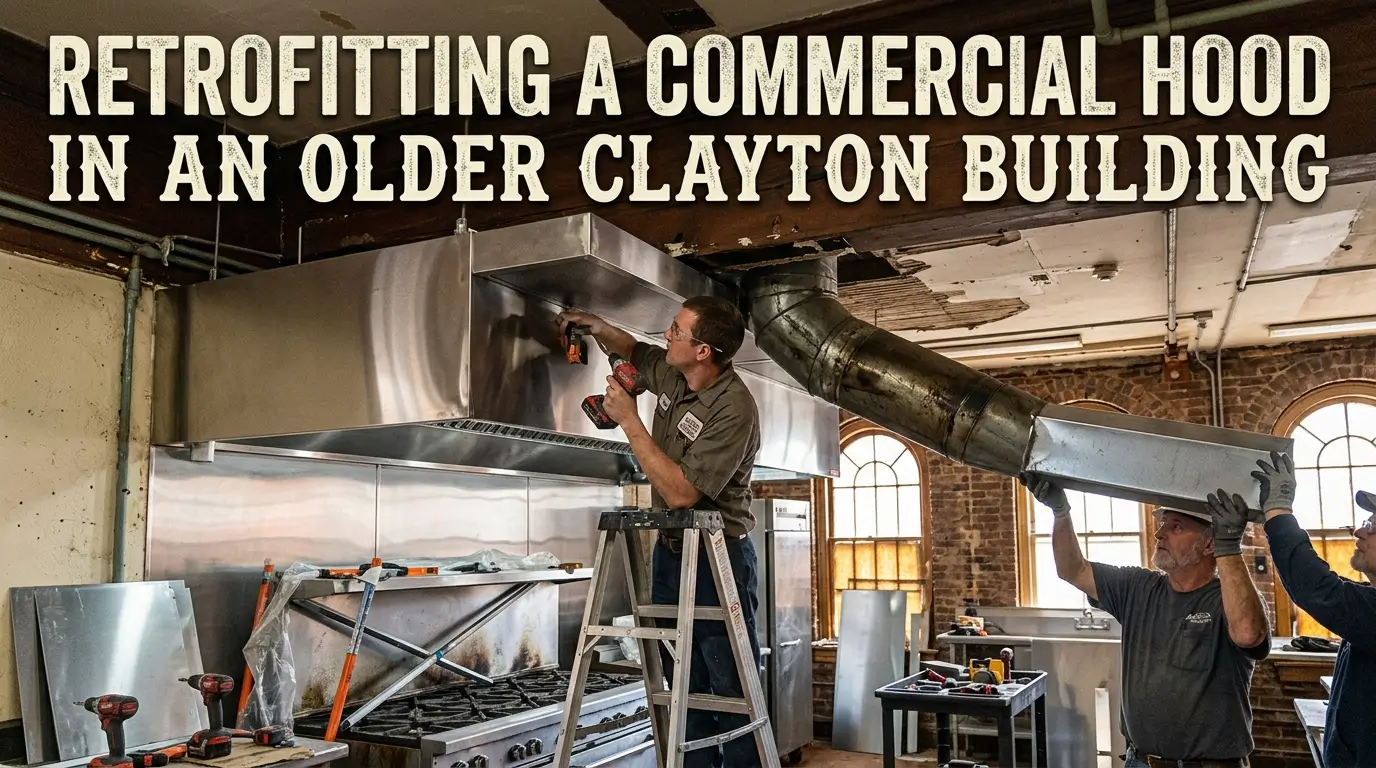
A properly executed commercial hood installation starts well before the first weld. A licensed fabricator reviews the equipment list, walks the kitchen layout, confirms what local code requires for that jurisdiction, and designs the system around those specific conditions. The fabrication happens based on that design, not based on a standard template.
During installation, the hood canopy, ductwork, and exhaust components are integrated as a system rather than as separate pieces that get connected at the end. Fire suppression coordination is handled with certified fire protection contractors, since those components have to interface correctly with the hood and the equipment shutoffs to function under NFPA 96. After installation, the system is checked against the same standards the inspector will use, which is why systems installed by experienced fabricators tend to pass on the first attempt rather than requiring follow up visits to resolve discrepancies.
It’s also worth noting that business owners are responsible for coordinating their own general contractors, equipment suppliers, and inspectors throughout a commercial kitchen project. That makes it even more valuable to have the hood installation handled by someone who has been through this process enough times to know exactly what the inspector will look for, because that piece of the project isn’t being managed on the owner’s behalf.
Why Track Record Is the Most Reliable Indicator
There’s no shortcut to evaluating whether a hood installer is the right one for a project. Manufacturer certifications and UL listings reflect a paid credential process rather than actual fabrication quality. The more reliable indicator is a documented history of systems that pass inspection, built by a fabricator with hands on experience rather than a parts supplier relationship.
Since 1980, CRS Hoods has installed more than 10,000 commercial kitchen exhaust systems across Pennsylvania, New Jersey, Delaware, and Maryland, with systems that consistently pass inspection on the first attempt. CRS Hoods approaches every project as a custom fabricator first, designing and welding each system around the specific kitchen rather than adapting a standardized product to conditions it wasn’t built for. Installation and ongoing cleaning are handled as part of that same fabrication expertise, which means the same people who built the system understand how to maintain it.
Final Thoughts
Professional installation matters for commercial kitchen hoods because there is no version of this work where shortcuts don’t eventually surface. Whether it’s at inspection, during a health department visit, or in the event of a grease fire, a hood system that was installed without the right expertise and code knowledge will show it. The investment in a licensed fabricator with a proven track record isn’t a premium on top of the project. It’s the part of the project that determines whether everything else holds up.
Frequently Asked Questions
Why can’t a general contractor install a commercial kitchen hood?
General contracting licenses don’t cover the specific fire code requirements, grease duct standards, and suppression system integration that commercial hood installation involves. In many states, including Maryland, commercial hood work falls under its own licensing category separate from general contracting.
What happens if a commercial hood fails inspection?
The kitchen cannot open or continue operating until the system is brought up to code. Depending on what needs to be corrected, this can mean significant rework, additional permitting, and delays that push back an opening timeline considerably.
Does fire suppression have to be part of every commercial hood installation?
Under NFPA 96, any hood serving cooking equipment that produces grease laden vapor, such as fryers, griddles, or charbroilers, requires an integrated fire suppression system. The specific design depends on the equipment and configuration, confirmed by a licensed fabricator and certified fire protection contractor.
How does custom fabrication improve the installation outcome?
Custom fabrication means the hood is built around the actual equipment, ceiling height, and ductwork path of the specific kitchen rather than adjusted to fit after the fact. That upfront design work reduces the mismatches that cause inspection failures and long term performance problems.
Who is responsible for coordinating inspections during a commercial kitchen build?
The business owner is responsible for coordinating their own general contractors, equipment suppliers, and code inspectors. A licensed hood fabricator handles the hood system specifically, but overall project coordination remains with the owner.