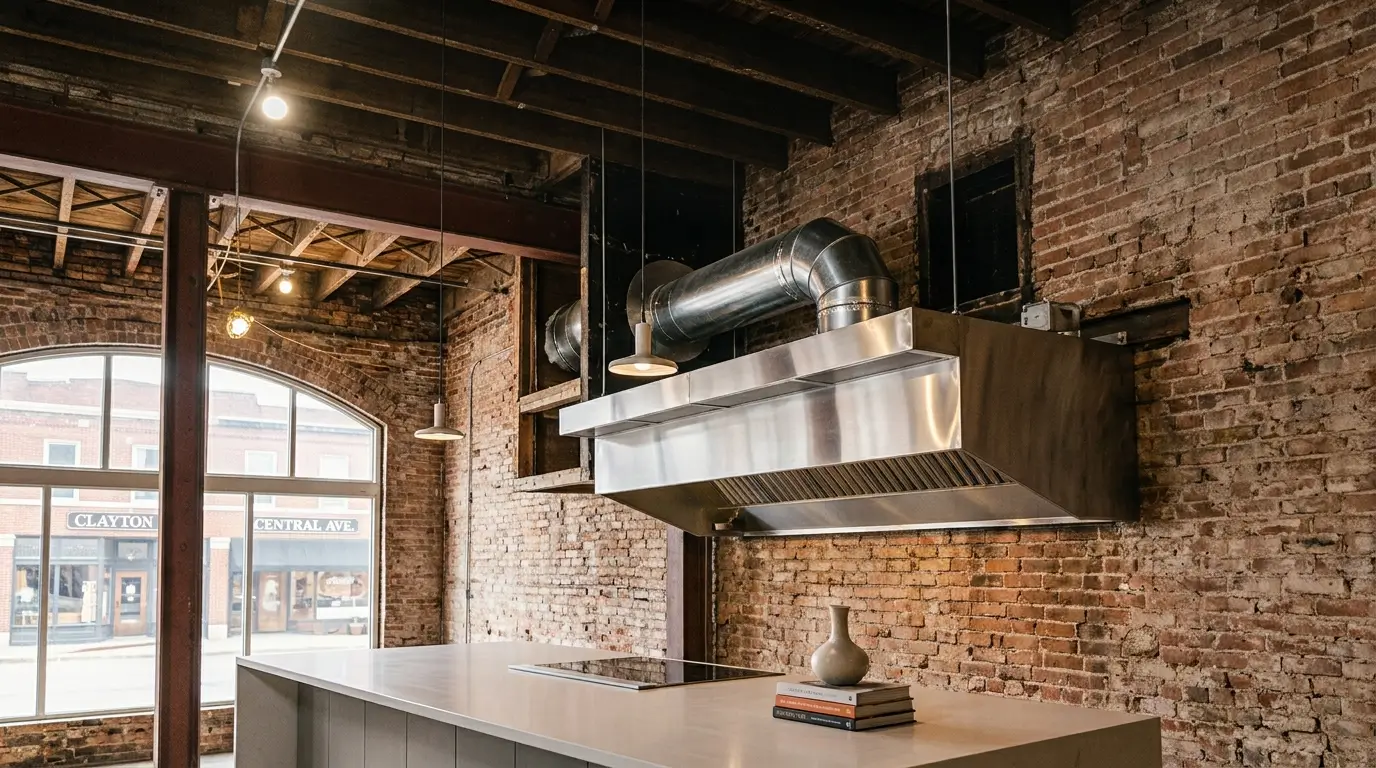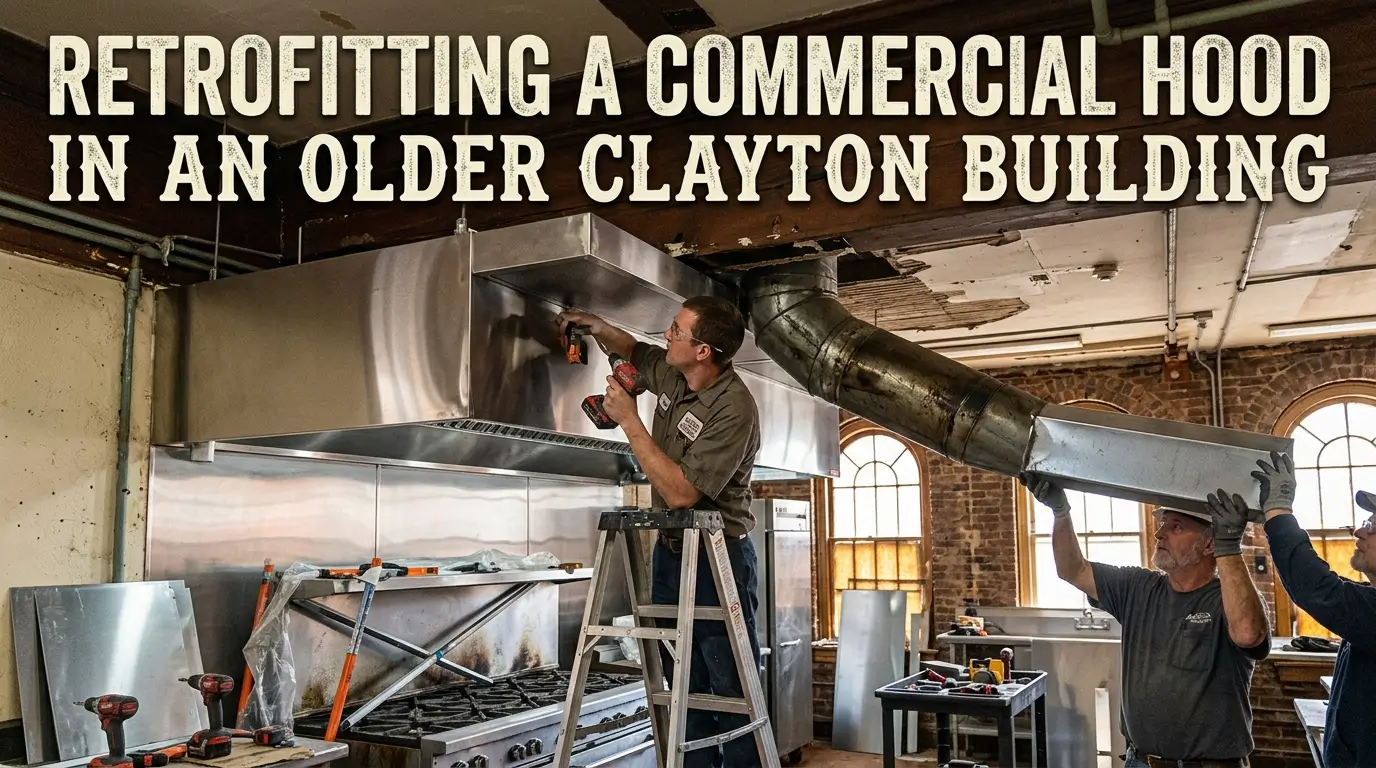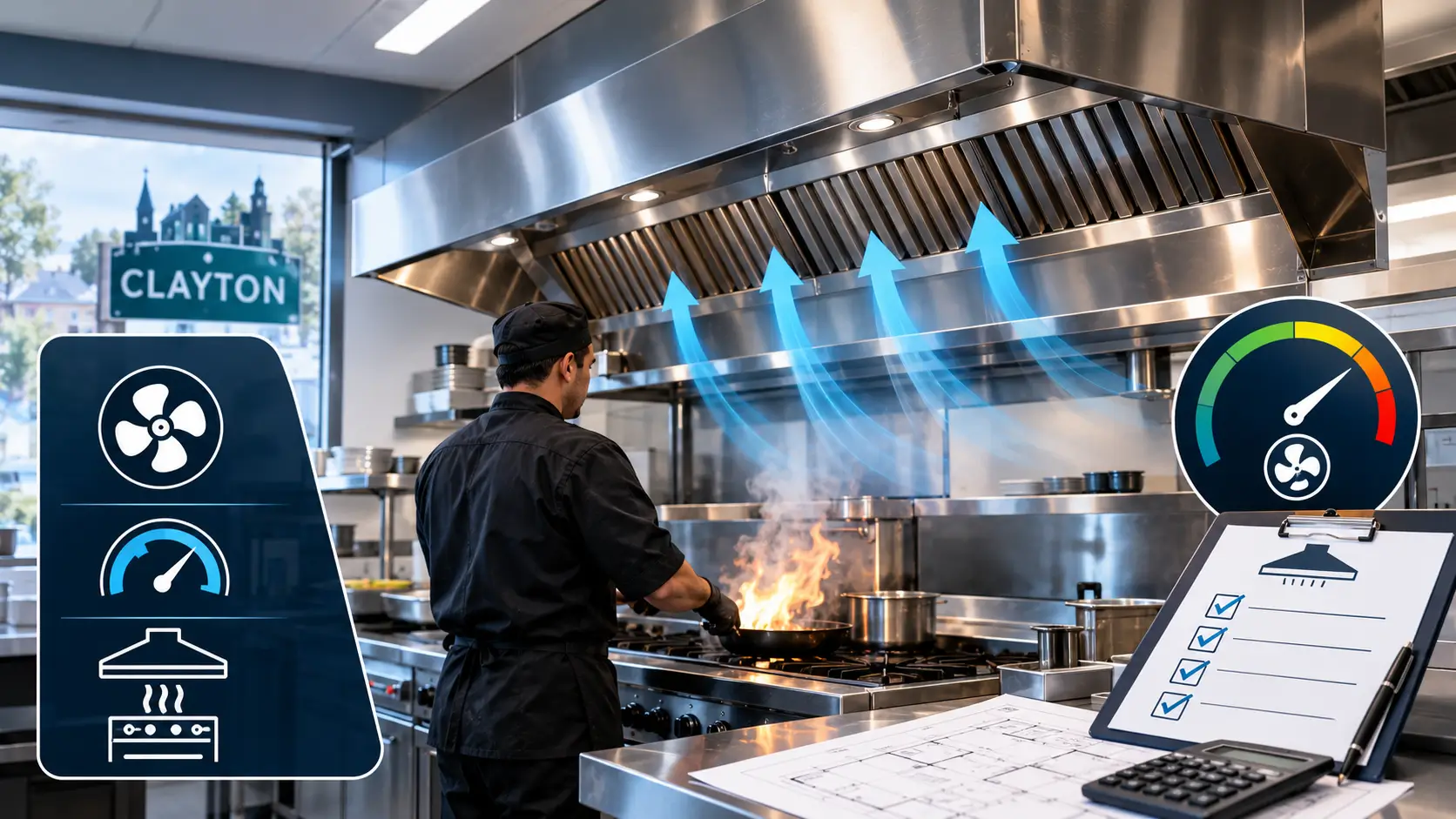

The main difference between commercial and home hoods comes down to engineering, construction, and code compliance. Commercial hoods are custom fabricated to handle continuous grease laden airflow from a full cooking line and must meet NFPA 96 and International Mechanical Code requirements before a kitchen can legally operate. Home hoods are mass produced appliances designed for occasional cooking, lighter grease loads, and none of the fire code obligations that govern a commercial kitchen. If you’ve ever wondered why a restaurant exhaust system looks nothing like the hood above a home range, the answer comes down to how the system is built, what standards it has to meet, and who is legally responsible for making sure it passes inspection.
Understanding this distinction matters for anyone opening a food service business, renovating a commercial kitchen, or simply trying to understand why hood requirements look so different depending on where the cooking is happening. This article breaks down the real differences in plain terms, without generic industry talking points.
Why the Distinction Matters
A lot of people assume a higher end range hood from a home improvement store is essentially a smaller version of what a restaurant uses. That assumption is incorrect, and the difference isn’t cosmetic. Commercial and home hoods differ in airflow design, fire suppression requirements, fabrication standards, ductwork, and the regulatory framework each one has to satisfy.
Restaurants generate grease vapor for hours at a stretch during service. A fryer, a flat top, and several burners running through a lunch and dinner rush create a very different airborne grease load than a home stove used for an hour at dinner time. NFPA 96, the fire code that governs commercial cooking ventilation, exists specifically because that continuous grease exposure is a documented fire risk. Home kitchens are not subject to the same code framework, which is exactly why the equipment looks and performs so differently.
Airflow and Capacity
Commercial hood airflow requirements are not based on a single universal number. The correct airflow for a given hood depends on the type of cooking equipment underneath it, the linear footage of the hood, how that equipment is grouped, and what the local mechanical code requires for that specific configuration. A hood positioned over a charbroiler and a hood positioned over a few burners will have very different airflow calculations, even if they look similar in size. This is part of why hood design has to be engineered for the specific kitchen rather than selected off a shelf.
Home hoods are sized by manufacturers around average household cooking habits rather than continuous commercial loads. They are not designed around the same kind of engineering calculation, because they are not expected to handle the same volume or duration of grease laden air.
Construction and Fabrication
Commercial hoods are typically fabricated from stainless steel and welded rather than riveted, since welded seams hold up better against grease accumulation and heat over years of daily use. They are built with grease gutters, drip troughs, and removable baffle filters designed to capture grease before it reaches the ductwork. Because every kitchen layout, equipment lineup, and ceiling height is different, commercial hoods are generally custom fabricated to fit the specific space rather than installed as an off the shelf product.
This is a meaningful distinction worth understanding: a UL listing or a manufacturer’s published spec sheet reflects a paid certification process, not the actual quality of the welds or the fit of the hood in a real kitchen. Custom fabrication built around the actual equipment lineup and ceiling conditions is a more reliable indicator of long term performance than a manufacturer’s marketing material.
Home hoods are typically built from lighter gauge steel or aluminum with mesh or basic filters. They are not engineered for the heat exposure or grease volume that commercial equipment produces, and they are not intended to be customized to a specific kitchen layout the way a commercial system is.
Fire Suppression and Code Requirements
This is one of the most important differences, and it should be treated as a non-negotiable requirement rather than background information. NFPA 96 requires commercial kitchens cooking with grease laden equipment, such as fryers, griddles, and charbroilers, to have an integrated fire suppression system tied into the exhaust hood. These systems are designed to activate automatically if a fire starts in the duct, hood, or cooking equipment, and they are coordinated with certified fire protection contractors as part of the overall system design.
A restaurant cannot legally open or continue operating without meeting these code requirements, in the same way a new driver cannot legally get behind the wheel without following traffic laws. There is no gray area here. Inspectors check for compliance specifically because grease fires in unsuppressed systems are a documented and serious risk.
Home hoods are not held to this standard. A residential kitchen relies on a fire extinguisher and a smoke detector, which is appropriate for the lower fire risk of occasional home cooking, but would be inadequate for a kitchen running grease producing equipment for hours every day.
Why Working With Licensed Fabricators Matters
Commercial hood systems are not something a general contractor or an HVAC company is necessarily licensed or equipped to handle. In several states, including Maryland’s HVACR licensing requirements for hood system purchases, the law specifically distinguishes commercial kitchen exhaust work from general HVAC work. That distinction exists because hood fabrication, fire suppression integration, and code compliant ductwork require specialized knowledge that general contracting licenses do not cover.
Hiring an unlicensed or unqualified installer creates real risk: failed inspections, costly rework, project delays, and in some cases a kitchen that simply cannot open until the system is brought up to code. Business owners are responsible for coordinating their own general contractors, equipment suppliers, and inspectors, which makes it even more important to choose a hood fabricator with a verifiable track record rather than the lowest bid.
This is where regional experience matters. Business owners in southern Delaware looking for installation work handled by properly licensed professionals often look for Lewes commercial hood installers who understand local permitting requirements and NFPA 96 compliance specific to that jurisdiction. Since 1980, CRS Hoods has installed more than 10,000 commercial kitchen exhaust systems across Pennsylvania, New Jersey, Delaware, and Maryland, with systems that consistently pass inspection on the first attempt. CRS Hoods works as a custom fabricator first, with installation and cleaning as part of that broader capability, and that fabrication background extends to related kitchen metalwork like ductwork and stainless steel finishing as well.
Maintenance and Cleaning Requirements
Commercial kitchens are required under NFPA 96 to have their hood systems professionally cleaned on a schedule tied to cooking volume, with high volume cooking operations typically requiring more frequent cleaning than lower volume kitchens. Documentation of that cleaning has to be kept on file and is checked during inspections. Grease buildup in commercial ductwork is one of the most commonly cited causes of commercial kitchen fires, so this requirement reflects a real safety concern rather than a procedural formality.
Home hoods are not subject to any of this. Filters can be wiped down periodically and the hood surface degreased a few times a year, with no inspection schedule, no fire marshal involvement, and no compliance documentation required.
Noise, Size, and Everyday Use
Commercial hoods are sized to match an entire cooking line, which can be a significant length depending on the kitchen, and the blowers driving that airflow are noticeably louder than residential equipment. That tradeoff exists because the airflow needed to keep a commercial kitchen’s air breathable during a rush requires a level of draw that residential blowers are not built to produce.
Home hoods are sized to fit a single range and are engineered with noise reduction in mind, since the people using them are standing in the same room while cooking. A hood loud enough to match commercial airflow requirements would not be tolerable in a space that doubles as a living area.
Final Thoughts
A home hood and a commercial hood may occupy a similar role in a kitchen, but they are built for entirely different demands. One is designed for occasional household cooking. The other is engineered, fabricated, and code certified to handle continuous grease laden airflow under fire safety standards that exist because the risks are well documented. Understanding that difference is the first step toward making sure a commercial kitchen meets code from day one, with a system built and installed by professionals who specialize in exactly that work.
Frequently Asked Questions
Can a home range hood be used in a commercial kitchen?
No. Residential hoods do not meet NFPA 96 requirements for grease-producing commercial kitchens and will not pass inspection.
Why choose a custom-fabricated commercial hood?
Custom hoods are built to match your kitchen layout, equipment, and local code requirements for proper performance and compliance.
Who handles fire suppression for a commercial hood system?
Certified fire protection contractors coordinate the fire suppression system to ensure it integrates with the hood and meets NFPA 96 standards.
Can a general HVAC contractor install a commercial hood system?
Not always. Many states require specialized licensing for commercial hood installation, making experienced hood fabricators the safer choice.
How often should a commercial hood system be cleaned?
Cleaning frequency depends on cooking volume and equipment type. A licensed hood professional can recommend the correct schedule based on NFPA 96.