
Preventive Maintenance for Commercial Kitchen Hoods
Keep your kitchen running, before it stops
Commercial ventilation systems quietly carry the weight of every service. CRS Hoods’ preventive maintenance program protects that investment, catching wear before it becomes downtime, and keeping your kitchen up to code and in full operation.
WHY IT MATTERS
THE COST OF WAITING IS HIGHER THAN THE COST OF MAINTAINING
3×
more costly to repair vs. prevent a ventilation failure
40%
of restaurant fires are linked to grease buildup in exhaust systems
2–6 hrs
typical kitchen downtime during an unplanned equipment failure
15%
average energy savings with properly maintained exhaust systems
Ventilation equipment doesn’t fail all at once — it degrades gradually. Fan belts wear, filters clog, motors run hot. A preventive maintenance program gives your team a clear picture of system health so you’re never caught off guard during a busy service.
WHAT’S INCLUDED
A THOROUGH INSPECTION AND SERVICE, EVERY VISIT
Each maintenance visit covers the critical components of your hood and exhaust system. Our technicians document findings and flag anything that needs attention before it escalates.
Fan and motor check
Belt tension, motor temperature, bearing wear, and airflow volume are measured and recorded against baseline.
Grease and filter service
Filters are inspected, cleaned or replaced, and grease collection trays are cleared to reduce fire risk.
Controls and interlocks
Electrical connections, speed controls, and safety interlocks are tested for proper function.
Airflow measurement
We verify that capture velocity meets manufacturer specs and local code — critical for both safety and efficiency.
Duct and plenum inspection
Visible duct sections and plenum chambers are checked for grease accumulation and structural wear.
Written service report
You receive a clear summary of findings, actions taken, and any items flagged for follow-up — useful for insurance and health inspections.
OUR PROCESS
Simple and non-disruptive by design
We work around your schedule, not the other way around. Most visits are completed in two to four hours and can be arranged before or after service.
Initial system audit
We start with a baseline assessment of your existing equipment — age, condition, installation quality, and any outstanding issues. This shapes a maintenance plan specific to your kitchen’s load and hours.
Scheduled maintenance visits
Based on your kitchen volume and equipment type, we establish a visit frequency that keeps your system within safe operating parameters. High-volume kitchens typically require quarterly service; lighter operations may qualify for biannual visits.
On-site service and documentation
Our technician completes all inspections and hands-on maintenance, then walks through findings with your kitchen manager before leaving. All work is logged and reported in writing.
Priority response for enrolled customers
If an issue arises between scheduled visits, customers on our maintenance program receive priority scheduling — no waiting behind new service calls.
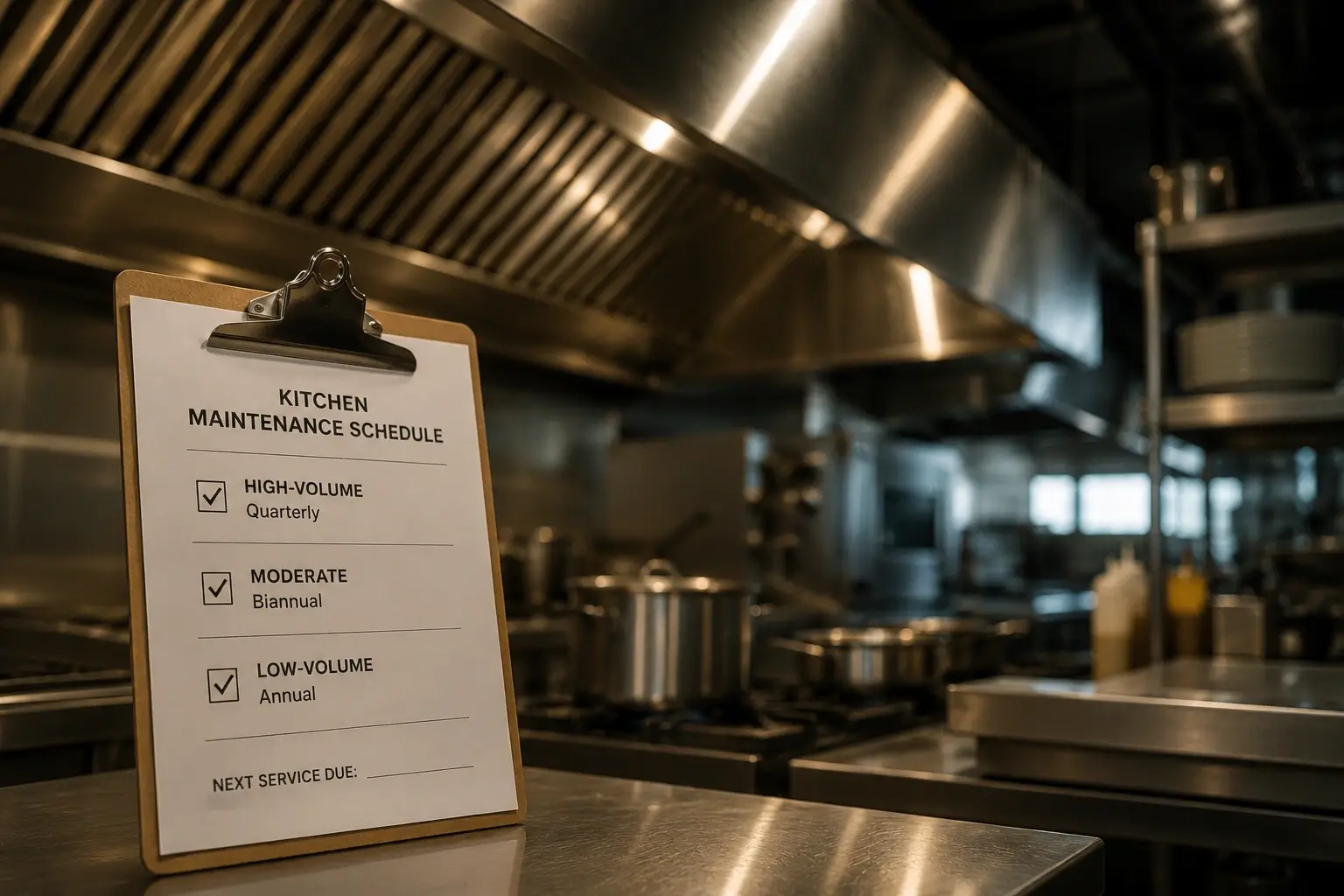
How often does your kitchen need service?
Industry guidelines and local fire codes typically determine minimum service intervals. CRS Hoods follows NFPA 96 standards and advises frequency based on your actual cooking volume.
- High-volume: quarterly
- Moderate: biannual
- Low-volume: annual
CRS Hoods helps determine the proper maintenance schedule for your kitchen based on your cooking volume, equipment, and local fire code requirements.
WHO WE SERVE
Built for commercial kitchens of any size
- Restaurants and cafés
- School cafeterias
- Healthcare facilities
- Hotels and hospitality
- Catering operations
What a maintenance program actually delivers
Extended equipment lifespan — properly maintained fans and motors last significantly longer than neglected ones
Reduced fire risk from controlled grease accumulation in filters, plenums, and ducts
Lower energy consumption from clean, correctly balanced airflow
Compliance documentation ready for health department and insurance inspections
Fewer emergency service calls and the disruption that comes with them
Consistent kitchen air quality for staff comfort and food safety
A predictable maintenance budget instead of unpredictable repair costs
A single point of contact who knows your system’s history over time
The best time to service ventilation equipment is before something breaks. A well-maintained system rarely surprises you, and in a commercial kitchen, no surprises is exactly the point.
— CRS Hoods technical team
Frequently Asked Questions: Type I Hood Installation
Ready to get on a maintenance schedule?
Reach out for a no-obligation system assessment. We’ll evaluate your current equipment and recommend a service plan that fits your kitchen’s needs and hours of operation.